
Credit Control and Statements
Credit control in SorviAI Finance is two tools and a discipline: a credit limit you record, a balance you read, and a statement you send.
None of them is dramatic, and used early they stop most disputes becoming write-offs.
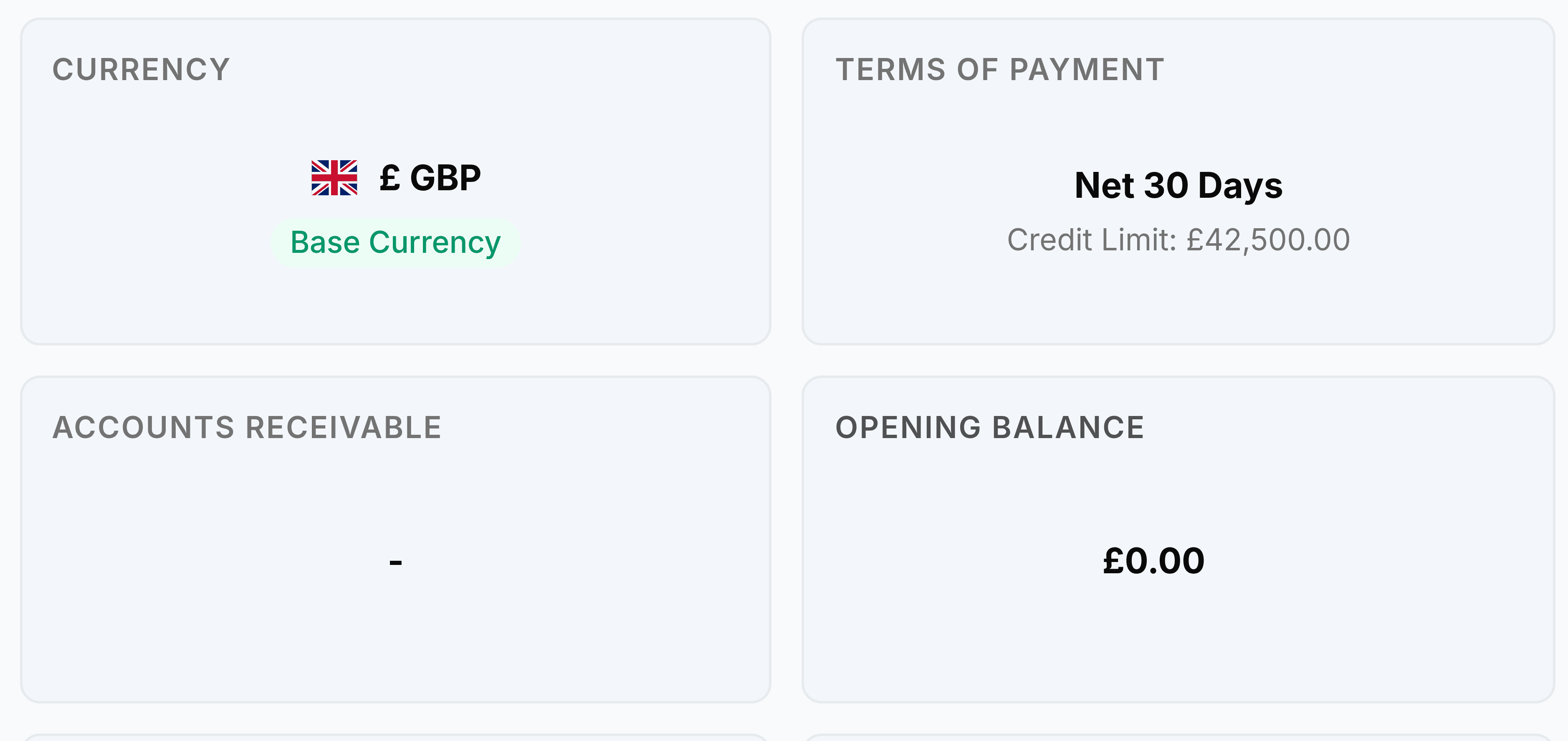
The credit limit
A customer record carries a credit limit, and it sits on the same panel as their payment terms and receivable balance. It is a number you record and read, not a rule the product applies.
| What you might expect | What actually happens |
|---|---|
| An order above the limit is blocked | It is not. Nothing checks the limit when a quote, order or invoice is raised. |
| A warning when the limit is passed | There is none. The limit and the balance sit side by side and it is on you to compare them. |
| Putting a customer on hold | There is no hold. A customer is Active or Inactive, and Inactive only removes them from the pickers for new documents. |
| Recurring profiles stopping for a customer in dispute | They do not. A profile keeps generating until you stop the profile itself. |
Reading the balance
The customer overview shows three numbers that are easy to confuse. They are not the same and they do not net against each other automatically.
- Outstandingthey owe you
- The unpaid total on sent invoices. This is the figure in your receivables ageing report.
- Unapplied credityou owe them
- Credit notes and overpayments not yet matched to an invoice. Apply them before chasing anything.
- Advance heldyou owe them delivery
- Money taken in advance that has not been drawn down. It is a liability, not a receivable.
Sending a statement
A statement is a period summary of everything raised, paid and credited for one customer, ending in what they owe. It is the document to send when someone says "which invoice is this for", because it answers the question in one page rather than in a thread.
Open the customer and choose Statements
Then pick the period. The default is the current financial year to date.
Choose the type
An outstanding statement lists only unpaid items. A full statement lists all activity in the period. Send the first for collections and the second for reconciliation.
Send or download
Emailed to the primary contact, or downloaded as PDF to attach to your own message.
When it is not coming back
A customer who will not pay a valid invoice is a bad debt, not a credit note. Crediting it would say you overcharged them, which is not what happened, and it would quietly reduce your reported revenue for the original period. Write it off in Accountant instead, so the sale stays on the books and the loss shows as a loss.