
Accruals, Prepayments and Depreciation
The three entries almost every business posts at period end, and the only three most businesses ever need.
Each one exists to put a cost in the month it belongs to rather than the month it was paid in.
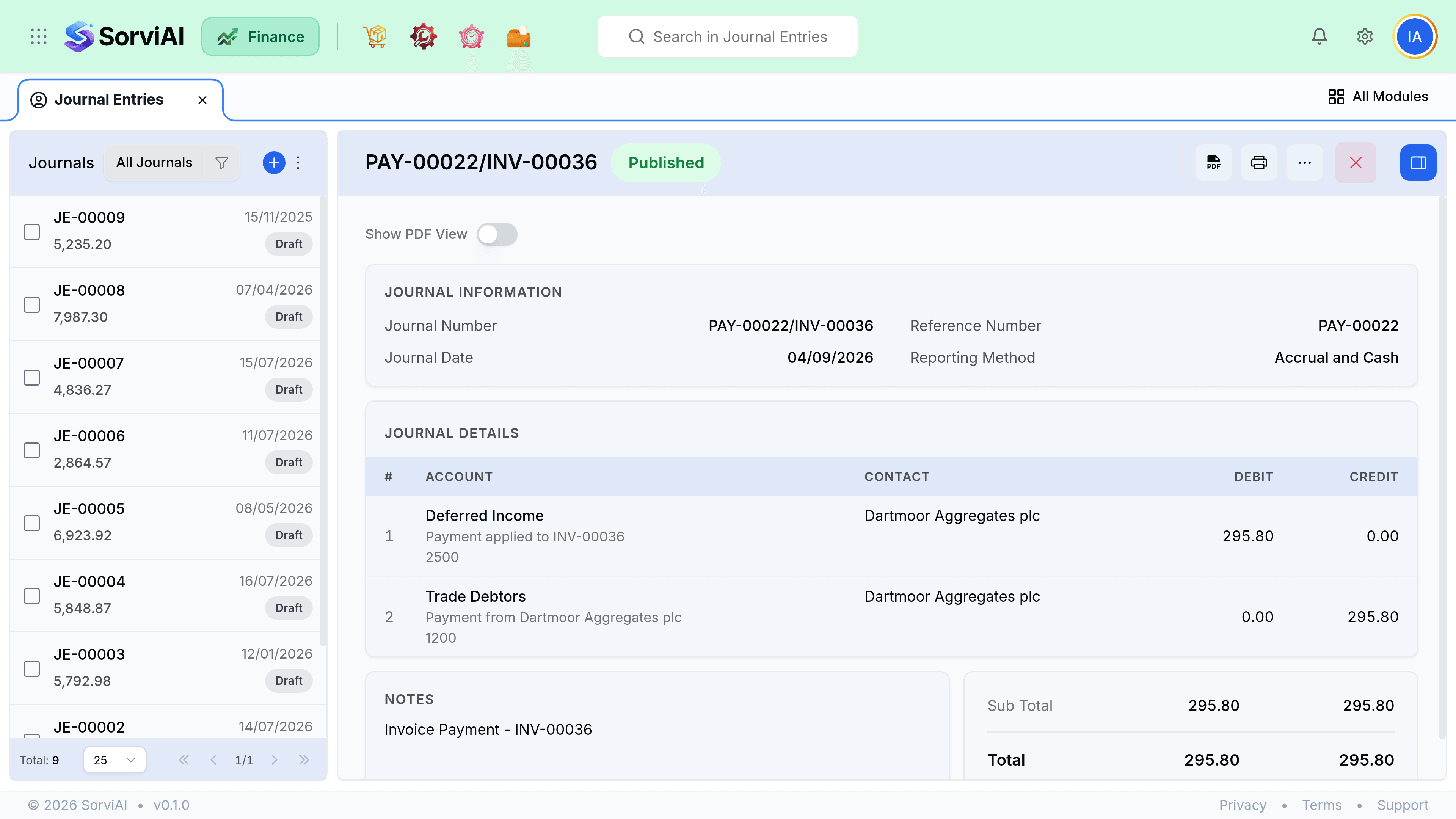
Accruals
The electricity was used in September, the bill arrives in October, and September looks cheaper than it was. An accrual fixes that by recognising the estimated cost in September and reversing it when the real bill lands.
- SeptemberAccrue the estimate: debit expense, credit accruals
- 1 OctoberReverse the accrual
- OctoberThe real bill posts as normal
- Net effectThe cost sat in September, once
Prepayments
A twelve-month insurance premium paid in January is not a January cost. Post the payment as normal, then move eleven twelfths into a prepayments asset and release one twelfth each month.
| Month | Entry |
|---|---|
| January | Debit prepayments, credit insurance expense, for eleven twelfths |
| February to December | Debit insurance expense, credit prepayments, one twelfth each |
| End of December | Prepayments account is zero again |
Depreciation
A van bought for cash is an asset, not an expense. Depreciation is the monthly entry that turns a slice of it into a cost, over whatever life your accounting policy sets.
Record the purchase as an asset
On a fixed asset account, not an expense account.
Agree the life and method with your accountant
Straight line over three or five years covers most cases.
Post monthly
Debit depreciation expense, credit accumulated depreciation.
Attach the schedule
So next month's entry is a lookup rather than a calculation.