
Introduction - Advance Invoices
An advance invoice bills a customer before the work is done or the goods are supplied.
It collects money against a balance you hold on their behalf, and that balance is then drawn down by real invoices as you deliver. Retainers, deposits and prepayments all work this way.
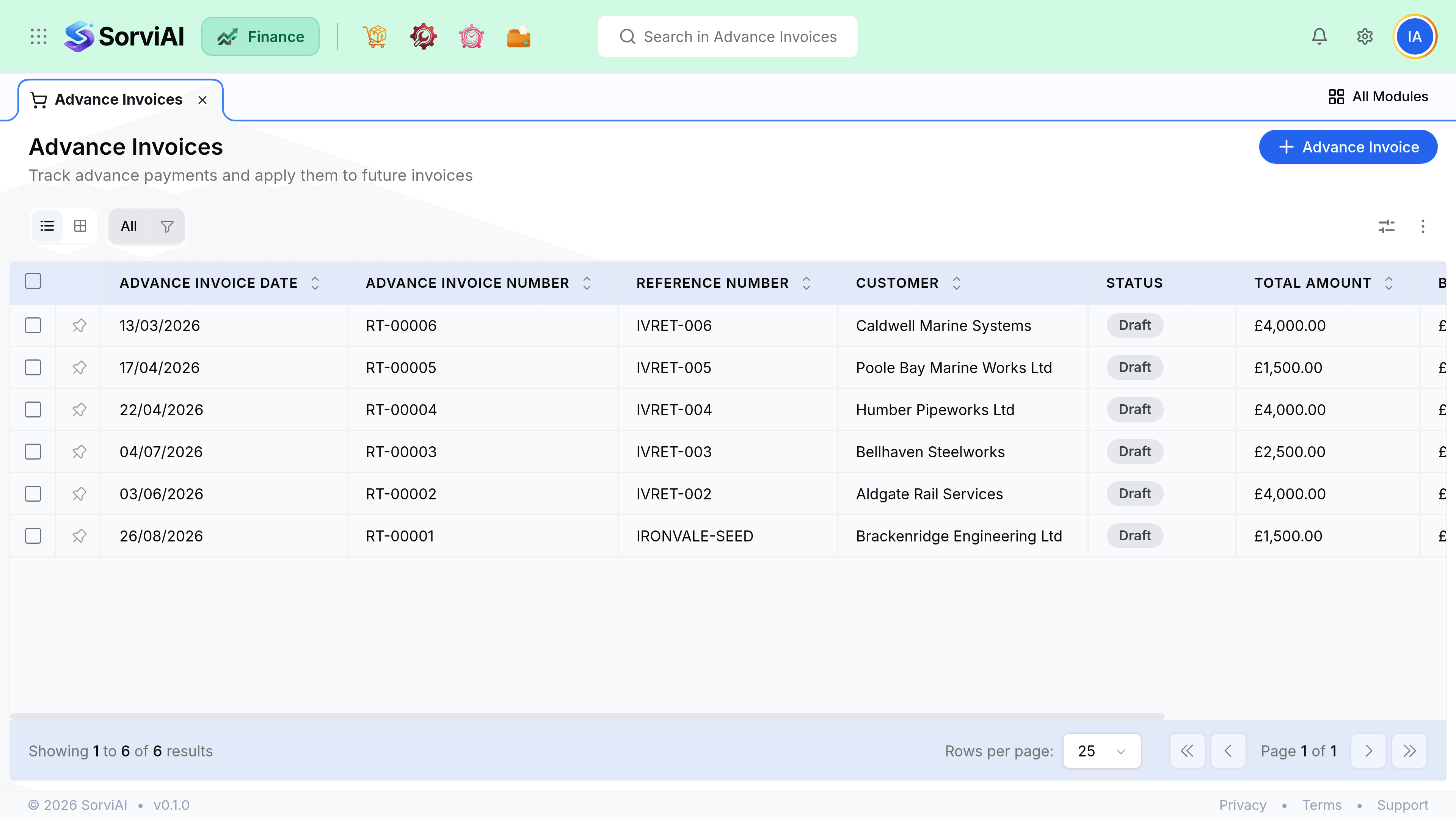
Why advances are different
Money taken in advance is not revenue. You owe the customer either goods or a refund, so it sits as a liability until you earn it. That is the whole reason this document exists separately from an ordinary invoice, which recognises revenue immediately.
- Advance invoiceYou ask for the deposit
- PaymentMoney arrives, held as a balance
- Real invoiceWork delivered and billed
- Apply advanceBalance drawn down
What the balance means
| State | Meaning | On the balance sheet |
|---|---|---|
| Paid, unapplied | You hold their money and owe them delivery | Liability |
| Partly applied | Some earned, some still owed | Liability, reduced |
| Fully applied | All earned as revenue | Cleared |
| Refunded | Money returned before it was earned | Cleared |
The customer record shows the advance balance still held. That figure is a liability, so it should be watched at period end as carefully as any receivable.
Advance against credit note
Both sit on a customer as money in your favour, and they are not interchangeable. An advance is money they paid you before you earned it. A credit note is value you have given back after overcharging. They post to different accounts and mean opposite things about who was wrong.