
Raise an Advance Invoice
An advance invoice looks like an ordinary invoice and posts somewhere completely different.
Raising one is three decisions: who, how much, and what to call it so the customer knows what they are paying for.
Raise it
Open the form
Go to SalesAdvance InvoicesNew.
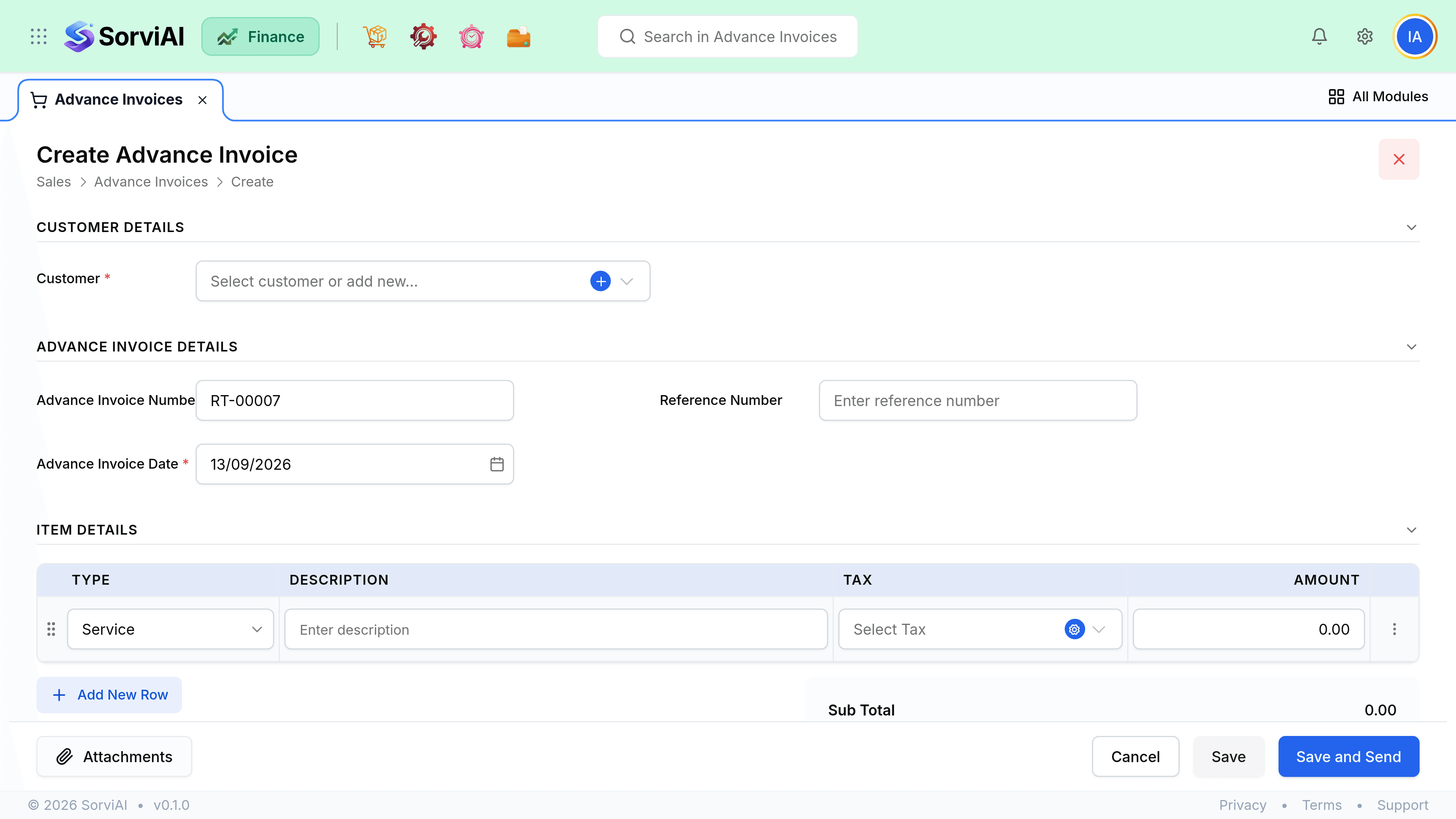
Pick the customer
The advance is held in their currency, and can only ever be applied to invoices in that currency.
Enter the amount
Advance lines describe what the money is for rather than itemising deliverables. A single line saying "50% deposit against order SO-1042" is better than a copy of the order.
Check the tax treatment
Whether tax is due on an advance depends on your jurisdiction. The treatment set here is what your tax return will use.
Send it
It behaves like an invoice from the customer's side: a PDF, a portal link and a due date.
Collecting the money
Payment against an advance invoice is recorded exactly like any customer payment. The difference is where it lands: instead of clearing a receivable, it creates an available balance on the customer, sitting as a liability until you earn it.
- The advance is only usable once it has actually been paid. An unpaid advance invoice holds no balance.
- A partial payment creates a partial balance, which can still be applied.
- The balance appears on the customer overview as advance held, separately from unapplied credit.
Common shapes
- Depositpercentage up front
- A share of an agreed order, taken before work starts and applied to the final invoice.
- Retainertopped up
- A standing balance drawn down by invoices as work is delivered, topped up when it runs low.
- Prepaymentpaid in full
- The whole amount taken before delivery. The eventual invoice is fully covered by the advance.