
Introduction - Purchase Receives
A purchase receive records what physically arrived against a purchase order.
This is the moment stock increases, so it is the document your warehouse owns and your accountant depends on. Receiving accurately is what keeps stock on hand meaning something.
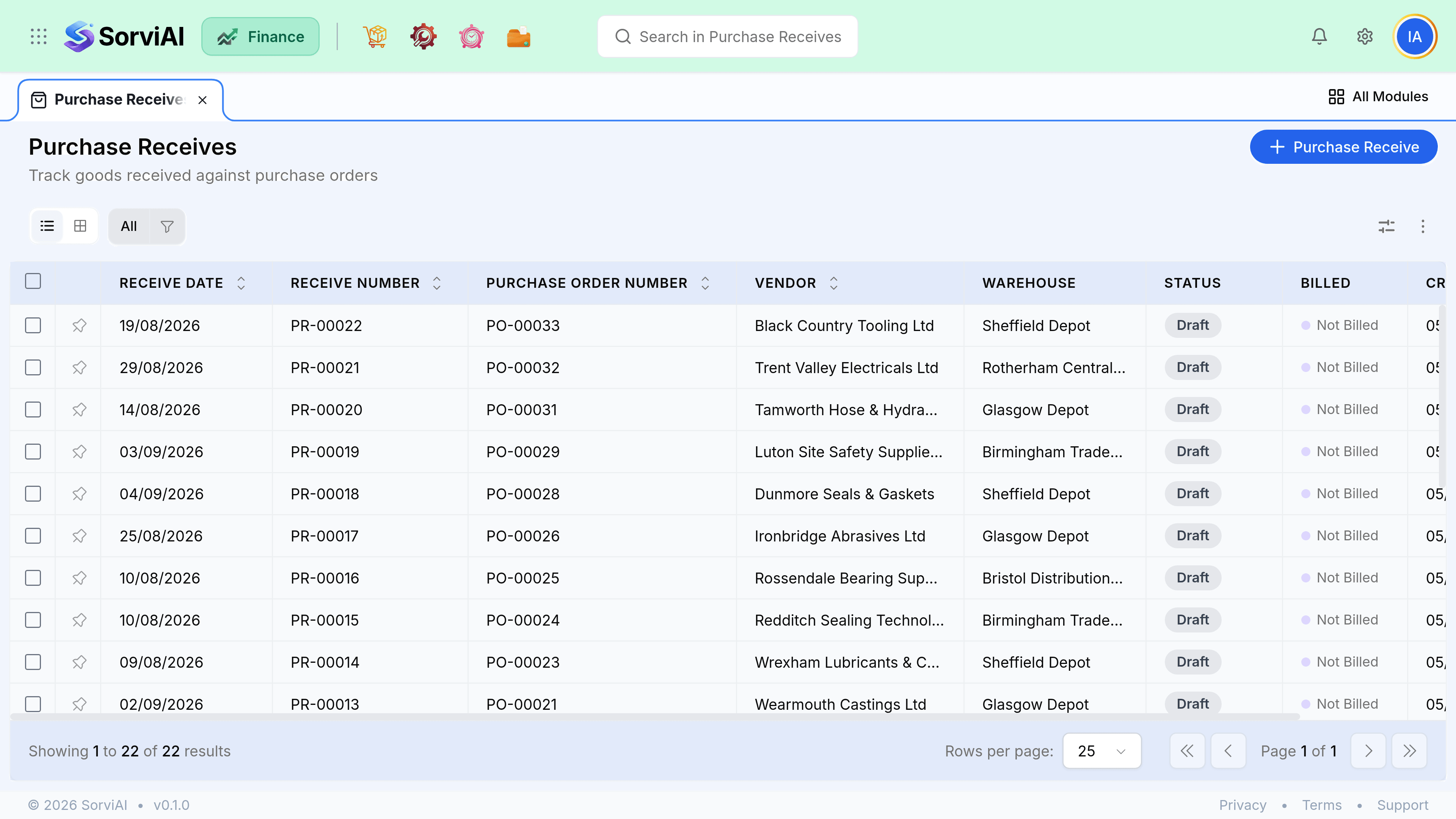
What receiving changes
| What | Effect |
|---|---|
| Stock on hand | Increases at the receiving location |
| Stock valuation | Increases at the purchase order cost |
| Purchase order | Outstanding quantity reduces |
| Payables | Unchanged. Only a bill creates a liability |
| Profit and loss | Unchanged for stocked items. Cost hits when you sell them |
Receiving against an order
Receiving always happens against a purchase order, so quantities can be compared with what was agreed. Goods that turn up with no order still need one: raise it retrospectively, which takes a minute and keeps the three-way match usable.
- Order issuedWhat you agreed to buy
- Goods arriveCounted on the dock
- Receive recordedStock increases
- Bill matchedLiability created
Do you need them at all
If you buy only services and non-stocked items, receives add nothing and you can bill straight from the order. The moment you hold stock, they stop being optional, because without them your stock on hand is whatever somebody last guessed.