
Introduction - Shipments
A shipment is the moment goods leave.
It is the only sales-side document that reduces stock on hand, which makes it the one fulfilment record that has to be right. Everything before it is preparation.
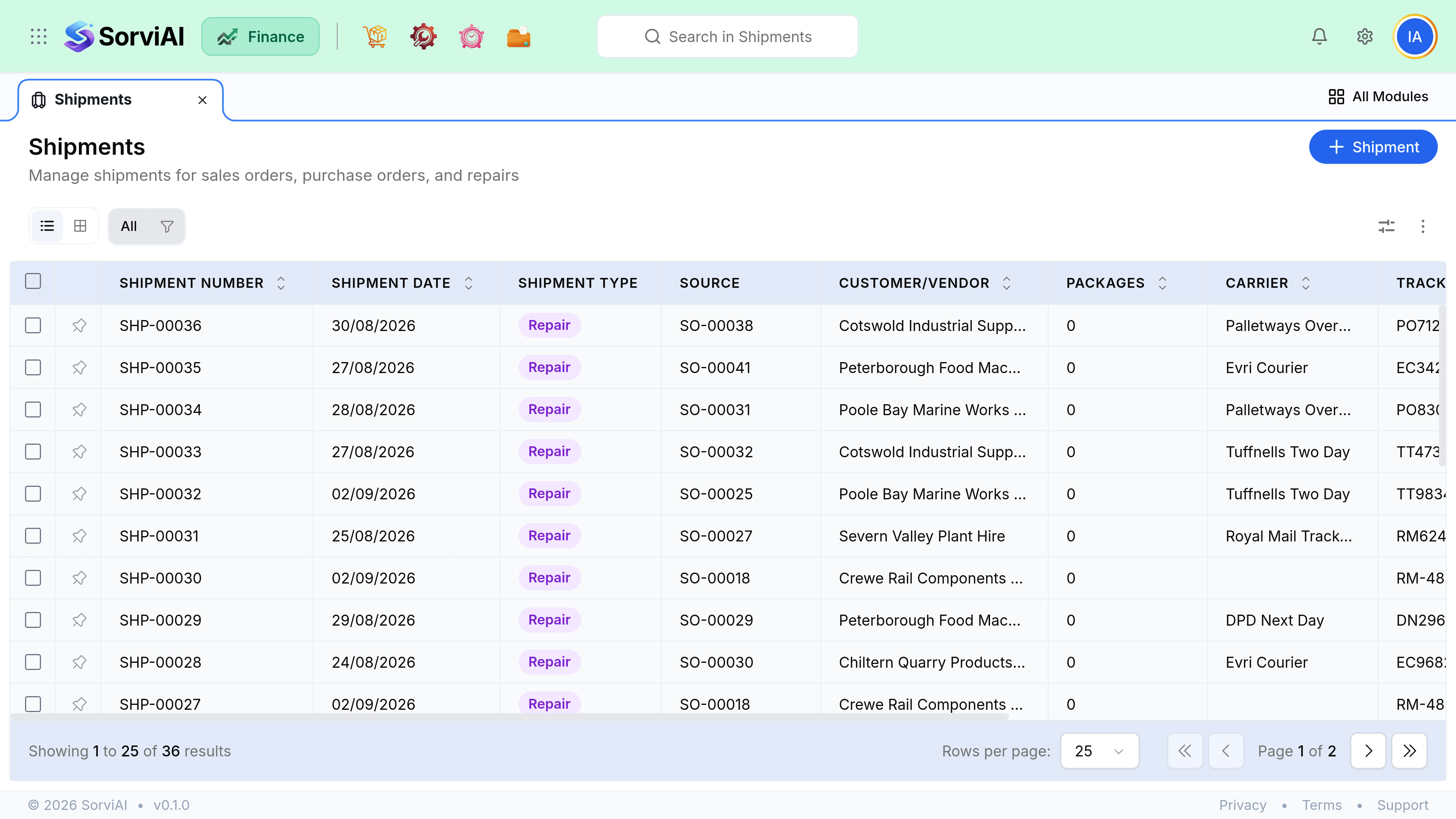
What a shipment changes
| What | Effect |
|---|---|
| Stock on hand | Reduces at the despatching location |
| Stock valuation | Reduces at cost, per the item's valuation method |
| Cost of goods sold | Recognised at this point |
| Sales order | Lines marked shipped, remainder stays open |
| Revenue | Unchanged. Only an invoice recognises revenue |
Shipping and invoicing
At month end, the list worth running is shipped and not invoiced. Every line on it is a cost you have recognised against revenue you have not, which makes your margin for the month look worse than it was.
Where shipments come from
- From packagessplit deliveries
- One shipment can carry several packages, which is what a single courier collection looks like.
- From a sales ordersimple despatch
- Straight from the order, skipping picklists and packages entirely. Perfectly valid.
- From a picklistwarehouse route
- When you pick but do not pack, this is the shortest path from shelf to van.