
Introduction - Expenses
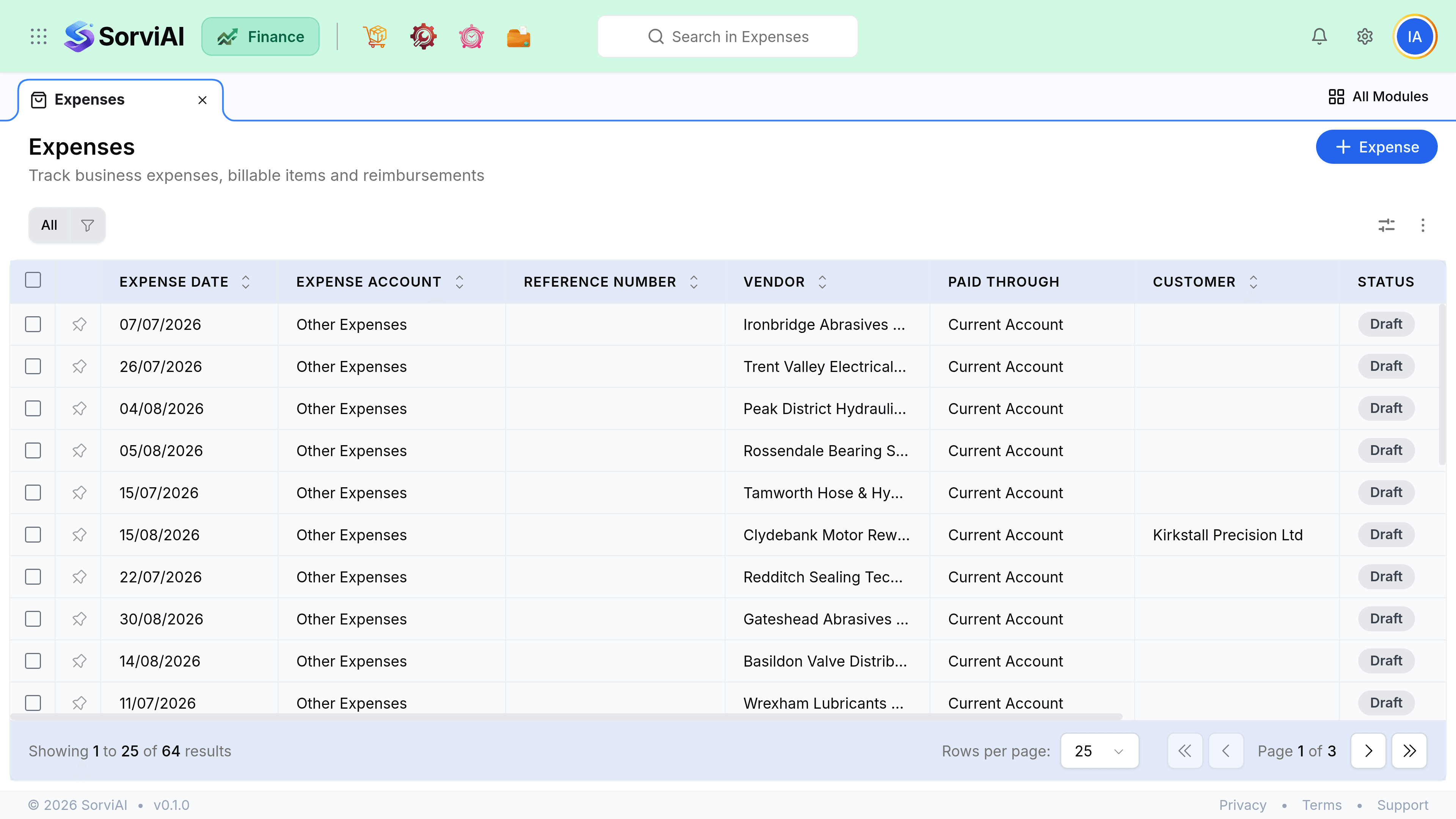
An expense is money already spent, recorded after the fact.
There is no order and no approval chain: you paid for something, and the books need to know. Use it for card spend, cash, mileage and anything else where a formal vendor bill never existed.
Expense or bill
The distinction is about timing, not size. A bill is something you owe and have not yet paid. An expense is something already paid for. Choosing wrongly does not lose the money, but it does misstate what you owe.
| You have | Record it as | Because |
|---|---|---|
| A vendor invoice due in 30 days | Bill | It is a liability until you pay it |
| A card receipt from this morning | Expense | The money has already gone |
| A subscription charged monthly to a card | Recurring expense | Already paid, and it repeats |
| A supplier statement to pay next month | Bill | Payment is still outstanding |
| Petty cash for stamps | Expense | No invoice, no liability |
What an expense posts
One line out of a payment account, one line into an expense account, plus tax if it is recoverable. That is the whole entry, which is why expenses are the simplest document in Finance and the easiest to get slightly wrong.
- Money leavesCard, cash or bank
- Expense recordedCoded to an account
- Appears in P and LOn the account you chose
- Tax claimedIf recoverable