
Run a Revaluation
A revaluation restates every open foreign balance at a closing rate and posts the difference.
It is a period-end step, it takes a few minutes, and skipping it is why foreign balances look wrong on a balance sheet.
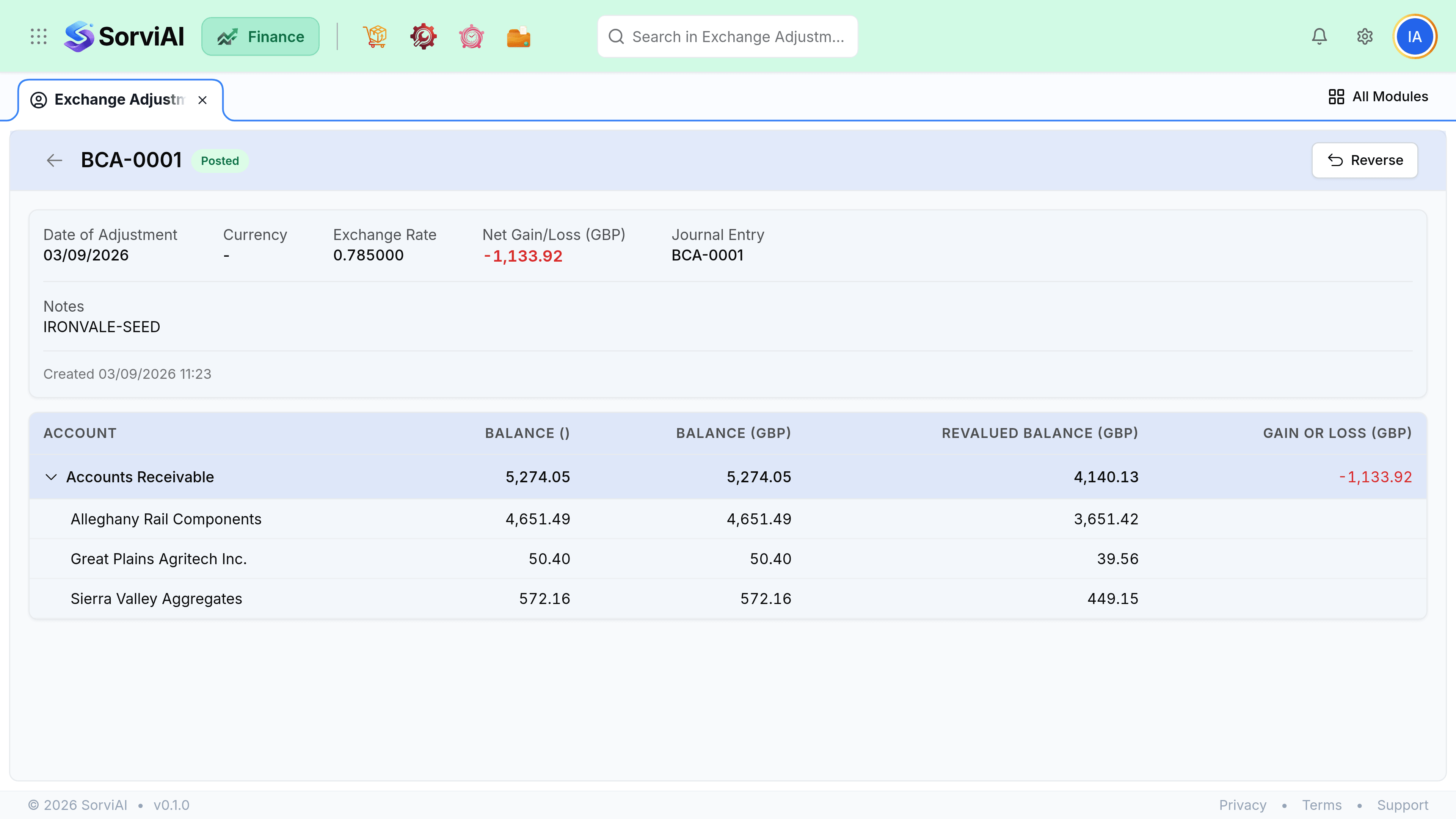
Run it
Choose the revaluation date
Normally your period end.
Enter the closing rates
One per foreign currency you hold balances in.
Review what will be revalued
Open foreign receivables, payables and bank balances.
Post the adjustment
The difference posts to your exchange gain or loss account.
Reverse it next period, if that is your policy
Many accountants reverse unrealised adjustments so the realised figure lands cleanly later.
What gets revalued
| Balance | Revalued | Why |
|---|---|---|
| Open foreign invoices | Yes | You are owed a foreign amount worth a different base amount today. |
| Open foreign bills | Yes | Same, in the other direction. |
| Foreign bank accounts | Yes | You hold the currency itself. |
| Settled invoices | No | The difference was realised at payment. |
| Base currency balances | No | There is nothing to translate. |
| Stock | No | Held at cost in base currency. |
To reverse or not
Both policies are defensible and the important thing is consistency. Reversing keeps each period's gain or loss attributable to that period alone; not reversing carries the cumulative position forward. Agree it with your accountant once and then never think about it again.