
Introduction - Customer Payments
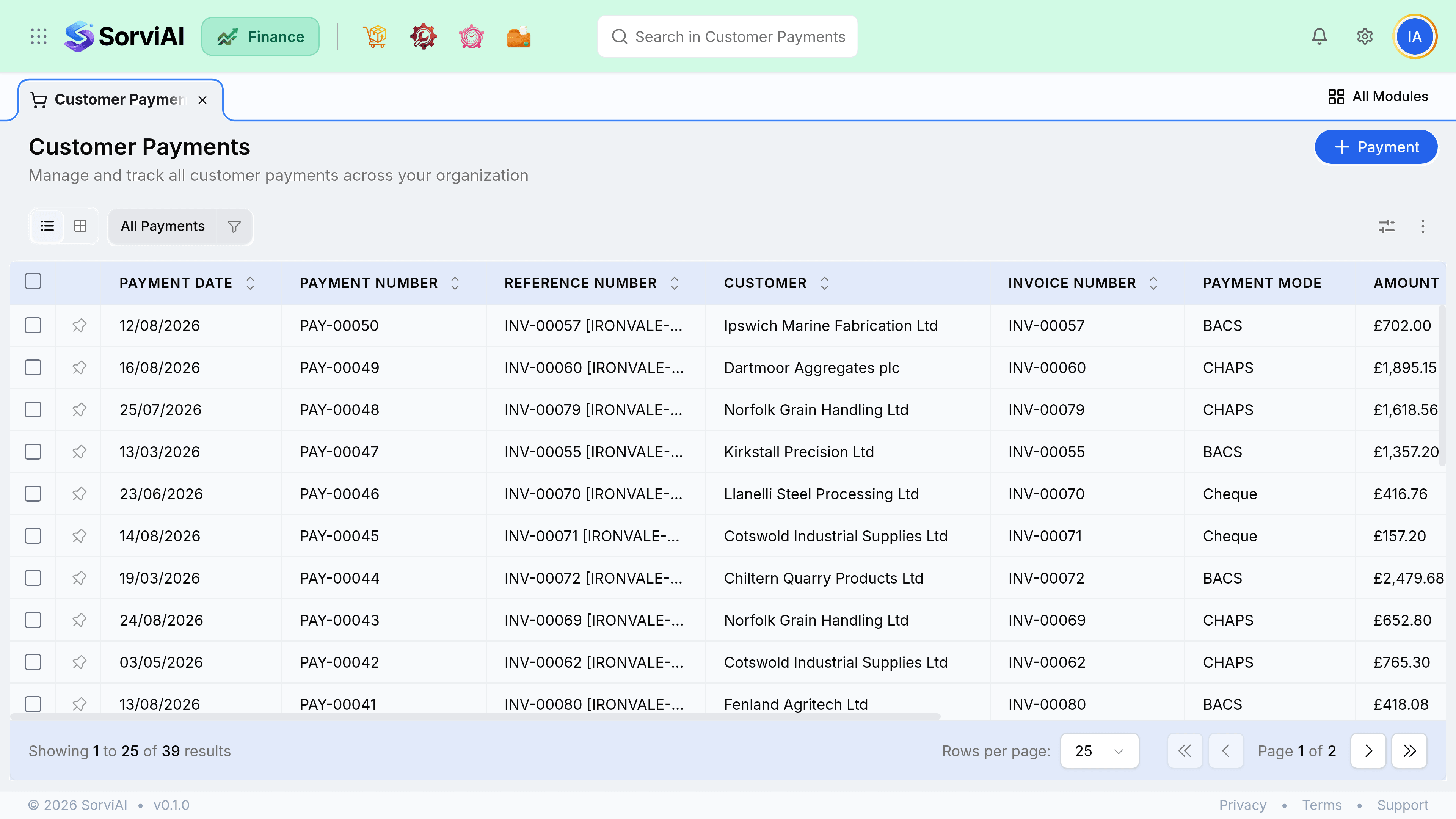
Every payment a customer makes is recorded here, whether it settles one invoice, several, or none at all.
A payment and an allocation are two separate things, and understanding the difference makes almost every awkward receipts question straightforward.
Receiving money is not the same as settling an invoice
A payment records that money arrived. An allocation decides which invoices it settles. Usually both happen in one action, but they come apart the moment a customer pays a round number that does not match any single invoice.
- Paymentthe money
- The amount, the date and how it was received. This is what hits your bank balance.
- Allocationthe matching
- How that amount is split across open invoices. Editable after the fact without touching the payment itself.
- Unapplied amountthe remainder
- Money received that has not been matched to anything yet. It sits as credit on the customer.
Money in your favour, three ways
A customer can have three different kinds of balance sitting with you. They look similar on the overview and mean different things, and only one of them is a payment.
| What it is | Where it came from | On your books |
|---|---|---|
| Unapplied payment | They sent money not matched to an invoice. | Reduces receivables when applied. |
| Credit note | You reversed value on an invoice. | Reduces revenue when raised. |
| Advance held | They paid before you delivered. | A liability until applied. |
All three can settle an invoice. Which one you should use is decided by what actually happened, not by which is nearest to hand.
Where payments come from
- From an invoice, which fills the allocation in for you. The common case.
- From the module, when one payment covers several invoices or none.
- From the portal, if customers can pay online. Recorded and allocated automatically.
- Imported, from a bank statement, then allocated by hand.