
Introduction - Vendor Payments
A vendor payment records what you paid a supplier and which of their bills it settles.
It is the mirror of a payment received and the end of the purchase chain. Like its counterpart it touches no stock at all: the goods were counted in at the receive, and paying for them is a separate matter settled later.
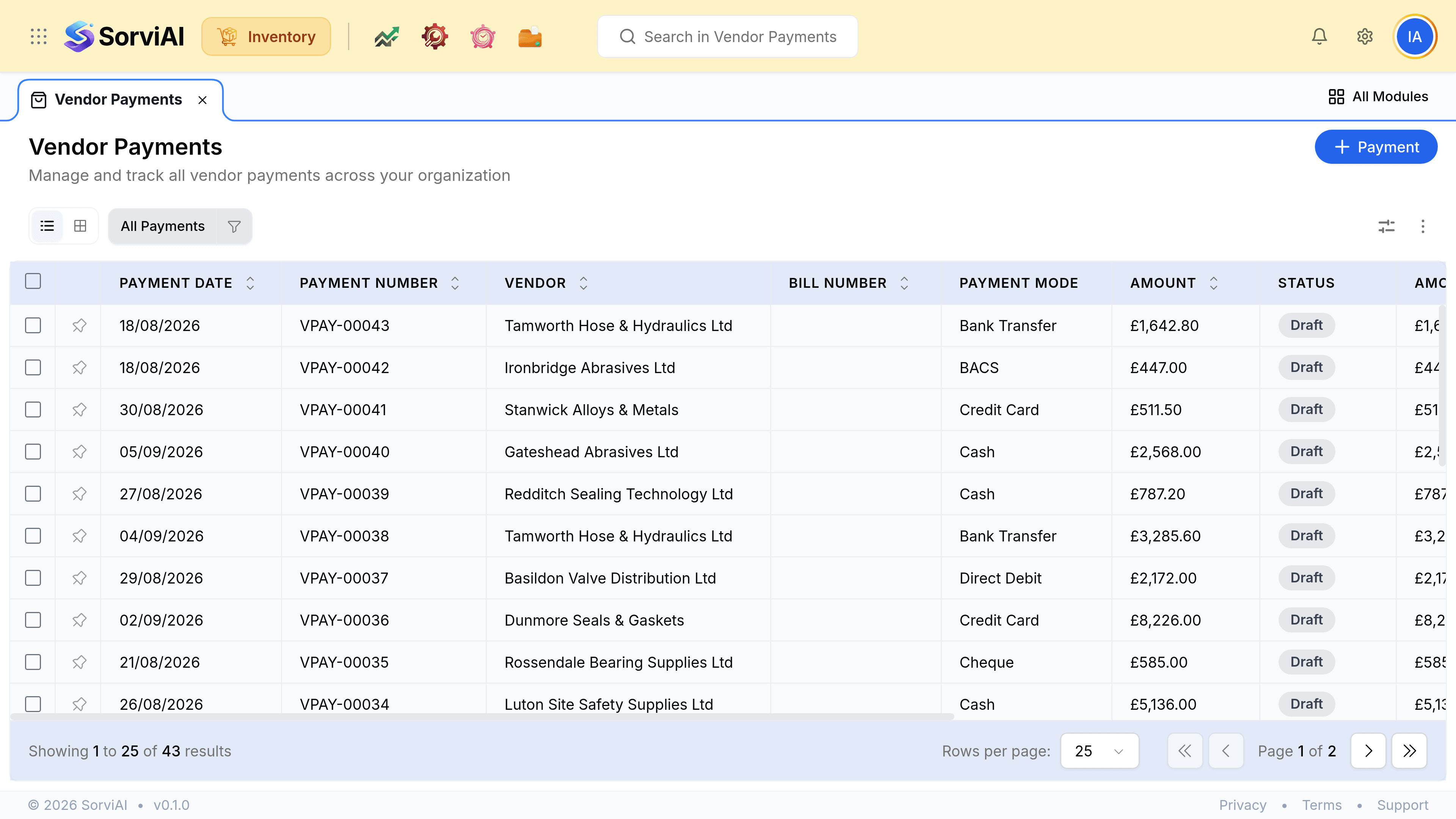
The payment and what it settles
- The paymentwhat left
- An amount, a date, a mode and the account it came out of. This is a fact about your bank.
- The allocationwhat it clears
- Which bills the money is applied against. One payment can settle several, and it can settle part of one.
Paying a round sum against a vendor's account without naming the bills is allowed and is sometimes what actually happened. It sits as an unallocated payment until somebody decides which bills it clears.
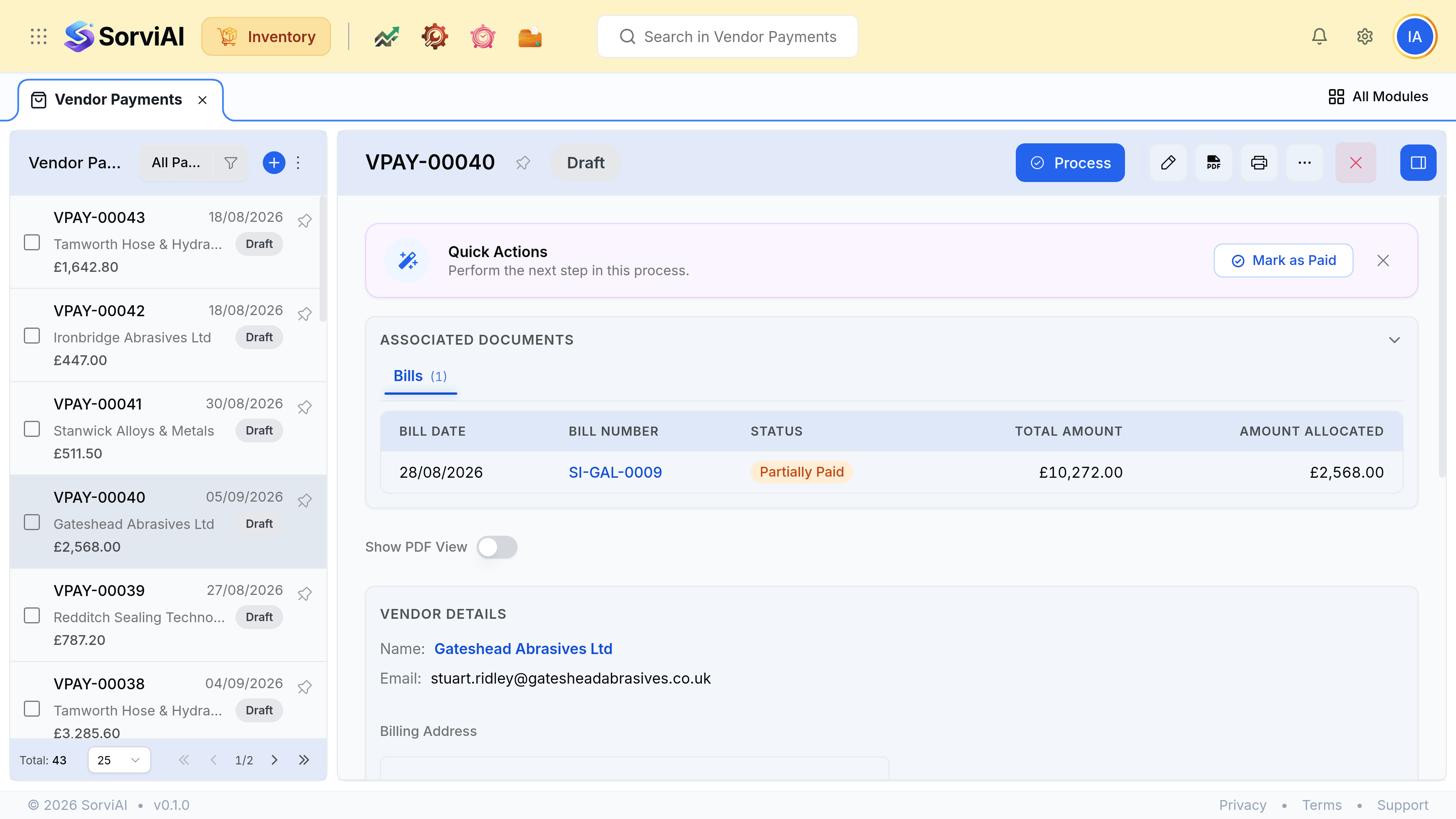
What to check before paying
The point of the purchase chain is that this is the moment the earlier steps pay off.
- Does the bill match the receive, or are you about to pay for goods that never arrived?
- Is there a vendor credit outstanding that should reduce this payment?
- Are the vendor's payment terms being met, early or late?