
Templates
The PDF layout a document prints with and the email it travels in, chosen per document type, with one of each marked default.
Templates are what a customer actually receives. The PDF template is the document's layout; the email template is the covering message it arrives in. They are chosen per document type, so a packing slip and an invoice can look nothing alike.
Go to SettingsTemplates. Two tabs: PDF Templates and Email Templates. Both open on two rows of choices above the gallery: a category, then a document type within it.
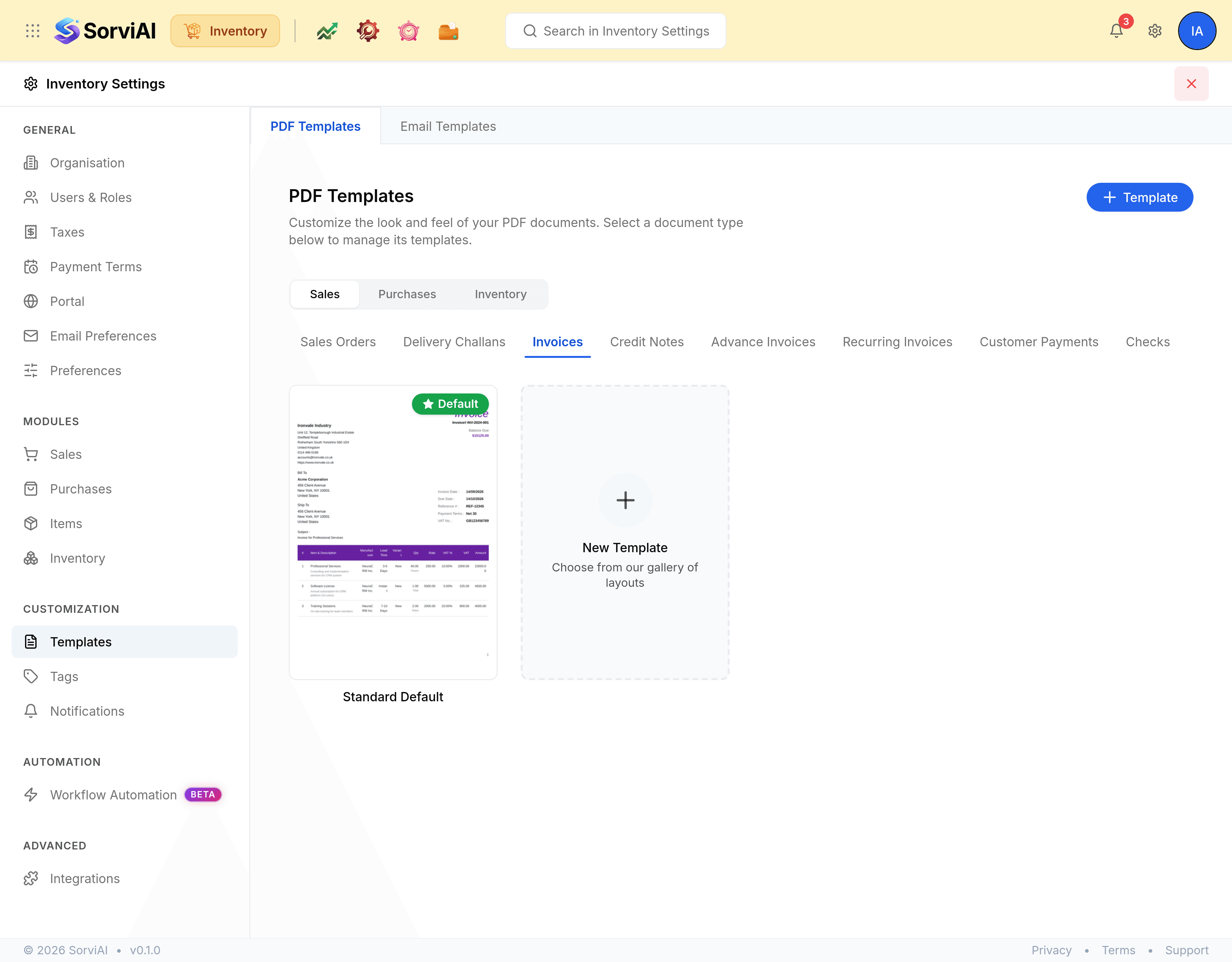
Choosing a document type first
Choose the category, then the document type within it, and the gallery below shows the templates that exist for it. Nothing here is workspace-wide in the sense of applying to everything: a change to the shipment gallery changes shipments and nothing else.
What you can do with a template
- Edit
- Opens the template in the editor, where its layout, colours and columns are set.
- Preview
- Renders the template so you can read it before committing it to a customer.
- Set as default
- Makes it the template new documents of that type use. The badge moves to it.
- New Template
- Starts another one for the same document type, which is how a second brand or a customer-specific layout is handled.
The seeded template that ships with the product cannot be deleted. Yours can, once it is not the default.