Create an Invoice
Raise it from the order, or from the part of the order that has actually shipped.
An invoice can be raised at any point, and the useful discipline is billing what has left rather than what was agreed.
Raise one
Open the sales order and create an invoice from it
The customer, the lines and the rates carry across, and the two documents stay linked.
Trim to what has shipped
If half the order is on backorder, invoicing half is what matches the delivery note the customer is holding.
Check the payment terms and the due date
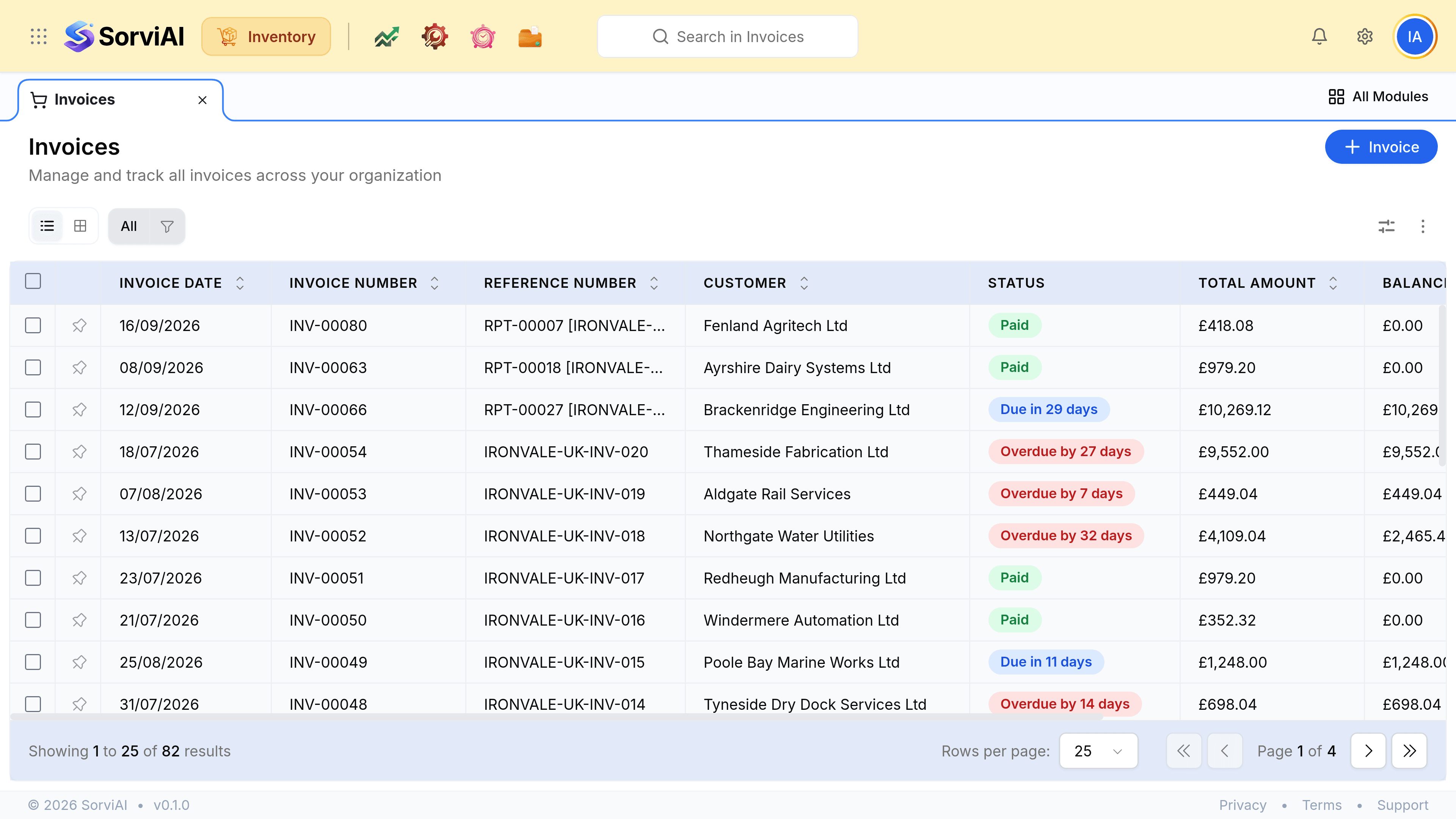
Both come from the customer record and both are editable here. The due date is what drives the Overdue by N days label afterwards.
Quote their purchase order number
It carries across from the sales order. Trade accounts routinely hold payment on an invoice that does not show it.
Save, then send it
A draft invoice reaches nobody and appears in no balance.
Invoicing before or after the goods
| Order | When it fits |
|---|---|
| Ship, then invoice | The normal case. The invoice matches the delivery note |
| Invoice, then ship | Payment up front, or a customer whose process needs the paperwork first |
| Invoice part, ship the rest later | A long order delivered in stages |