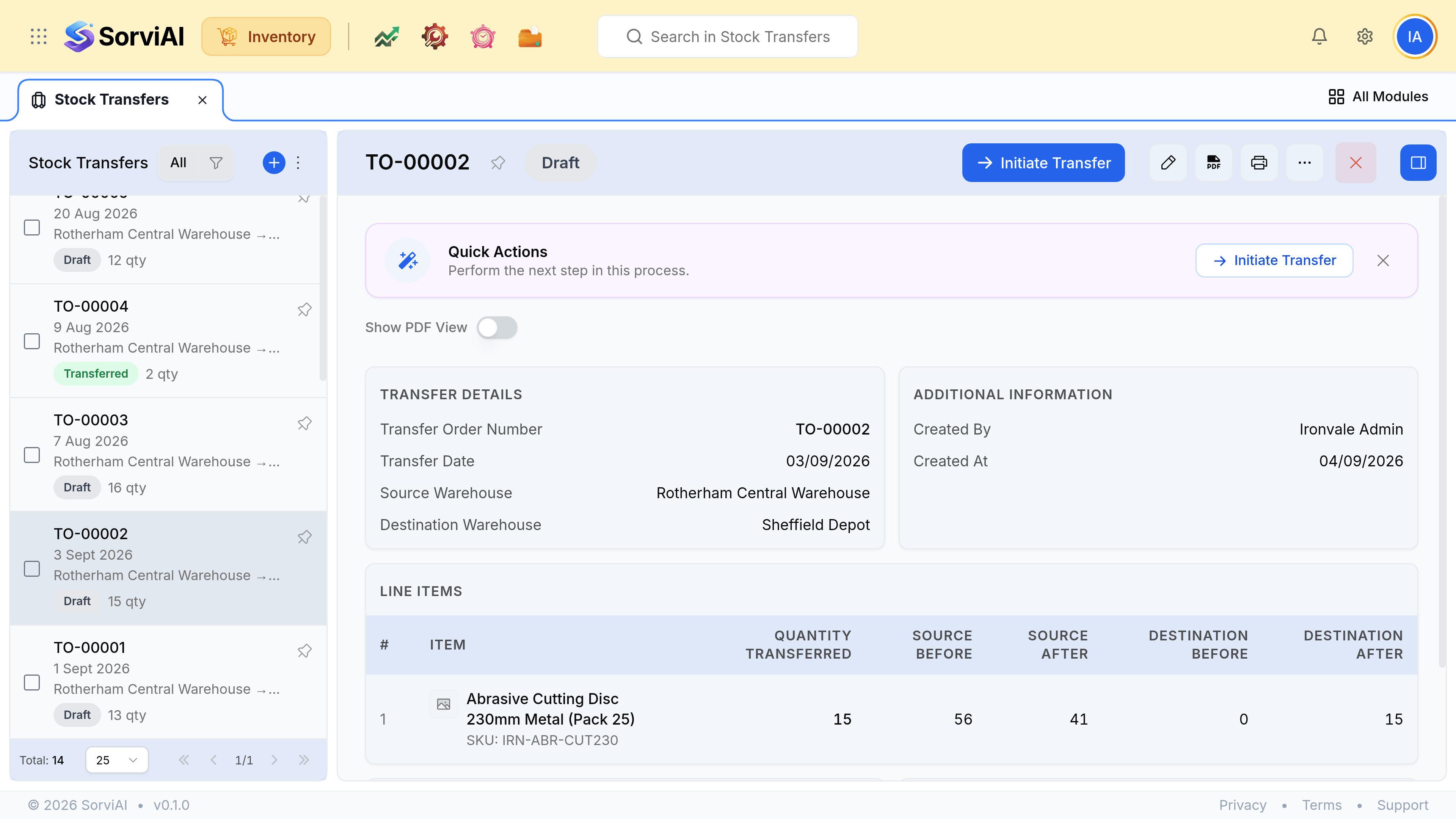
Introduction - Stock Transfers
A transfer moves stock between your own depots. Nothing is sold, nothing is bought, and your total does not change.
It is the one stock document with no customer and no vendor on the other side of it, which is what makes it easy to get wrong: there is nobody external to notice a mistake.
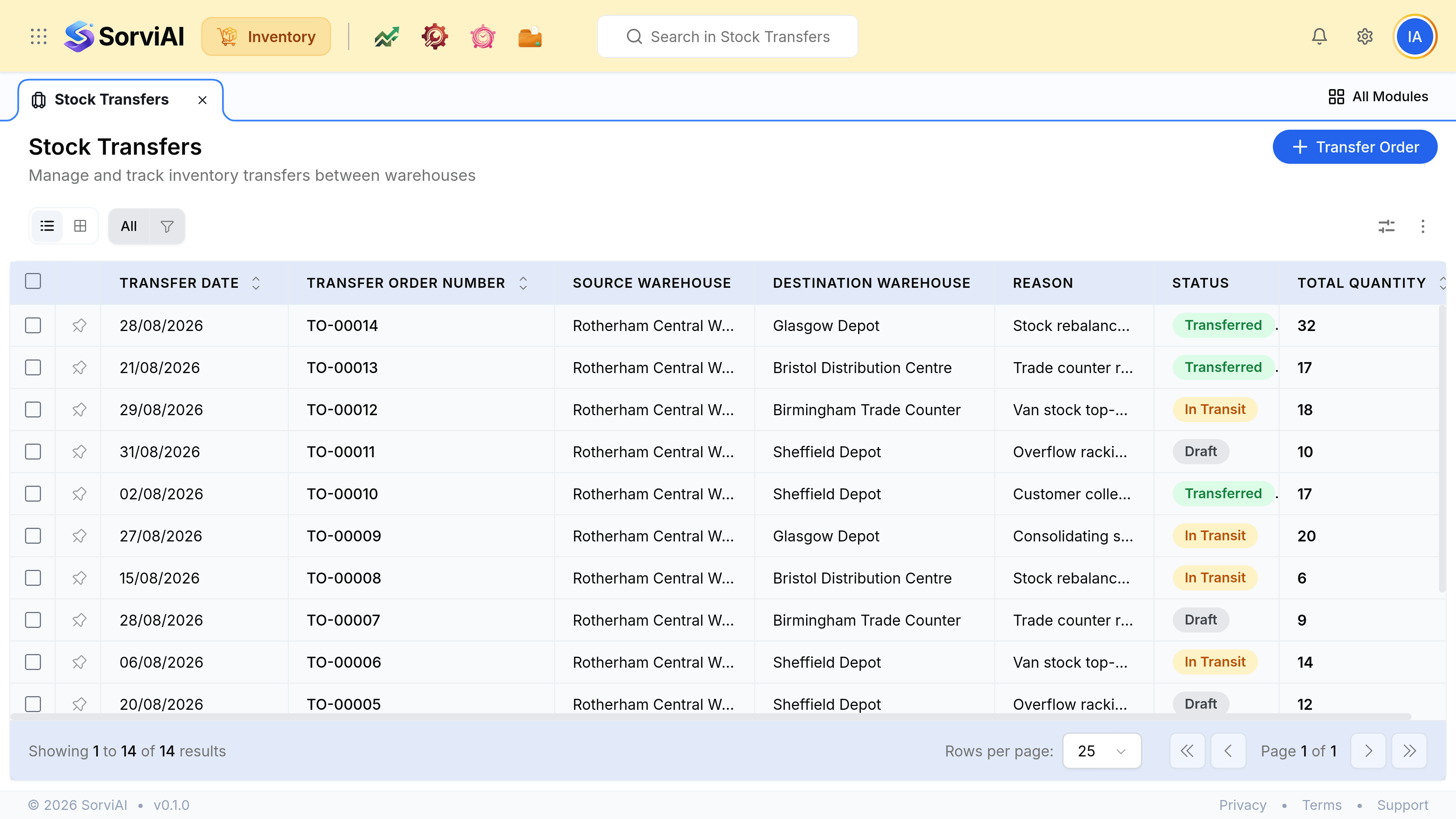
What it does to your numbers
| Figure | Effect of a transfer |
|---|---|
| Total stock on hand | Unchanged |
| Stock at the source depot | Down by the quantity sent |
| Stock at the destination | Up by the quantity received |
| Stock value | Unchanged. Nothing was bought or sold |
| Revenue and cost of goods | Untouched |
Because the total does not move, a transfer never shows up in a profit figure. It shows up in availability, which is the number that decides whether you can promise a delivery.
Three states, and the one in the middle
- DraftNothing has moved
- In TransitLeft the source
- ReceivedLanded at the destination
Between the last two the stock is in transit: gone from where it was, not yet where it is going. That state is real and it is worth watching, because stock in transit is stock nobody can sell.