
Introduction - Stock Adjustments
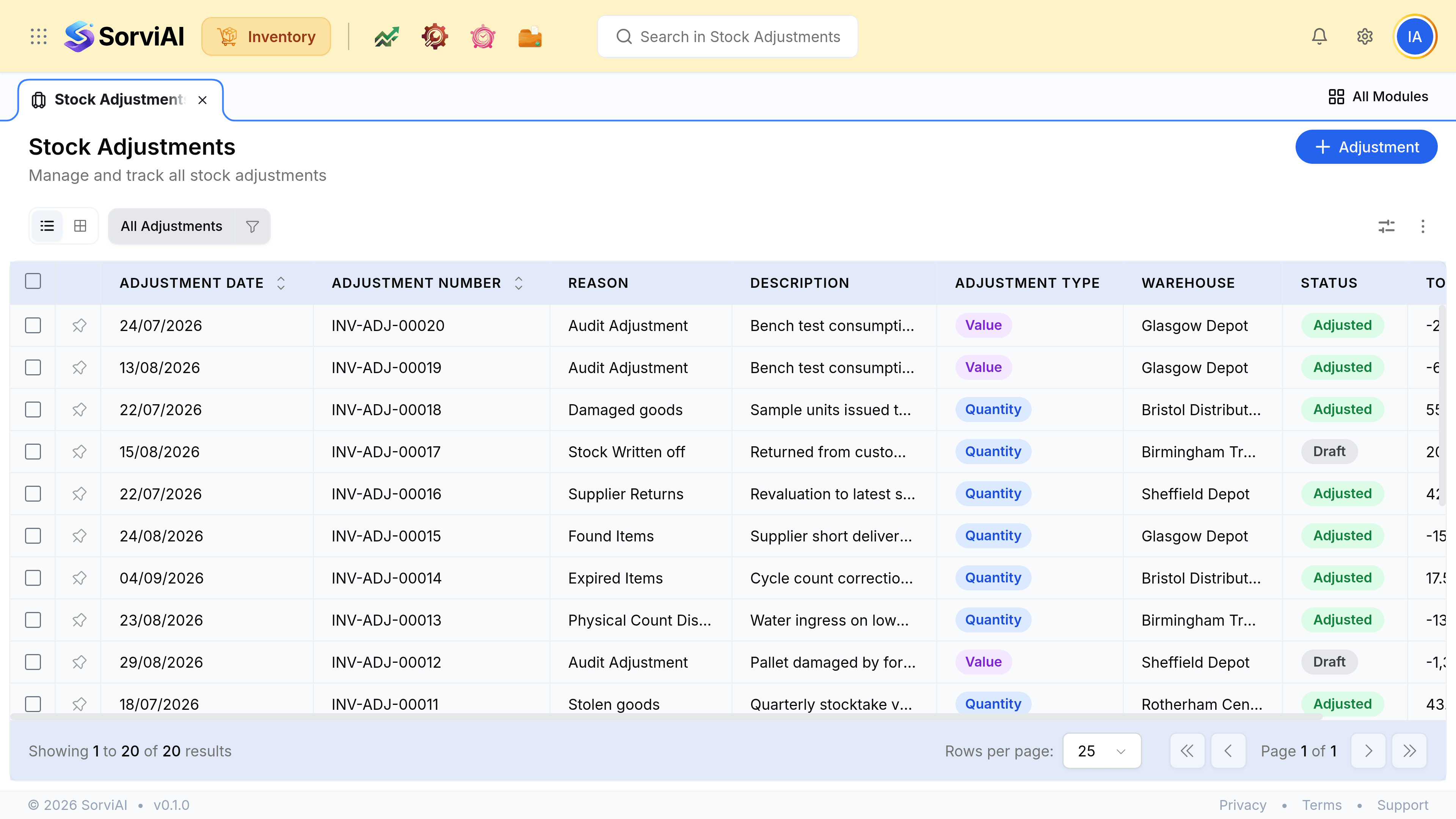
An adjustment changes quantity or value on hand with no sale and no purchase behind it.
It is the correction of last resort: the right tool for a stocktake difference, breakage or expiry, and the wrong tool for anything that has a proper document behind it.
Before you adjust, check nothing else fits
An adjustment has no counterparty, so it explains nothing about where the goods went. That is exactly why it is easy to reach for and worth resisting.
| What happened | What to raise |
|---|---|
| A stocktake found fewer units | Stock adjustment, Physical Count Discrepancy |
| Goods broke in the warehouse | Stock adjustment, Damaged goods |
| Stock passed its shelf life | Stock adjustment, Expired Items |
| Goods arrived from a vendor | Purchase receive, not an adjustment |
| Goods went out to a customer | Shipment, not an adjustment |
| Goods moved between depots | Stock transfer, not an adjustment |
| A customer sent goods back | Sales return, not an adjustment |
Quantity or value
The choice is made per adjustment, not per line, and the list shows it as the Type column.
- Quantitythe count changes
- You hold more or fewer units than recorded. Value moves with the quantity, at the item's current cost.
- Valuethe cost changes
- The count is right but what it is worth is not. Used for writing down obsolete or damaged stock that still physically exists.
Draft and adjusted
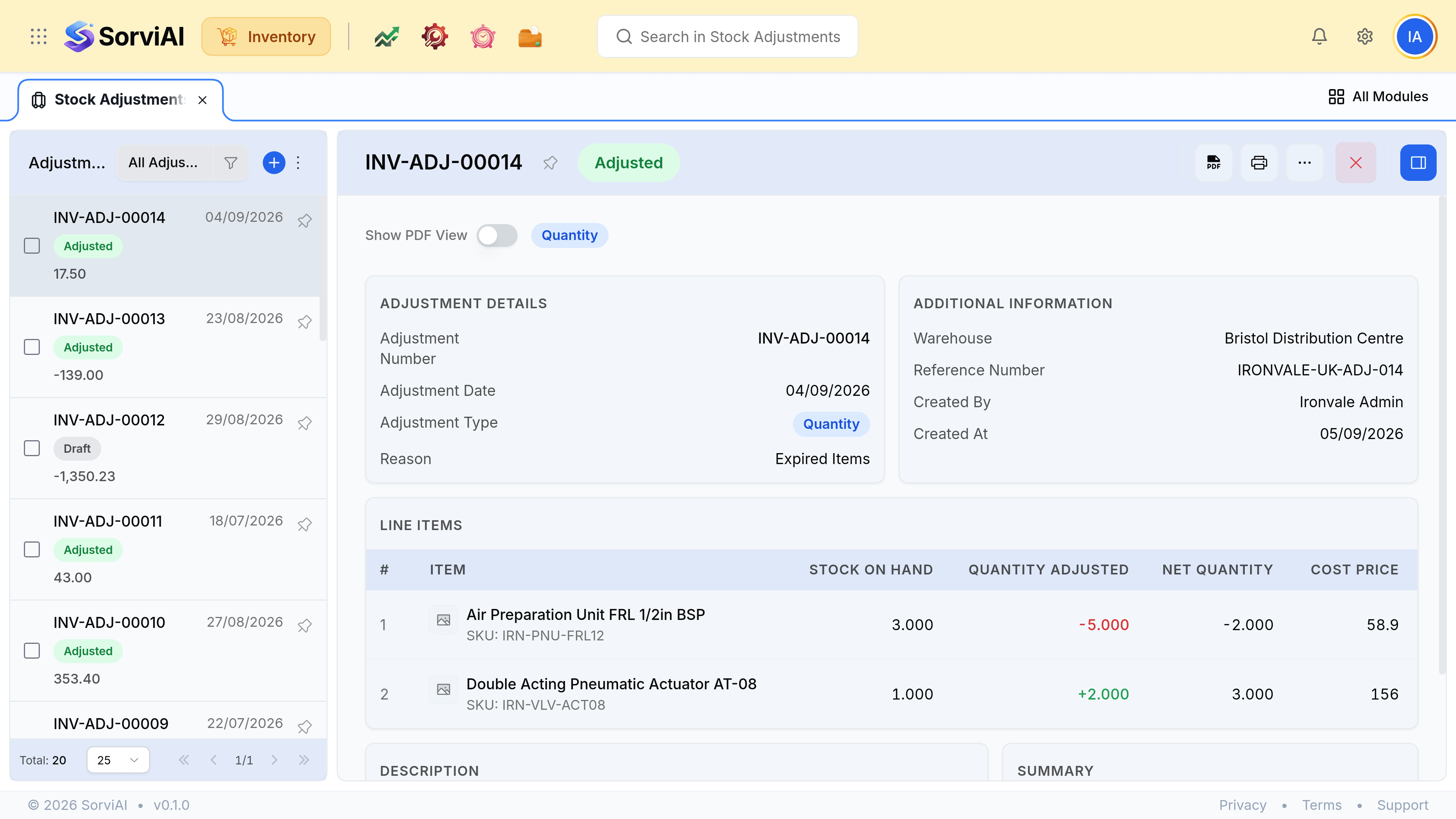
A draft adjustment has changed nothing: no count has moved and no value has posted. Only Adjust Inventory does that, and once it has, the document is a movement rather than an editable form.
What an adjustment costs you
A write-off is a real cost hitting a real account, and unlike a sale it earns nothing.
- An adjustment down posts the value to the account you choose on the form.
- An adjustment up posts value into your stock asset from that same account.
- Neither touches revenue. There is no sale.
- The reason code is what makes the monthly total explainable rather than embarrassing.