Introduction - Invoices
An invoice is what you billed for what you shipped, and keeping the two in step is the job.
Inventory cares about invoices for one reason: they are the half of the transaction that is easy to forget once the goods have gone. Stock left on the shipment, so the warehouse considers the job done, and nothing physical happens when the invoice is late.
Goods and money move on different documents
| Document | What it moves |
|---|---|
| Sales order | Nothing. It reserves |
| Shipment | The stock, off your count |
| Invoice | The money owed, onto the customer |
| Payment received | The money itself |
The two chains are deliberately separate, because they genuinely happen at different times: goods can go out before the paperwork, and an invoice can be raised for goods that ship next week.
Reading the status
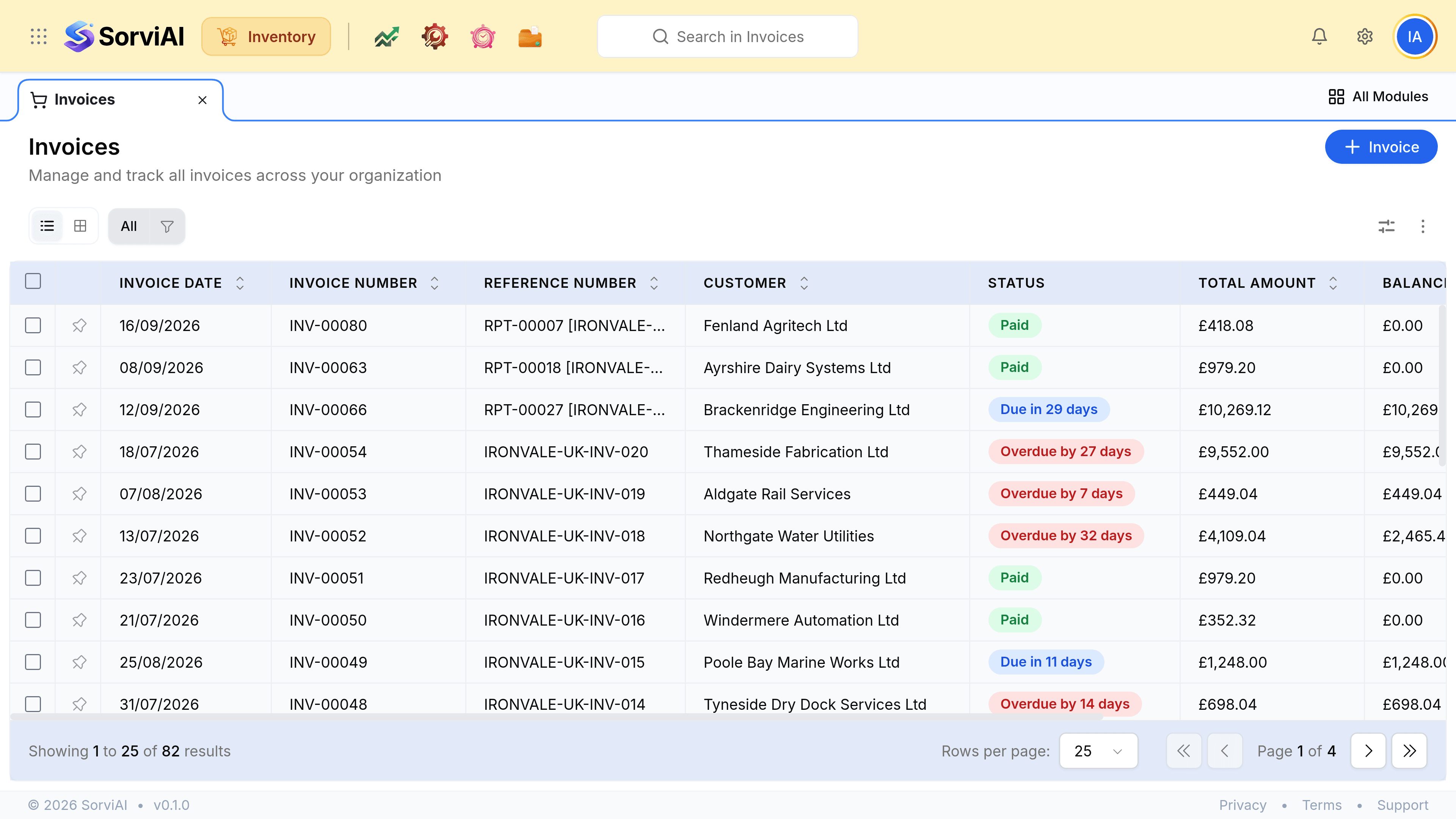
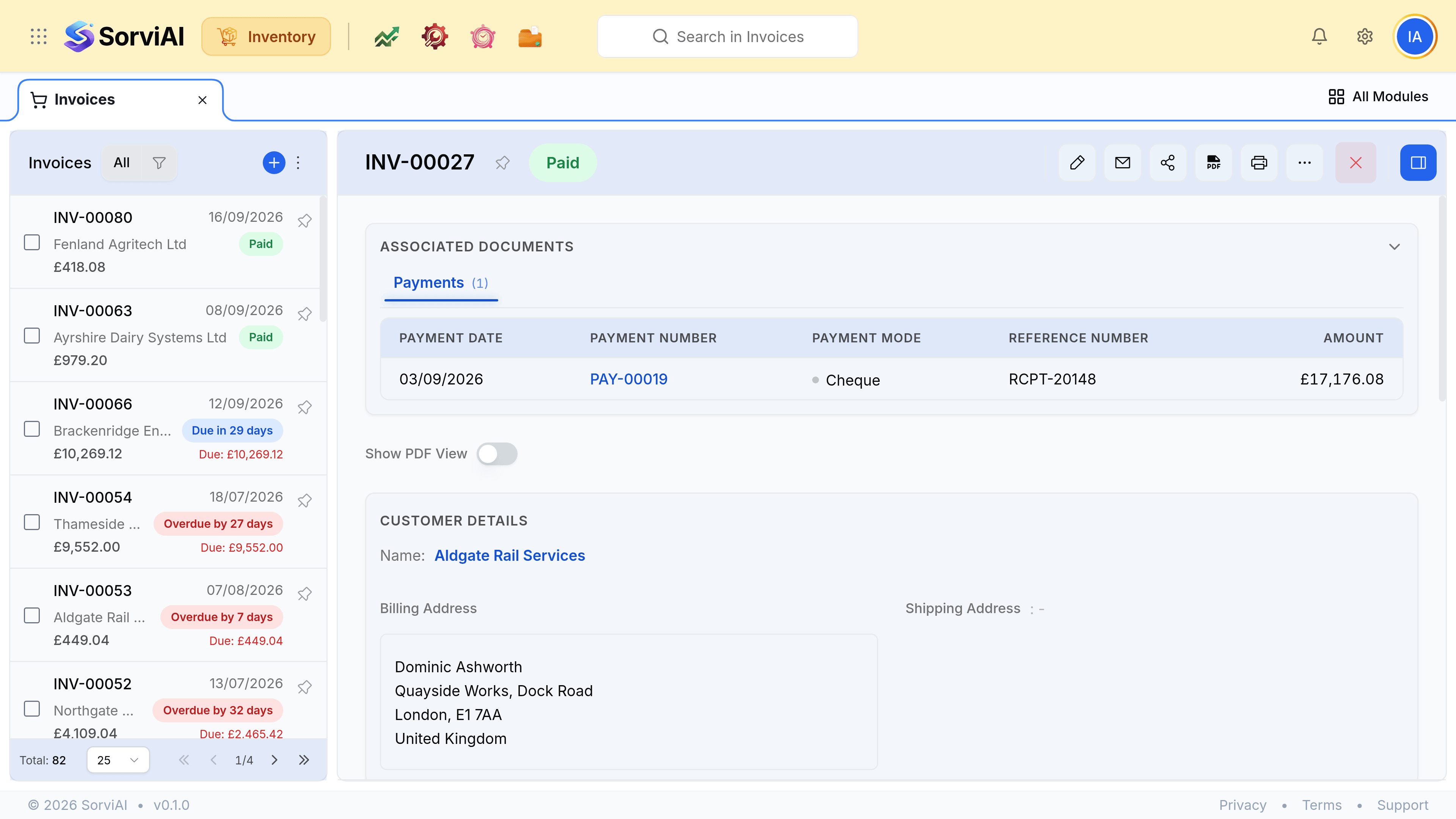
- Due in N daysnot yet owed
- Raised, sent and inside its payment terms. Nothing to do.
- Overdue by N dayspast its terms
- The number is what makes a chasing list sort itself.
- Partially Paidsomething arrived
- A payment has been allocated but does not cover the balance. Often follows a short delivery.
- Paidsettled
- Balance due is zero and the invoice is out of the way.
What an invoice does not do
- It does not reduce stock. The shipment already did that.
- It does not release a reservation. Cancelling or shipping the order does.
- It does not change valuation. What the goods were worth was settled when they came in.