
Introduction - Shipments
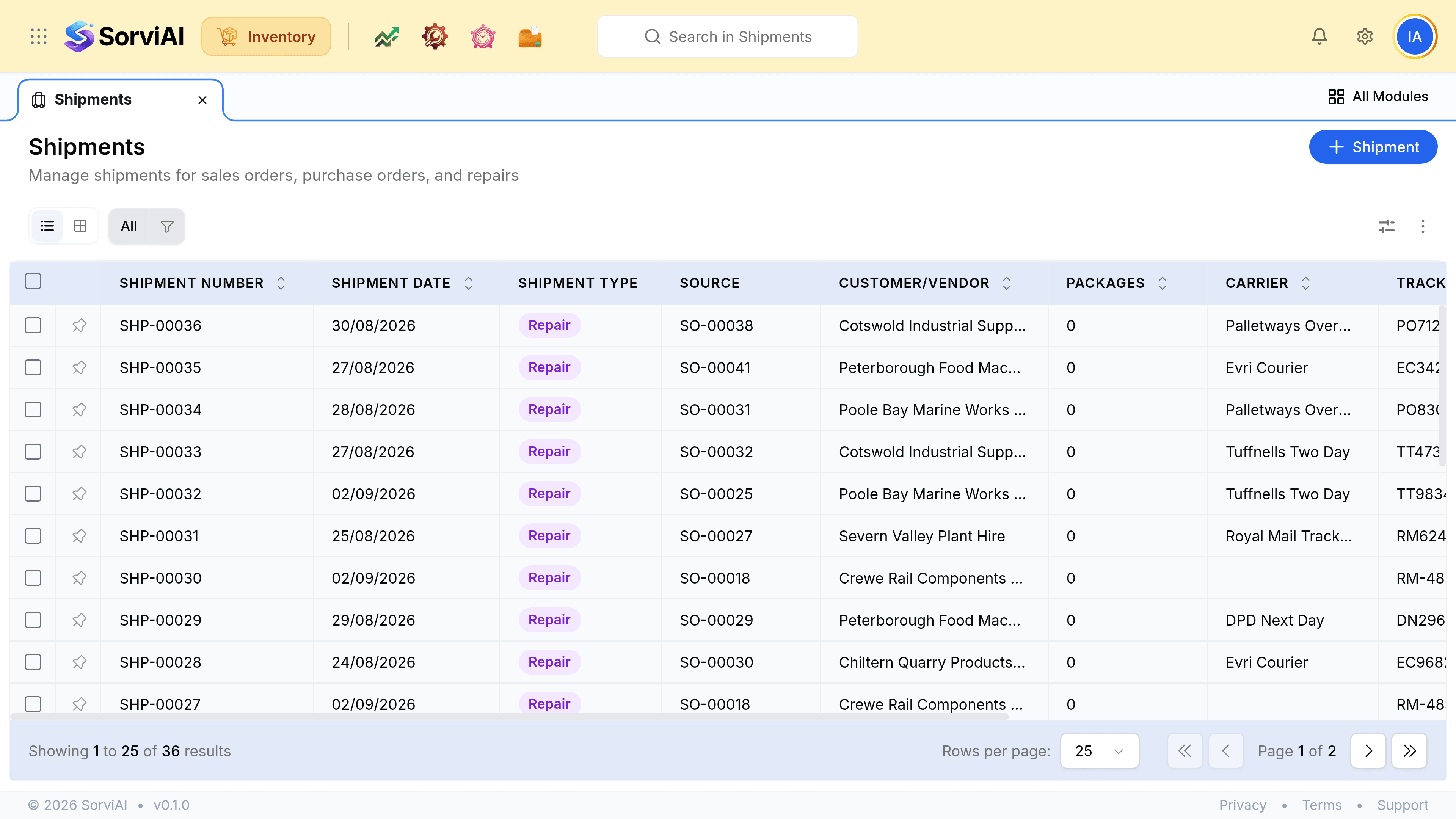
A shipment is the record of a package leaving, and it is the document that finally takes the stock off your count.
Everything before it is preparation. The sales order reserved the units, the picklist pulled them and the package boxed them; the shipment is the point at which you no longer hold them.
The moment stock moves
Before the shipment
- YesCounted in stock on hand
- YesReserved against the order
- NoAvailable to promise elsewhere
- NoCost recognised
After the shipment
- NoCounted in stock on hand
- NoReserved against the order
- NoAvailable to promise elsewhere
- YesCost recognised
This is the most useful thing to know about the outbound chain. If your stock figure looks too high, the question is almost always which packages have not been shipped yet.
What a shipment carries
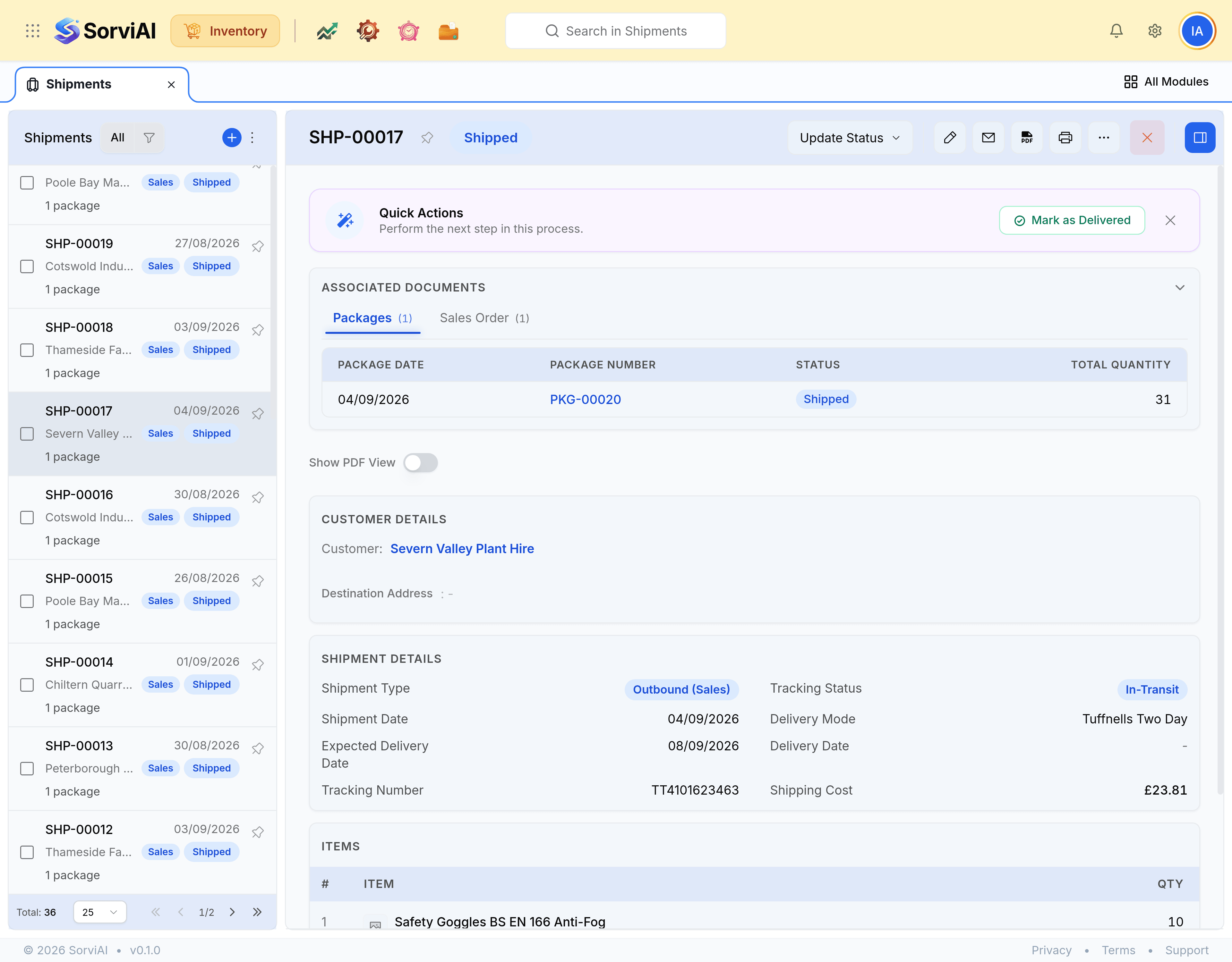
- The packagewhat is inside
- A shipment always ships a package, so the contents are already recorded rather than retyped.
- The carrier and tracking numberwho has it
- What you give the customer when they ask where it is. The carrier list is your own.
- The statuswhere it has got to
- Pending while it waits for collection, In Transit once it is with the carrier, and delivered when it lands.
- The costwhat carriage cost you
- Recorded per shipment, which is what makes carriage readable as a number rather than a monthly surprise.
Not only for sales
Like packages, shipments cover sales orders, purchase orders and repairs. The Type column says which, so goods going back to a vendor are shipped through the same document a customer order is.