
Introduction - Bills
A bill is what the vendor charged you, and Inventory's question about it is whether it matches what they delivered.
It is the last document in the inbound chain and the only one that does nothing to your stock. Everything it is useful for comes from comparing it against the two documents in front of it.
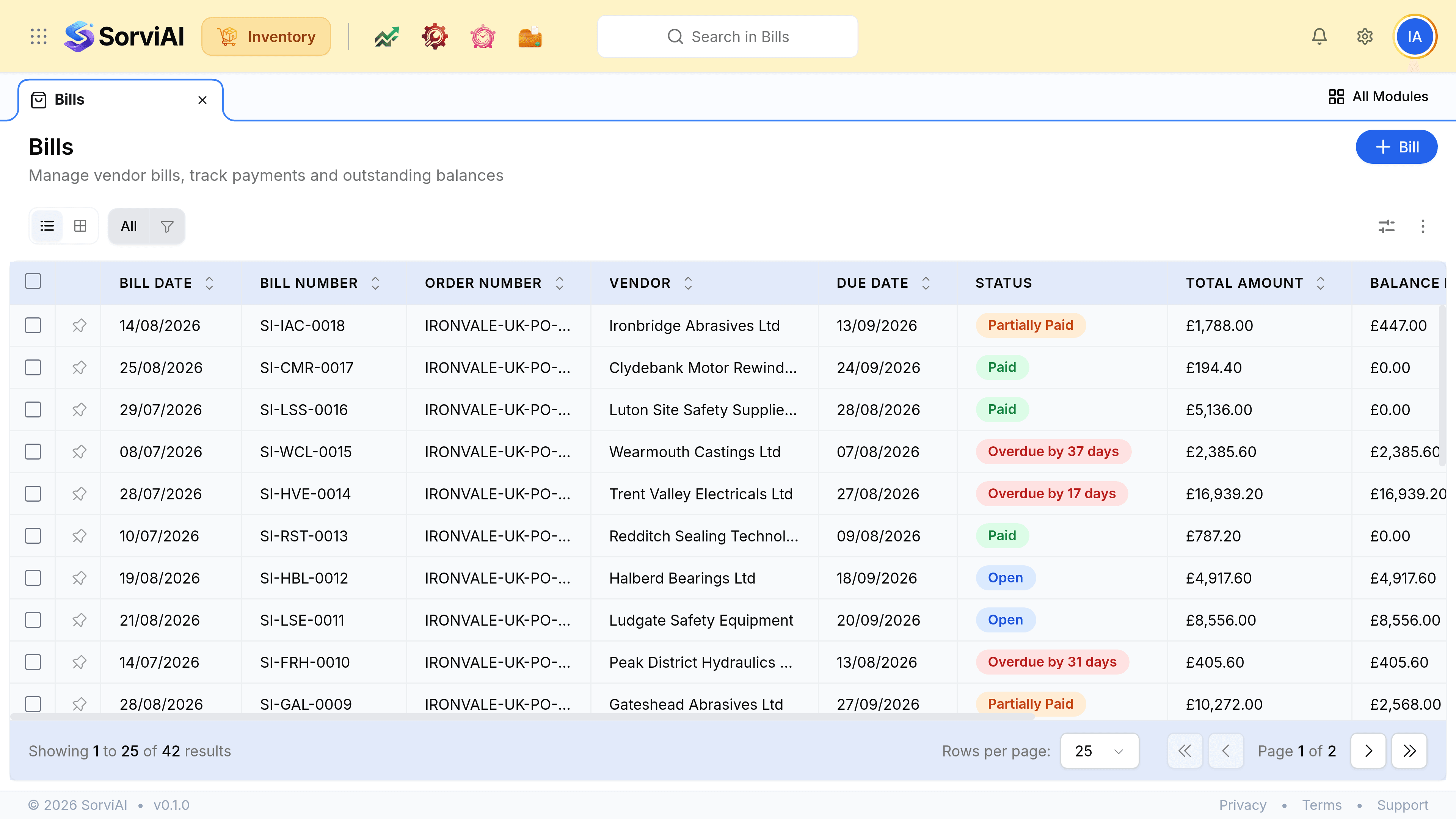
Three documents that should agree
| Document | What it says | Written by |
|---|---|---|
| Purchase order | What you asked for, and at what price | Whoever ordered |
| Purchase receive | What turned up | Somebody standing next to the pallet |
| Bill | What you are charged | The vendor |
When all three agree, there is nothing to do. When they do not, the receive is the one to trust: it is the only one of the three written by somebody who was looking at the goods.
A bill does not move stock
The receive already did. Raising a bill changes what you owe and nothing on any shelf, which is why a bill can arrive weeks after the goods without any count being wrong in the meantime.
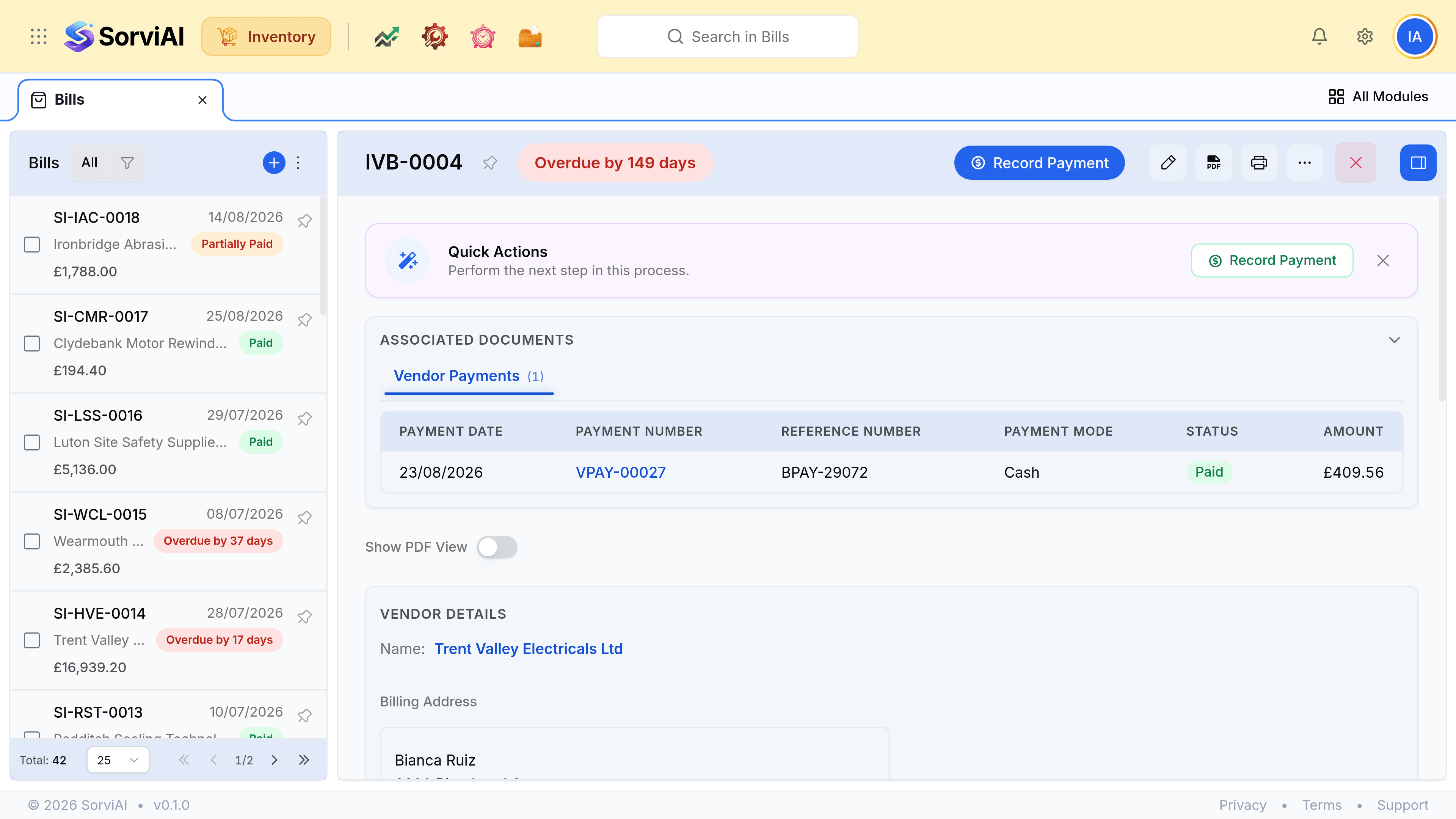
- Received, not billednormal
- The goods are yours and the vendor has not invoiced yet. You owe money that no bill has recorded, which matters at month end.
- Billed, not receivedworth a look
- The vendor has invoiced for goods nobody has counted in. Either a receive was missed or the delivery was.