
What Inventory settings covers
The sixteen screens behind the gear, the five groups they sit in, and which of them are shared with the rest of your workspace.
Inventory settings hold the decisions the whole organisation works from: who you are on a document, where stock is held, what a variant can vary by, and the one setting that decides when a purchase actually becomes stock. They apply to everybody, not just to you.
Five groups, sixteen screens
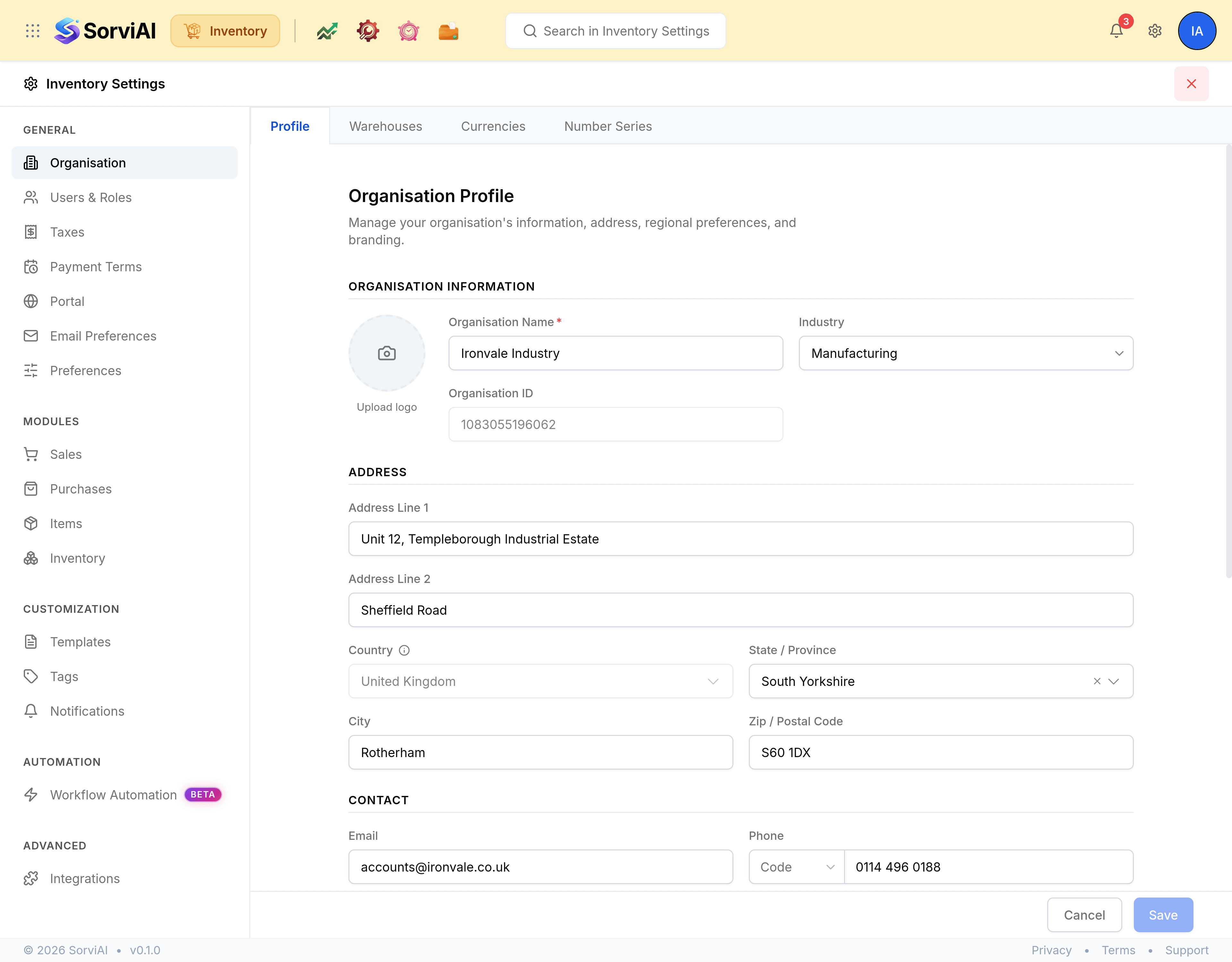
General is the organisation: who you are, who gets in, and what every document inherits.
- OrganisationYour profile, warehouses, currencies and document numbering.
- Users and RolesWho has access to Inventory, and what each role may do.
- TaxesThe rates a document line can be charged at.
- Payment TermsThe due-date rules every document offers.
- PortalThe self-service site your customers and vendors sign in to.
- Email PreferencesThe addresses Inventory sends from, and how they are authenticated.
- PreferencesWhich modules Inventory offers, and the workspace defaults.
Modules is one screen per part of Inventory. Inventory is the big one, and the only place stock behaviour is decided.
- InventoryEight tabs: variant options, warehouses, and when a purchase becomes stock.
- Module settingsSales, Purchases and Items, and the tab each document type owns.
Customization, Automation and Advanced are what you change once the basics are in place.
- TemplatesThe PDF layout and the covering email for every document type.
- TagsThe labels you file contacts, items and transactions under.
- NotificationsHow and when Inventory tells you something happened.
- Workflow AutomationRules that fire an email or a notification when a record changes.
- IntegrationsYour shipping carrier accounts and your payment provider.
Opening, saving and closing
The gear at the right of the Inventory header opens settings from wherever you are. It is labelled Inventory Settings, and it remembers the screen you came from, so the cross at the top right puts you back there.
Screens are down the left, grouped; tabs run along the top of the pane. Every screen saves the same way, from the bar at the foot: Save stays greyed out until something actually differs from what is stored, so a disabled button means nothing has changed yet, and Cancel puts the screen back.
Most of these are your whole workspace, not just Inventory
Your organisation profile, payment terms, portal, sender addresses, tags and notifications belong to the workspace. Another app opening the same screen sees the same values, because there is one set of them and not a copy per app.
Your rail may be shorter than this one
Two things decide what you see, and they work independently.
- Your role
- Settings are granted per section. A role given Taxes and nothing else opens the gear and finds Taxes. Some screens, Organisation among them, stay visible to everybody and read-only, which is how anybody can check the company address without being able to change it.
- Your enabled modules
- A tab that configures a module the organisation has switched off is removed, and a screen whose every tab has gone is removed with it. Turning packages off takes the Packages tab out of Inventory settings.
A screen that opens with every control greyed out is the first of those, and a tab that has vanished since you last used it is usually the second.