
Introduction - Items
An item is one thing you stock, buy or sell, and it is the record every quantity in Inventory is counted against.
Every purchase receive, shipment, adjustment and transfer points at an item rather than at loose text. That is what makes a count possible at all: stock is not a number you keep, it is the sum of what the documents did to one item.
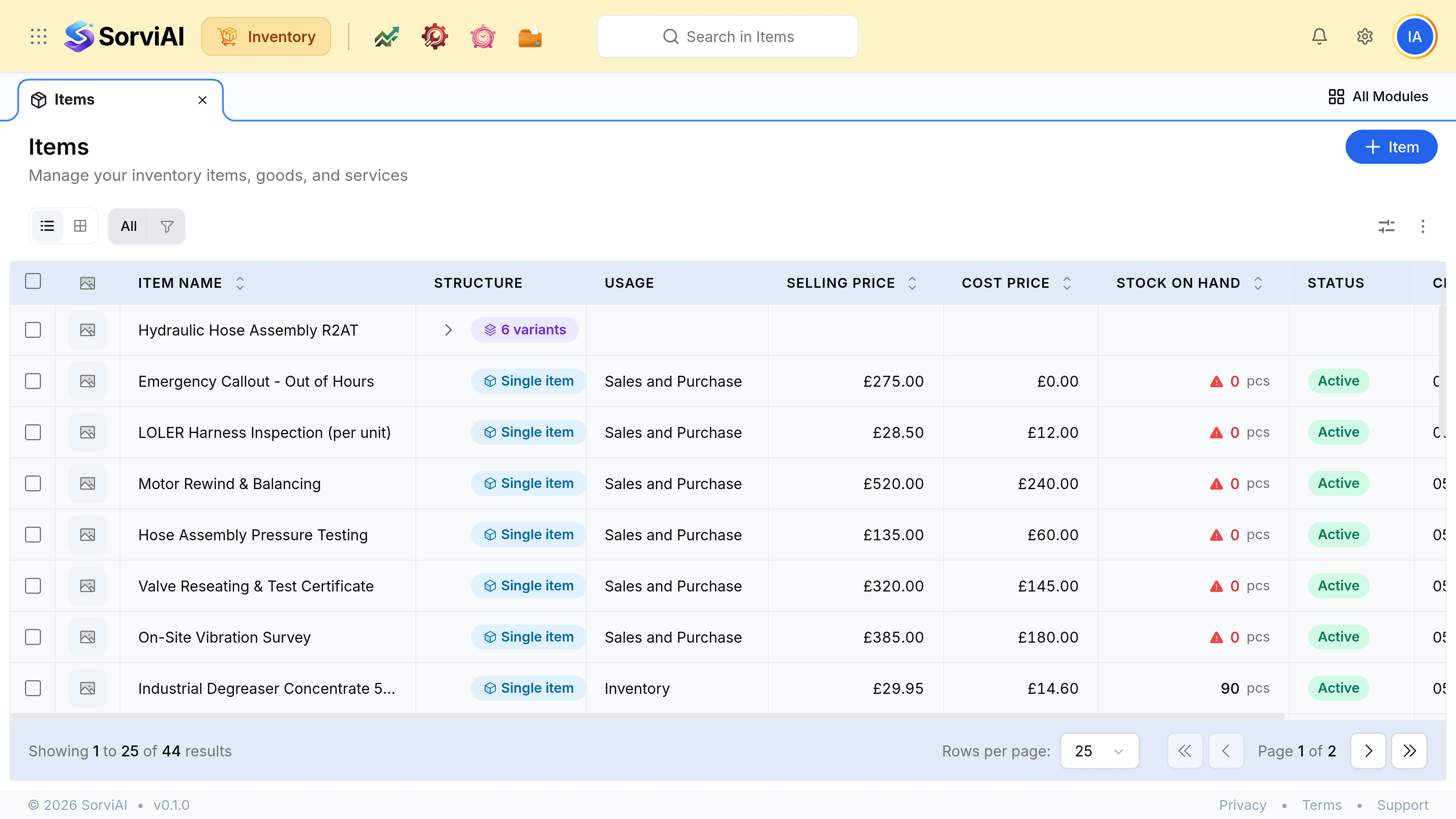
Tracked and untracked
The most consequential switch on an item is whether Inventory counts it.
Tracked
goods you hold
- YesA quantity, per warehouse
- YesAppears in stock reports
- YesCan be picked, packed and shipped
- YesCost recognised when it sells
Untracked
services, and goods you never hold
- NoA quantity, per warehouse
- NoAppears in stock reports
- NoCan be picked, packed and shipped
- NoCost recognised when it sells
Only goods can be tracked, because a service has nothing to hold. An untracked good is a real and useful thing: something you order in per job and never keep on a shelf. In the list above, the Usage column tells you which is which at a glance.
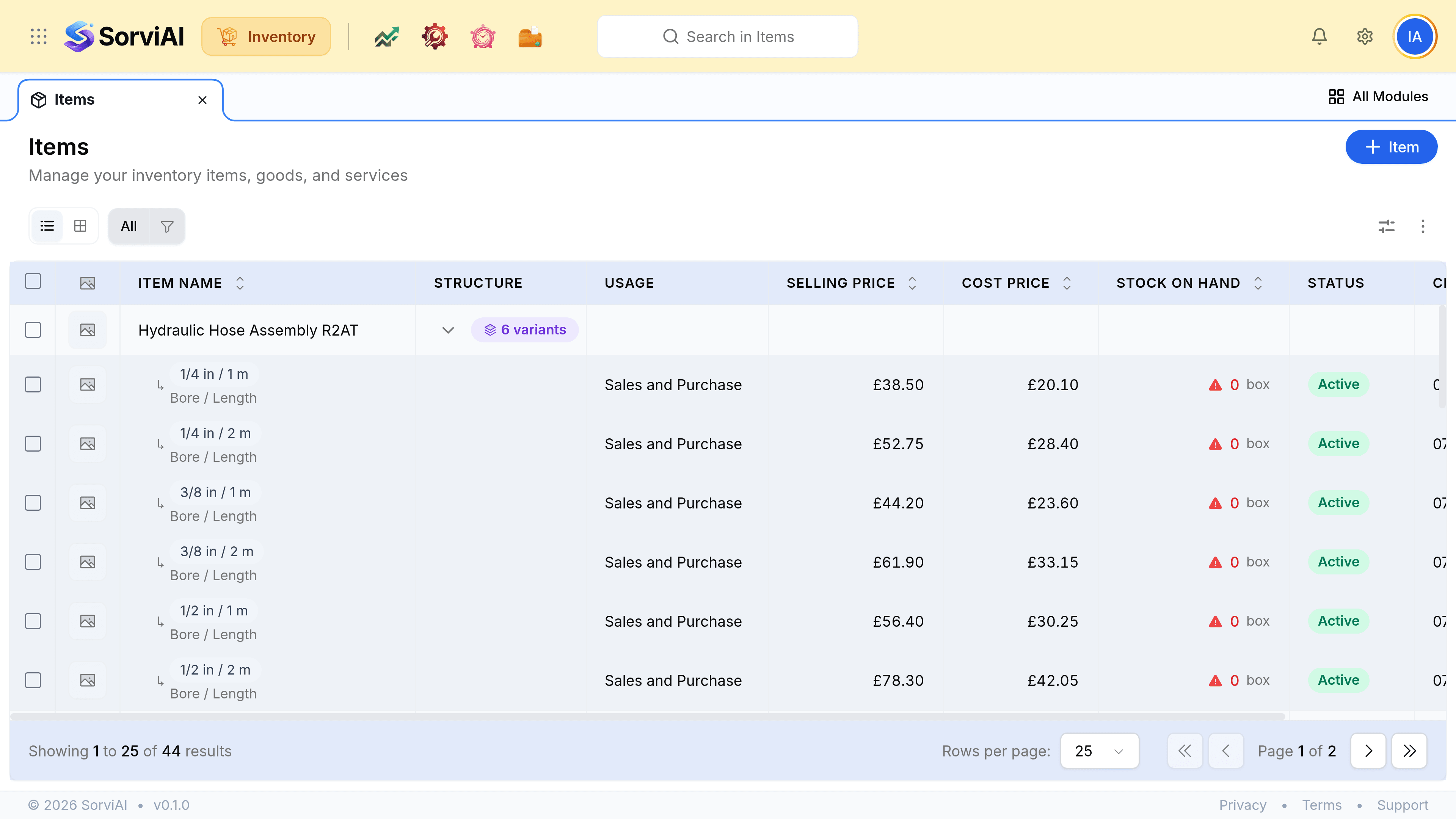
A variant is itself an item
A variant is not a property of a product and not a row hanging off one. It is a complete item with its own SKU, prices, stock and status, joined to the product above it by nothing more than a parent reference.
What an item record holds
Open any item and it splits into a summary, its stock, and the history behind both.
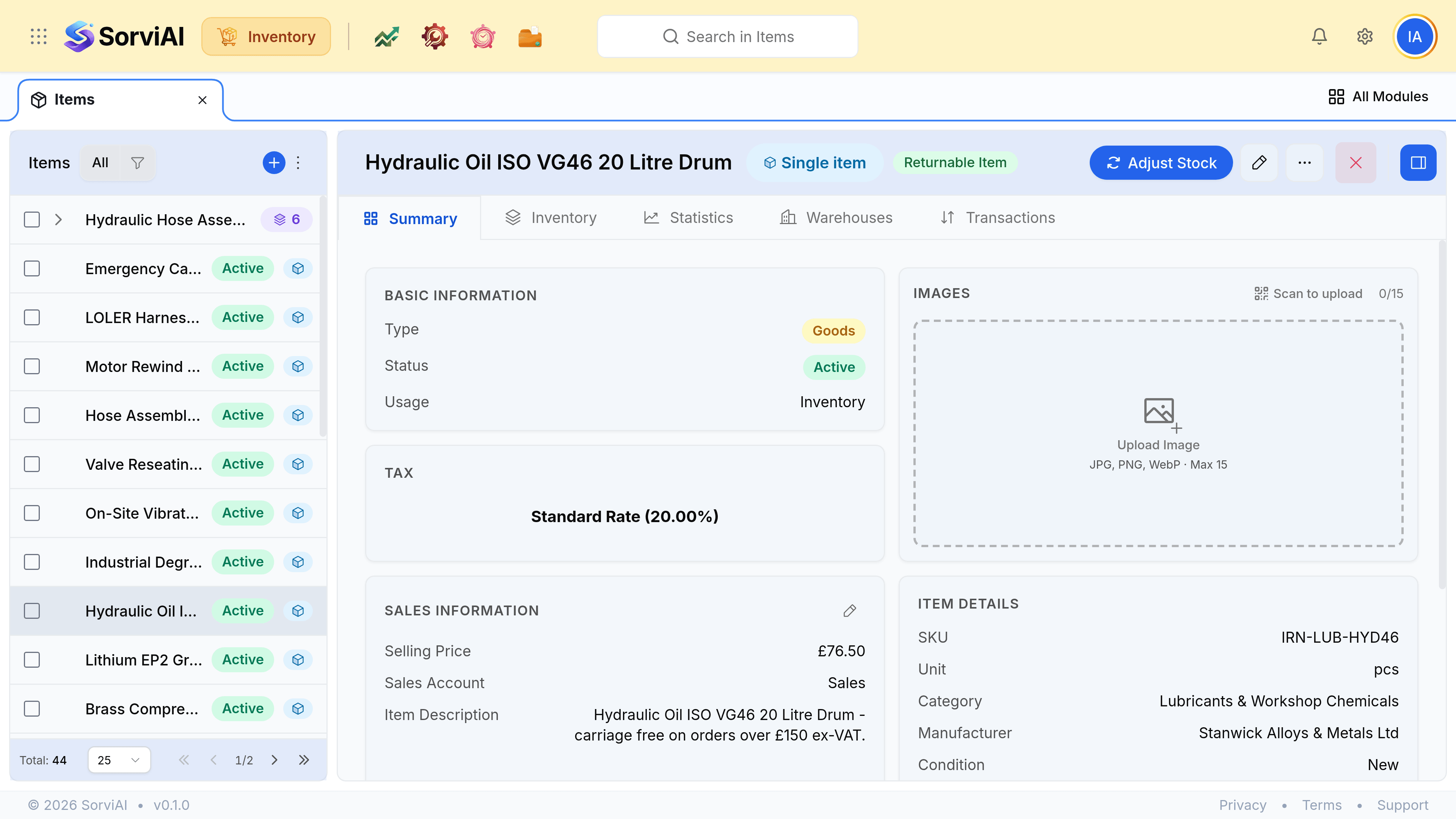
| Tab | What it answers |
|---|---|
| Summary | What the item is, what it sells and costs, and its identifiers |
| Inventory | What you hold and what it is valued at |
| Statistics | How it has been selling and buying |
| Warehouses | Where the stock physically sits, depot by depot |
| Transactions | Every document this item has appeared on |
Stock on hand is three numbers
Asking how many you have has three honest answers, and the gap between them is where most availability arguments come from.
- Stock on handper warehouse
- What is physically there, available and reserved together.
- Availableper warehouse
- Stock on hand minus what open sales orders have already committed. This is the number that decides whether you can promise a delivery.
- The item totalacross warehouses
- What the items list shows. Useful for valuation, misleading for a promise: any single depot can be empty while the total looks healthy.