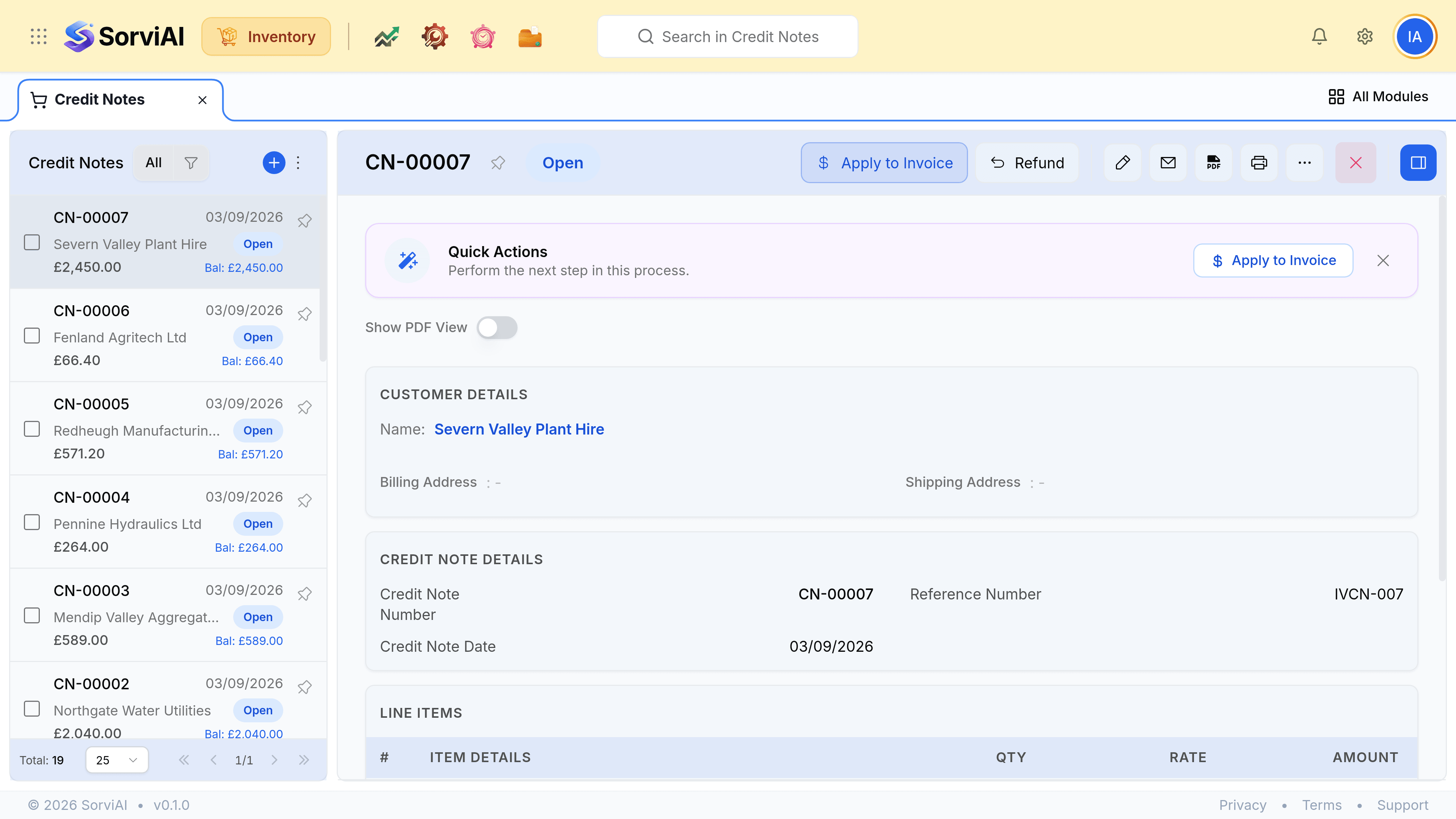
Introduction - Credit Notes
A credit note is money owed back to a customer, whether or not any goods came back with it.
It is the correcting document on the sales side. An invoice that was wrong is never edited once it has gone to the customer; a credit note is raised against it instead, so both halves stay on the record.
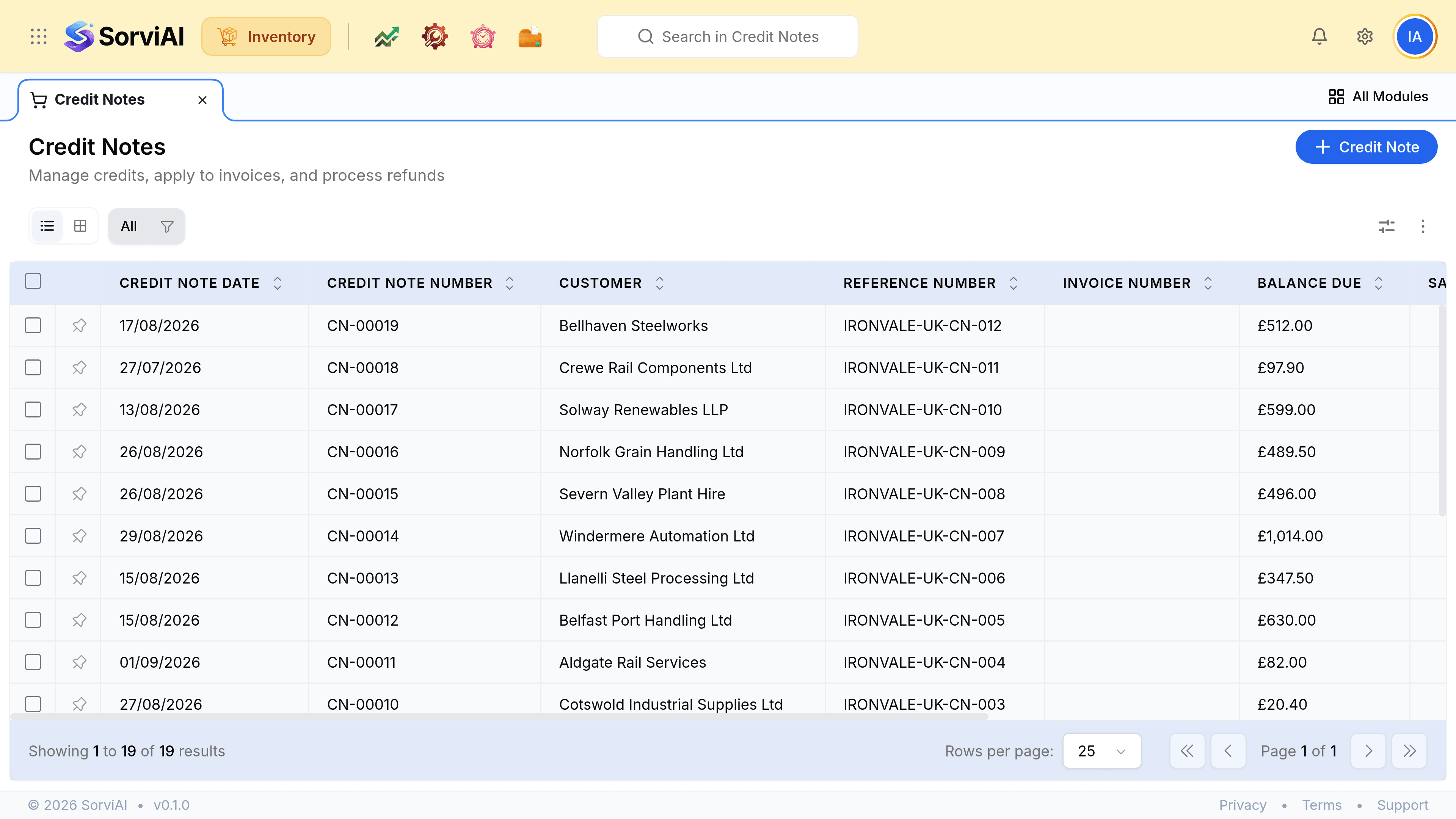
Credit note or sales return
These two are confused constantly, and the difference is simply whether anything physically came back.
Credit note
money only
- YesReduces what the customer owes
- NoPuts stock back on the shelf
- YesRight for an over-invoice or a goodwill discount
Sales return
goods, then money
- YesReduces what the customer owes
- YesPuts stock back on the shelf
- YesRight when the goods are coming back
Raising a credit note for goods that are physically returning is the mistake worth avoiding: the customer is credited and your count stays wrong, so the units you are holding never reappear.
When a credit note is the right document
| Situation | Why a credit note fits |
|---|---|
| The invoice priced it wrong | Nothing moved. Only the amount was wrong |
| A goodwill discount after the fact | There is nothing to return |
| Goods were damaged and the customer kept them | No stock is coming back |
| A duplicate invoice | Cancel the value, keep the audit trail |