
How Your Hours Add Up
What each figure on the timer band counts, and how the week and month totals are built from them.
Four figures sit on the timer band and none of them is simply "time since you arrived". This is what each one counts.
| Field | What it does |
|---|---|
| Net Working Time | Time checked in with break time taken out. This is the figure your day is judged on. |
| Effective | The same span expressed in hours, minutes and seconds, for reading rather than watching. |
| Breaks | Everything logged as a break today, added together. |
| Remaining | Scheduled hours less net working time. It counts down while you are checked in and stops at zero. |
| Status | Not Checked In, Checked In or Checked Out. It is the plain statement of which of the three you currently are. |
The week and the month
The two cards under the band aggregate the same records over longer spans. Neither is live: they settle as days close.
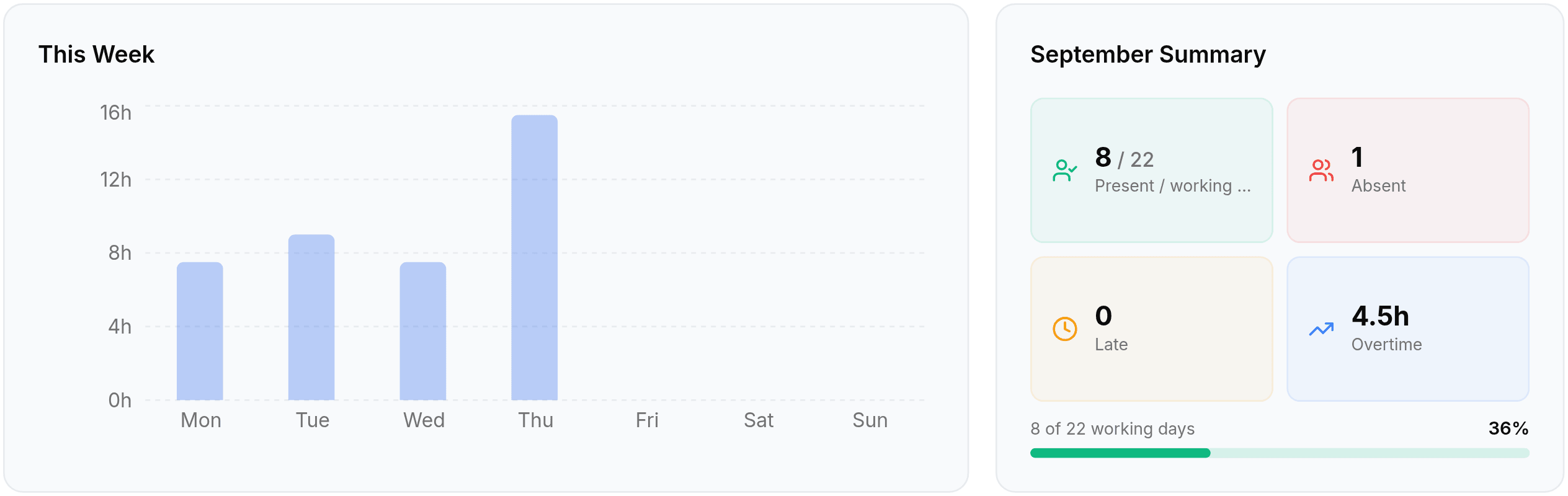
| Figure | Counts | Worth knowing |
|---|---|---|
| Present / working days | Days you were present, over the working days in the month so far. | Working days come from your shift's week pattern, so a four-day week has a smaller denominator. |
| Absent | Days with no record and no approved leave against them. | Approved leave is not absence. If a day you took off shows here, the leave was never approved. |
| Late | Days you checked in after your shift start plus its grace period. | The grace period is set by your administrator, so being a minute late is usually not Late. |
| Overtime | Net working time beyond your scheduled hours, added up. | Overtime is recorded whether or not anybody approved it. Approving it is a separate request. |
Why net and effective can disagree with the clock on the wall
An eight-hour day at your desk is rarely eight hours of net working time, because the break is subtracted. A shift with a sixty minute break allowance and 8.5 scheduled hours expects nine and a half hours between check in and check out. Reading Remaining rather than the wall clock is the quickest way to know when you are done.