
Introduction - Departments
How the organisation is divided, what a sub-department adds, and everything the grouping drives.
A department is not a label. It scopes reports, filters attendance, groups the roster and, in most setups, decides who approves whose leave. Getting the structure right early saves rebuilding it once people are in it.
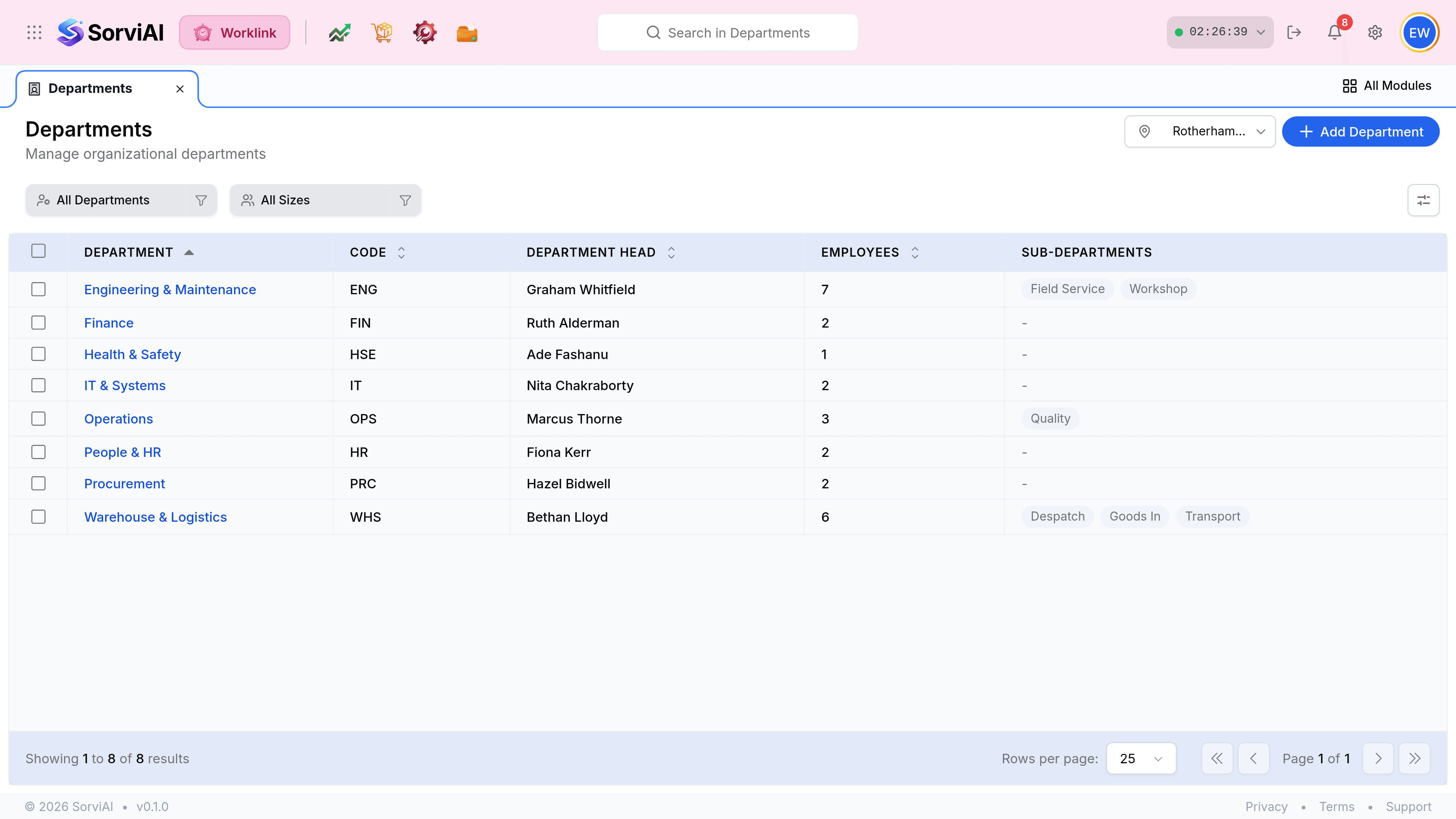
What a row tells you
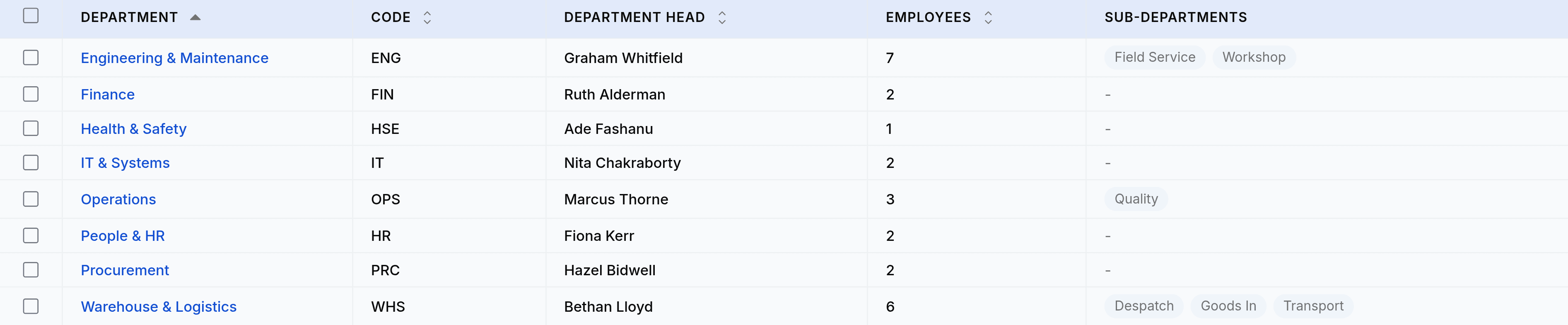
| Field | What it does |
|---|---|
| Department | The name, as a link. Selecting it opens the department with its members. |
| Code | A short reference such as ENG or WHS, used where the full name will not fit. |
| Department Head | Who runs it. This is the field leave approvals route through in most setups. |
| Employees | How many people call this their primary department. |
| Sub-departments | The teams inside it, as chips. A dash means the department is flat. |
Two levels, and only two
Worklink gives you departments and sub-departments beneath them. There is no third level, which is deliberate: a structure deep enough to need one is usually better expressed as more departments.
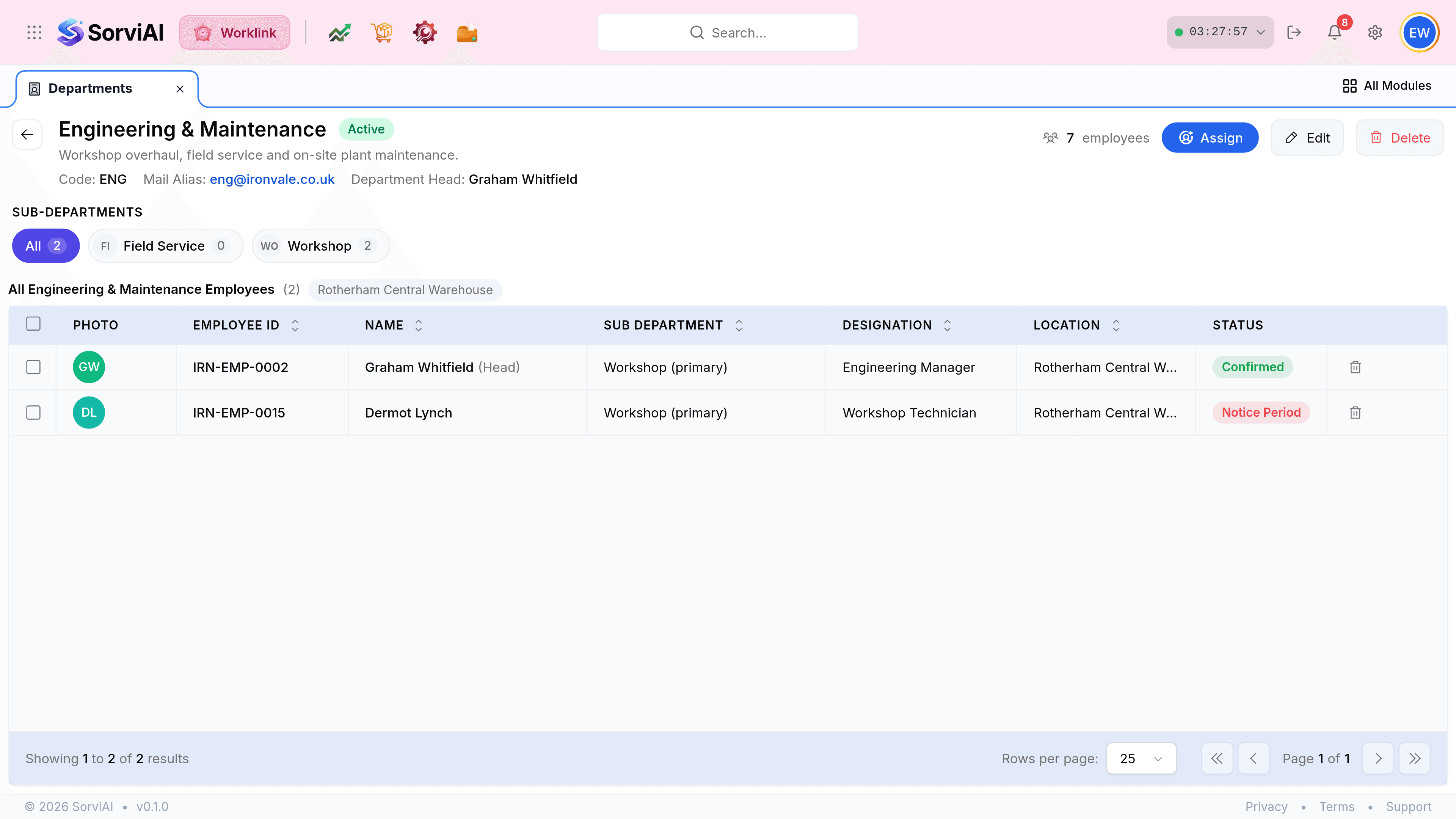

What the grouping drives
| Where | How the department is used |
|---|---|
| Leave approvals | The department head is who a request routes to. |
| Attendance records | The department filter narrows the list to one team. |
| Reports | Most reports can be grouped or scoped by department. |
| The employee roster | The Department column and its filter. |
| Presence | Filtering who is in today by team rather than by depot. |