What items are
The parts you fit and the services you charge for, the difference between them, and how a variant behaves.
An item is anything that can go on a ticket line: a service your technicians perform, or a part they fit. Both are the same kind of record, and what separates them is whether anybody counts it. A rewind is done and gone; a bearing came off a shelf and left a gap.
Highlights
- Parts and services share one catalogue, and one list.
- Usage is the column that tells them apart, not the name.
- This list is not filtered to repairs. Everything the business stocks is here.
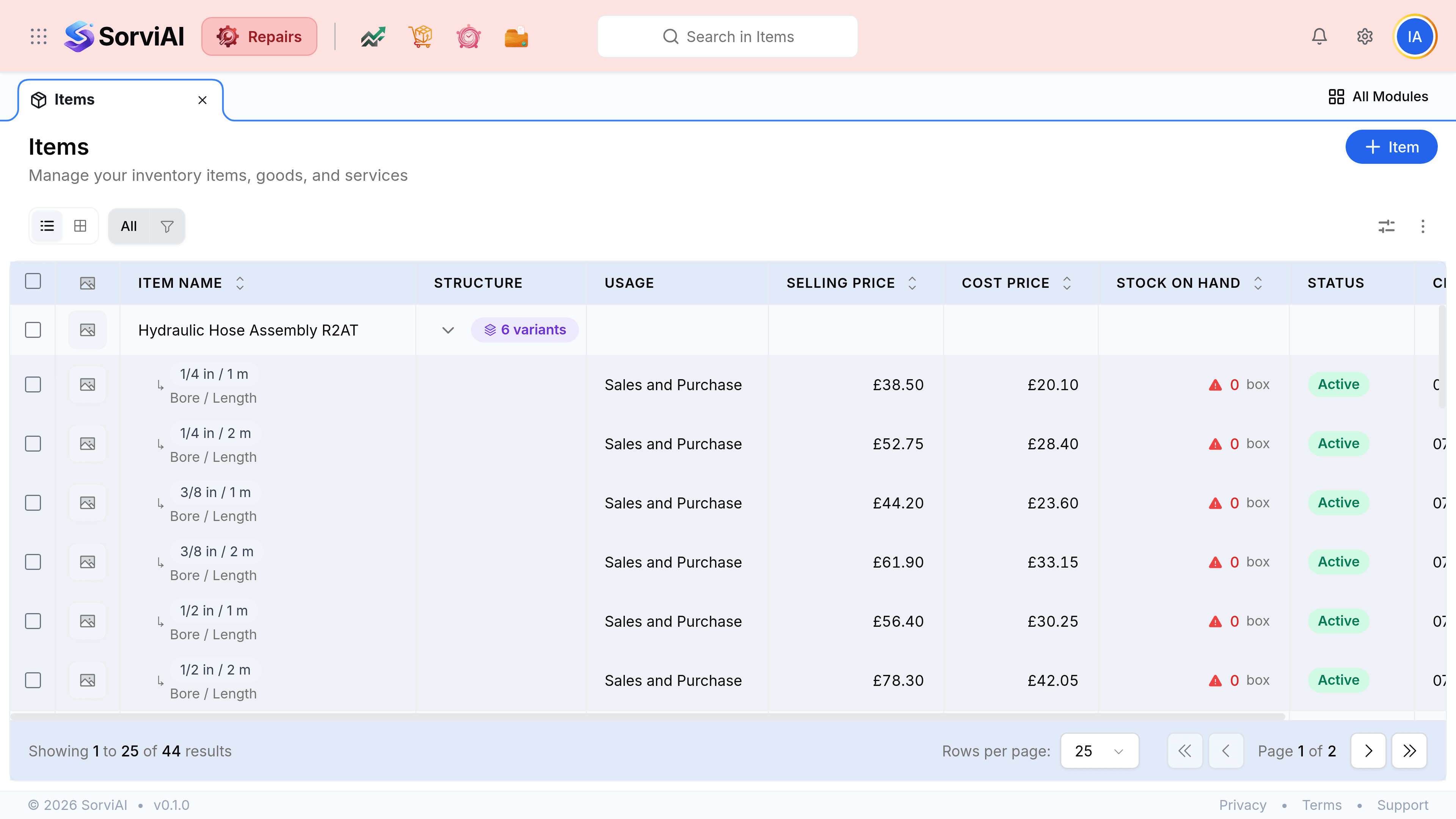
- A variant is a full item with its own code, its own price and its own stock.
- A variant parent is only a label, and its row is deliberately empty.
The list
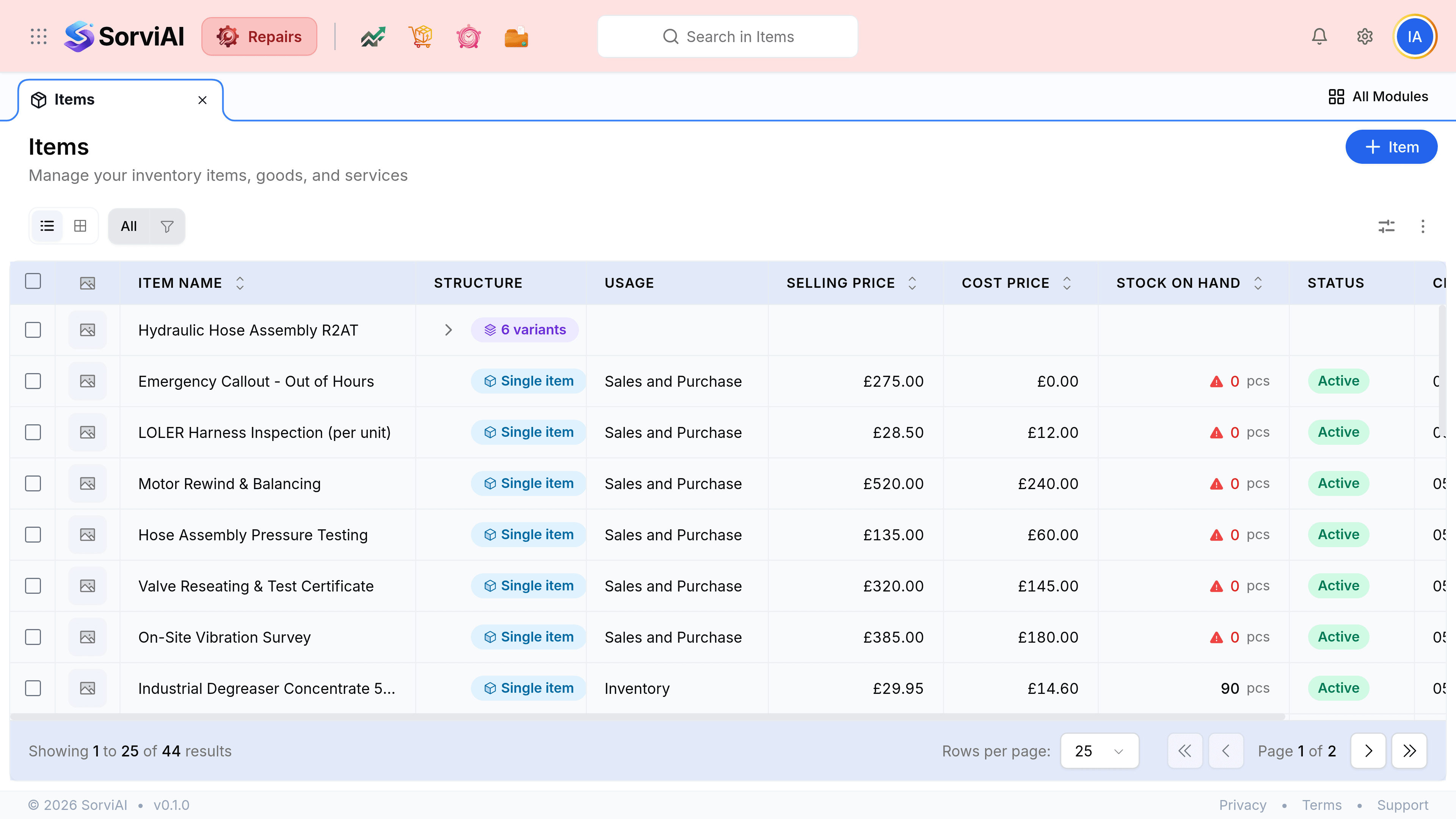
- Usage: Inventory
- A part. Quantities are counted, stock moves when it is bought and fitted, and the stock on hand column means something.
- Usage: Sales and Purchase
- A service. It is sold and charged for but never counted, which is why the stock column reads zero on every one of them.
- Structure: Single item
- An item in its own right, with one code and one price.
- Structure: N variants
- A grouping row. The badge counts the real items hiding underneath it.
What an item record holds
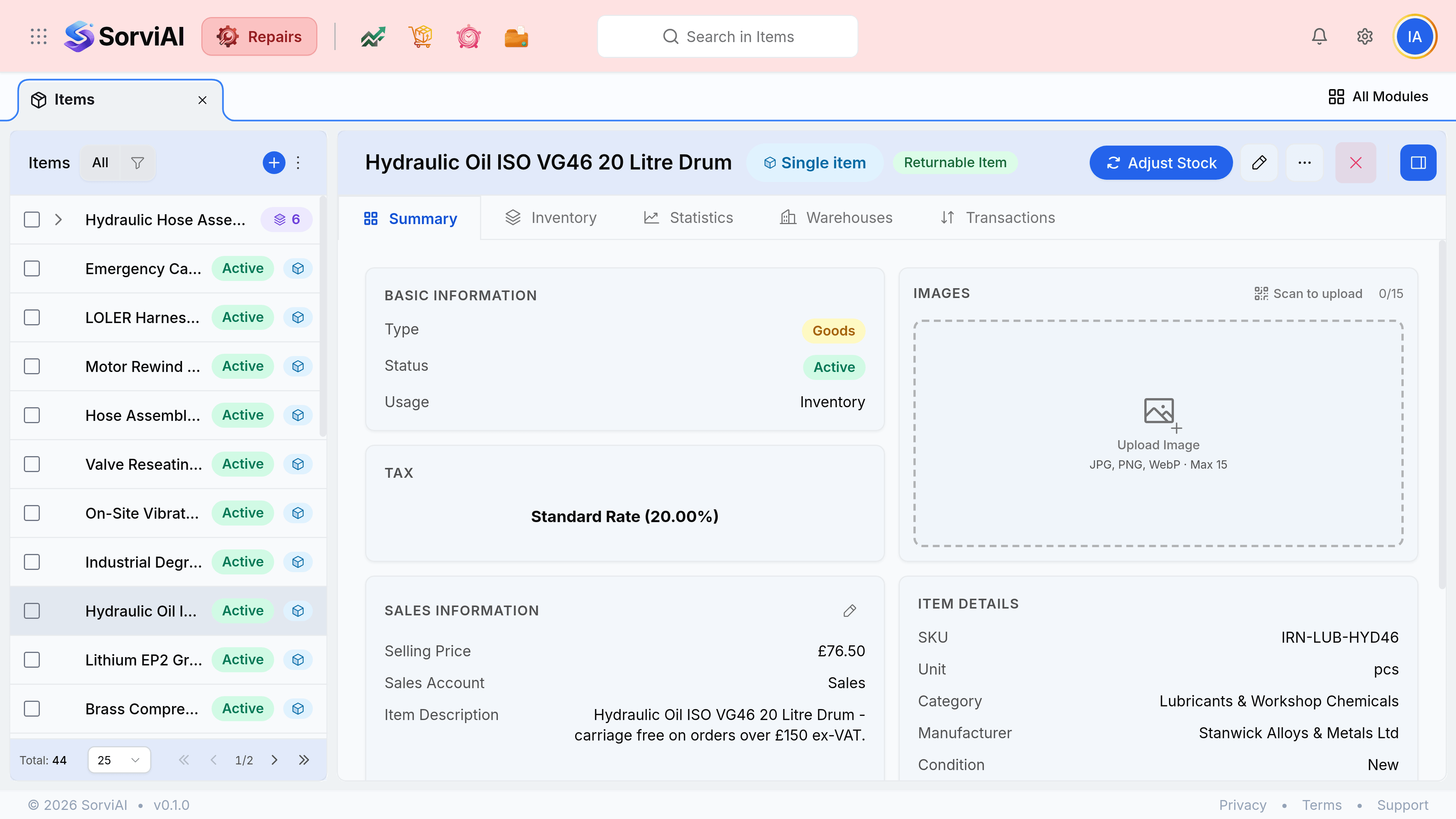
- Basic information
- Whether it is goods or a service, whether it is still active, and whether the product counts it.
- Sales information
- What you charge and which account the revenue lands in.
- Purchase information
- What it costs you, which account that lands in, and the supplier you usually buy it from.
- Item details
- The SKU, unit, category, manufacturer and condition. This is what makes a part findable and identifiable.
- The tabs
- Inventory for the count, Warehouses for where it is, Transactions for what it has been on, Statistics for how it has moved.
Variants, and why the parent row is blank
An item that comes in sizes is stored as a group. The group itself is a label; the sizes are the real items.