
Stock, and what a repair consumes
What happens to your count when a part is committed to a ticket and then fitted, and why two stock figures disagree.
A part on a ticket is not the same thing as a part off the shelf. Between promising a component to a repair and actually fitting it, the number you hold and the number you can promise to somebody else move apart. The Inventory tab on an item is where that gap is visible.
Highlights
- Committed means spoken for, not gone.
- Available for sale is the useful number when somebody asks what you can promise.
- Two stock figures are kept: what is physically there, and what has been billed.
- A reorder level warns you before the shelf empties.
- Services have no stock at all, which is why theirs reads zero.
Read the inventory tab
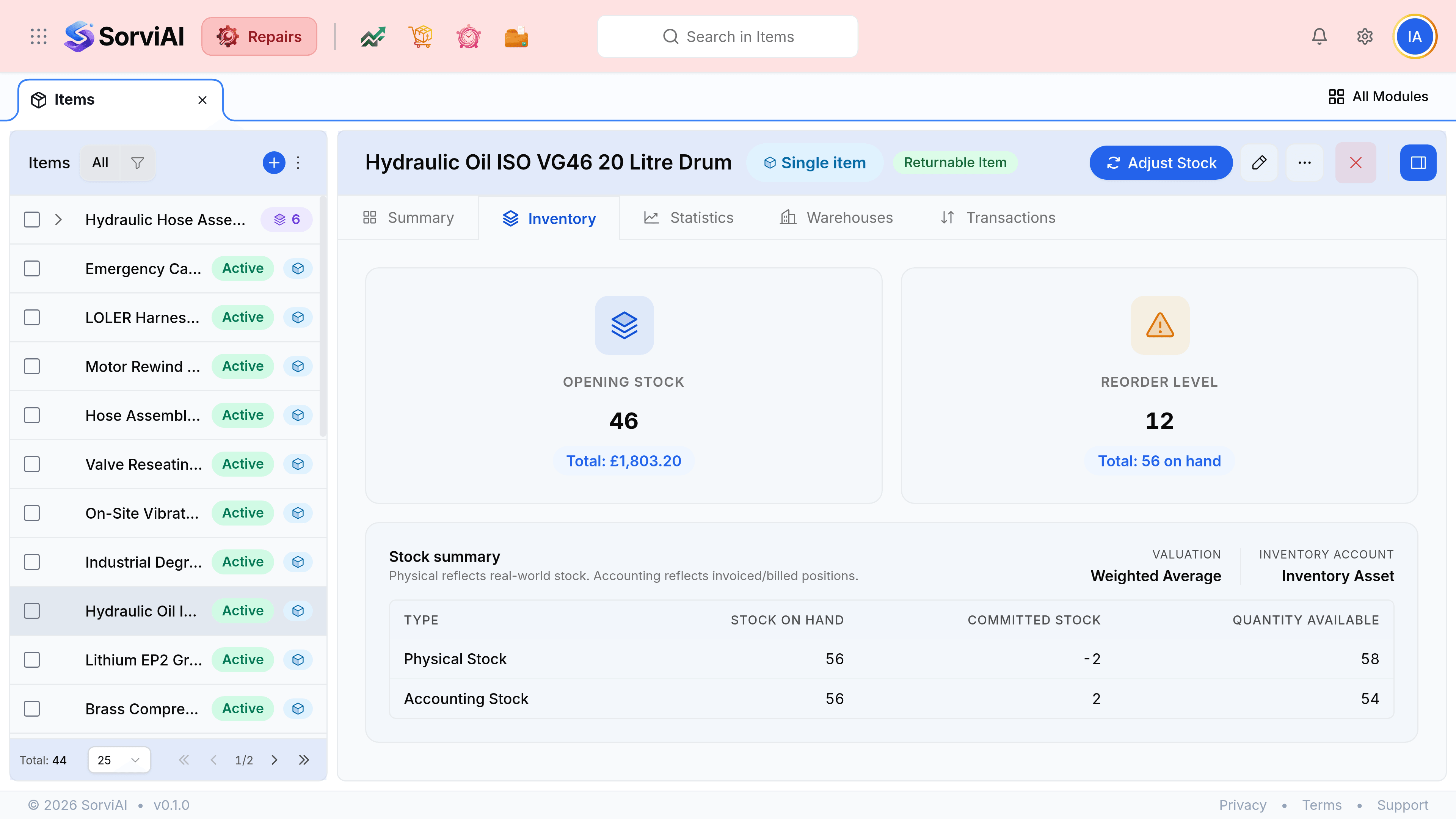
| Field | What it does |
|---|---|
| Stock on Hand | How many you hold, before anything is set aside. It changes when goods are received, transferred, adjusted or shipped. |
| Committed | How many are already spoken for by open documents. A part promised to a repair is committed before anybody unwraps it. |
| Available for Sale | Stock on hand less what is committed. The number to quote when somebody asks whether you have one. |
| Physical Stock | What is really on the shelf, whatever the paperwork says. |
| Accounting Stock | The same count read through what has been invoiced and billed. The two disagree while goods have arrived and the bill has not, or the reverse. |
What a repair does to the count
| When | What moves |
|---|---|
| The part is added to a ticket | It becomes committed. Stock on hand does not change, and available for sale falls |
| The part is ordered from a supplier | Nothing, until the goods arrive |
| The delivery is received | Stock on hand rises |
| The technician fits it | It is consumed, and stock on hand falls |
| The repair is invoiced | The accounting figure catches up with the physical one |
Keeping the shelf stocked
Set a reorder level on the parts you fit regularly
It is on the item's inventory tab, and it is what turns an empty shelf into a warning you get in advance.
Watch available for sale rather than stock on hand
Six on the shelf with five committed to open repairs is one, and quoting six to a customer is how a job stalls.
Use Adjust Stock when the count is simply wrong
Breakage, a miscount or a part used without a ticket. Record a reason, because an adjustment with no explanation is indistinguishable from a mistake later.