
The quantity is maintained by the movements.
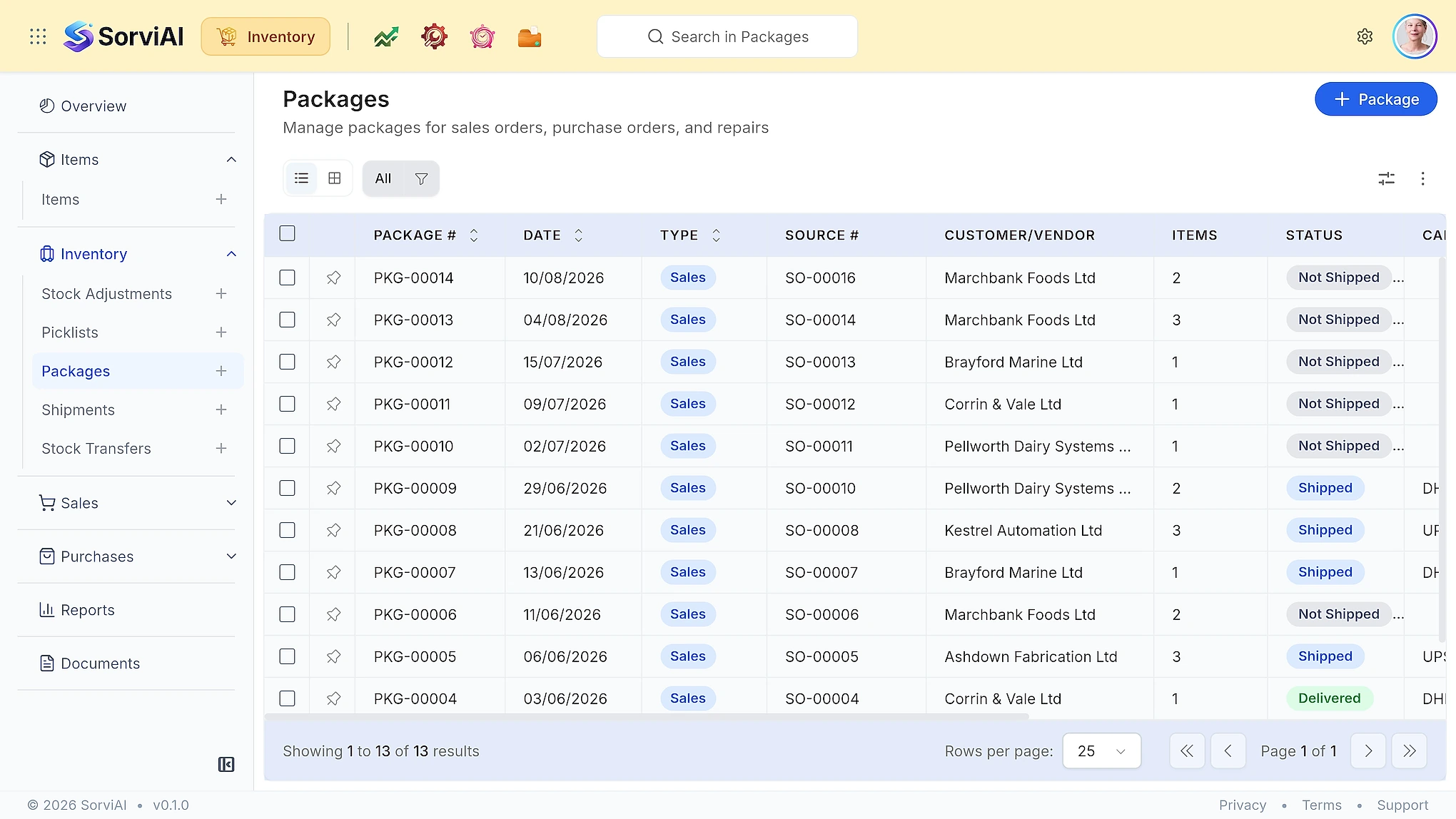
Inventory changes a quantity only when a recorded event moves it: a receive, an order, a job, a return or a counted adjustment. The figure held against the item is the sum of those events, with the document that caused each one still attached.
What Inventory covers
A variant is an item in its own right, with its own SKU, price and stock. Rate lists, sales returns, stock held per warehouse and a vendor portal for your suppliers all have a place here.
 Inventoryby SorviAI
$29Save 17%/ month, billed annually
All seven applications come to $79 a month on SorviAI Orbit.
30-day trial. No card needed. Export your data at any time.
- Any single SorviAI app, named at checkout
- Your own workspace on its own subdomain
- Included seats, flat per organisation
- Roles and permissions for every seat
- Two-factor authentication and an audit trail
Sales and purchases
Both trade cycles, on the stock they move
Buying and selling are raised in the same app the stock is held in. A purchase order becomes a receive that puts units on the shelf, and a sales order becomes a shipment that takes them off, so the figure and the paperwork move together rather than being reconciled afterwards.
One app holds both sides
Customers, sales orders, invoices and credit notes sit beside vendors, purchase orders, receives and bills, against the same items.
A document is what moves the figure
Raising an order commits units without moving them; a receive and a shipment are the events that change what is on hand.
The same item on both sides
The record a purchase order buys is the record a sales order sells, so a description or a unit is corrected once.

Corrections and moves
Stock adjustments and stock transfers
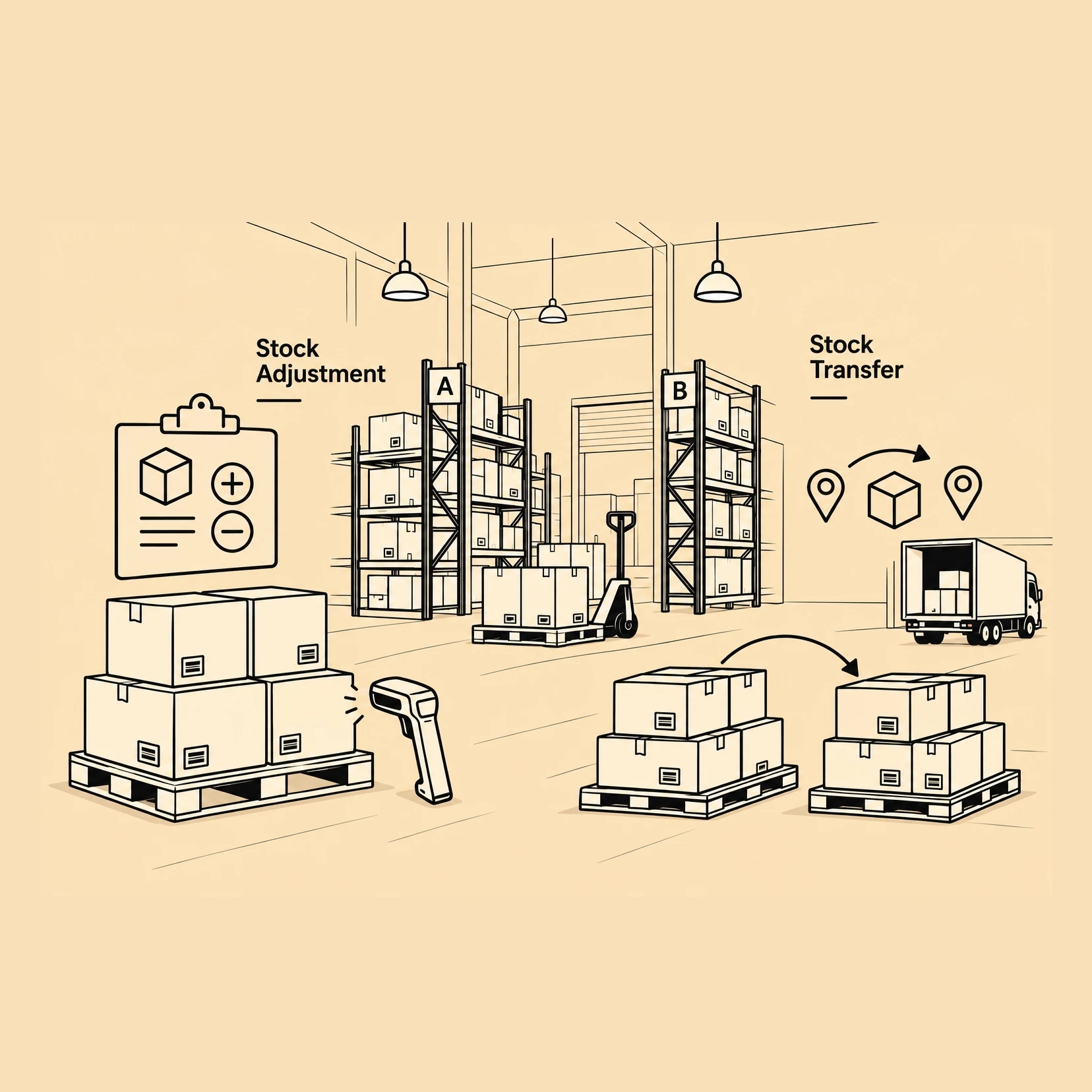
Not every movement is a sale or a purchase. A count that disagrees with the figure is settled by an adjustment that carries its reason, and units moved between sites travel on a transfer with its own picking and receiving, so they are accounted for while they are between the two.
An adjustment says why
Quantity or value, against a named warehouse, with a reason recorded on the document rather than in somebody’s memory.
A transfer is two events
Units leave one site and arrive at another, and the stock is counted at one end or the other throughout.
Both post as they happen
Each writes its own journal entry, so the value on the shelf and the value in the books move in the same step.
Fulfilment
Packages and shipments
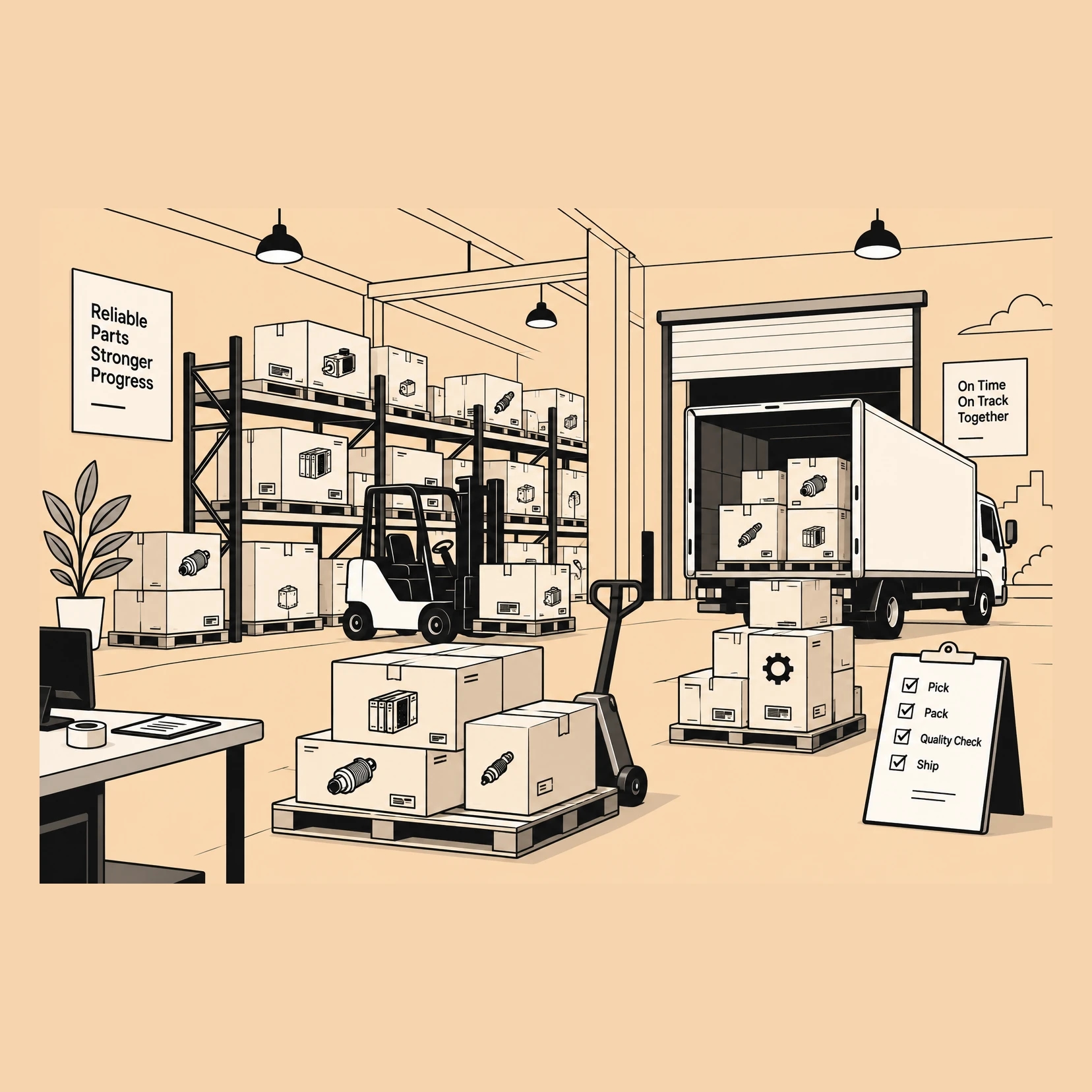
An order is a promise; a package is what was put in the box and a shipment is it leaving with a carrier. Stock comes off on the shipment, so what is on hand reflects what has actually gone rather than what has been agreed.
A package records what was packed
The units and quantities that went into the box, against the order they were promised on.
A shipment carries the carrier and the tracking
DHL and UPS tracking sits on the shipment, so the answer to where an order is lives on the record rather than in an inbox.
Stock leaves on the shipment
Committed units stay counted until the shipment goes, which is what keeps the figure honest between the order and the door.
Items
Items and picklists
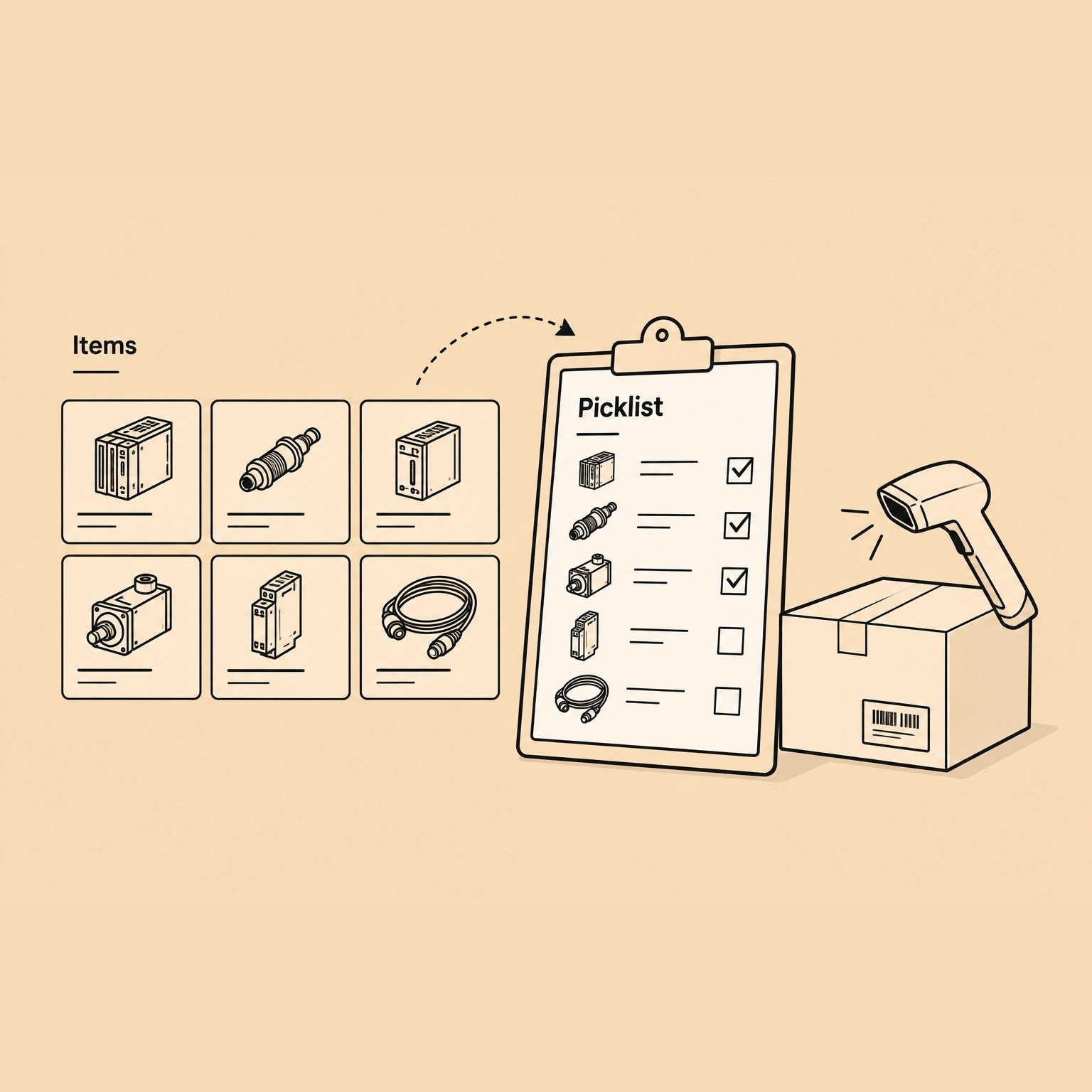
The item is the record every document on this page points at, carrying its own SKU, unit and stock. A picklist turns an order into an instruction: which units, how many, and where on the shelves they are.
One record, every document
The same item is ordered, received, priced, adjusted, transferred and shipped, so there is one place to correct it.
A picklist names units and locations
What to take and where it is, so picking is worked from the record rather than from a printout somebody annotated.
What is picked is what ships
The picked units are what the package is built from, which is how the shipment and the stock figure stay in step.
FAQ
Questions about Inventory
Always know what you hold, and what it is worth
Start a 30-day trial and put your first items on the shelf. When it ends, your workspace goes read-only and your export stays available. We never lock you out of your own books.
30-day trial. No card needed. Export your data at any time.