
The invoice is assembled by the ticket.
Every part fitted, every hour logged and every service line sits on the ticket the job was opened on, each carrying whether it has been invoiced. The bill is therefore a reading of the work rather than a reconstruction of it.
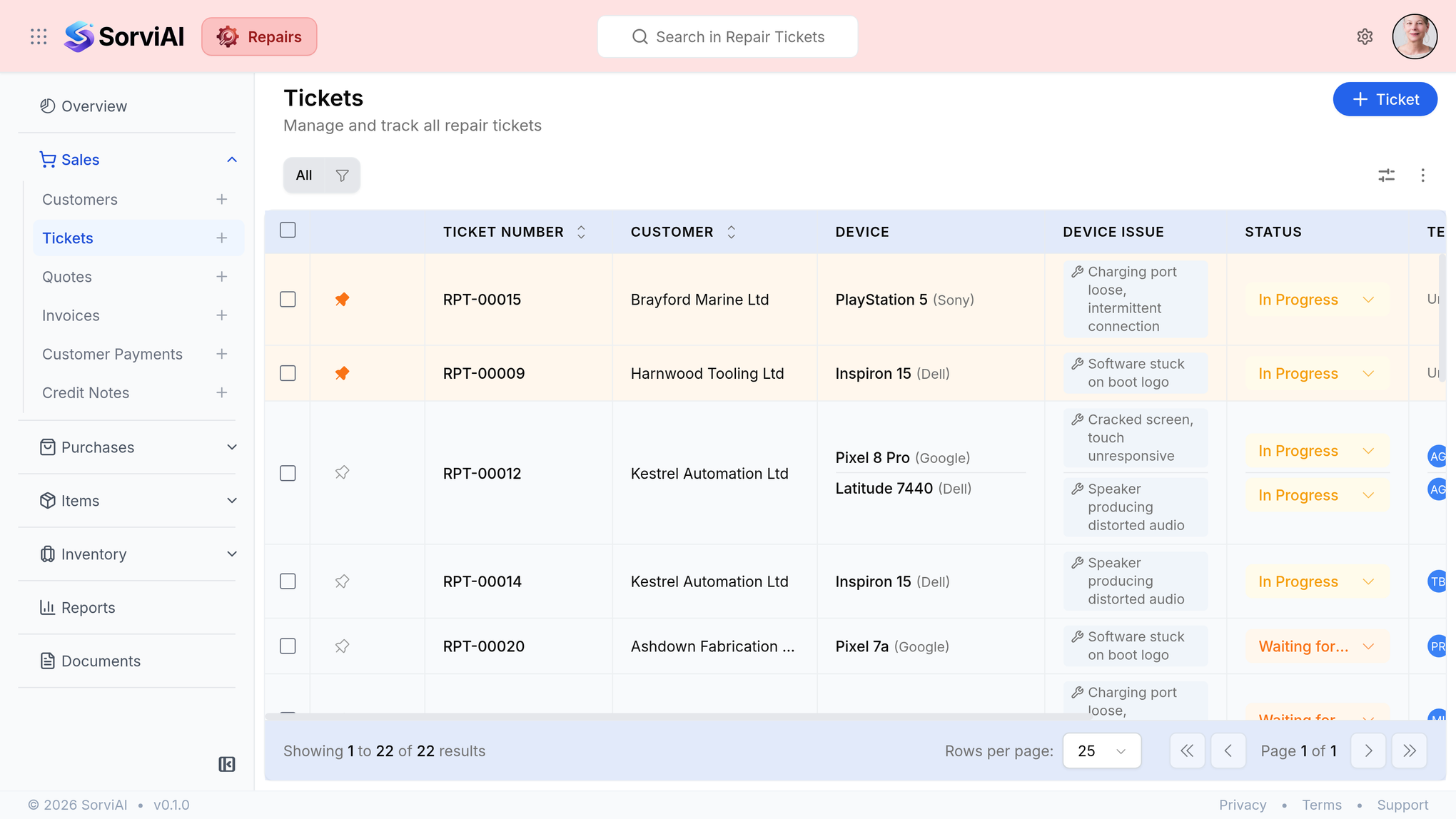
What Repairs covers
Tickets from intake to completion, carrying the device, the fault, the parts fitted and the hours worked. Technicians, device issues with their usual parts, work reports and a ticket history are held here too.
 Repairsby SorviAI
$29Save 17%/ month, billed annually
All seven applications come to $79 a month on SorviAI Orbit.
30-day trial. No card needed. Export your data at any time.
- Any single SorviAI app, named at checkout
- Your own workspace on its own subdomain
- Included seats, flat per organisation
- Roles and permissions for every seat
- Two-factor authentication and an audit trail
Jobs
Repair tickets
A ticket is opened at the counter against a customer and a device, and everything the job accumulates is held on it: the parts fitted, the hours worked, the status it has reached, and which of its lines have been invoiced.
Opened against a device and its serial
The item, its serial number, the fault as reported and a priority are what starts a ticket, and the number it is given comes from the workshop counter rather than from whoever is writing it up.
Statuses you define, not a fixed list
The stages a job moves through are yours to name, each sitting in one of five categories, so the board matches how the workshop actually runs.
Everything the job gathers lands on it
Parts, time entries, comments and each change of status are held on the ticket itself, so the record of a repair is assembled as the work happens.
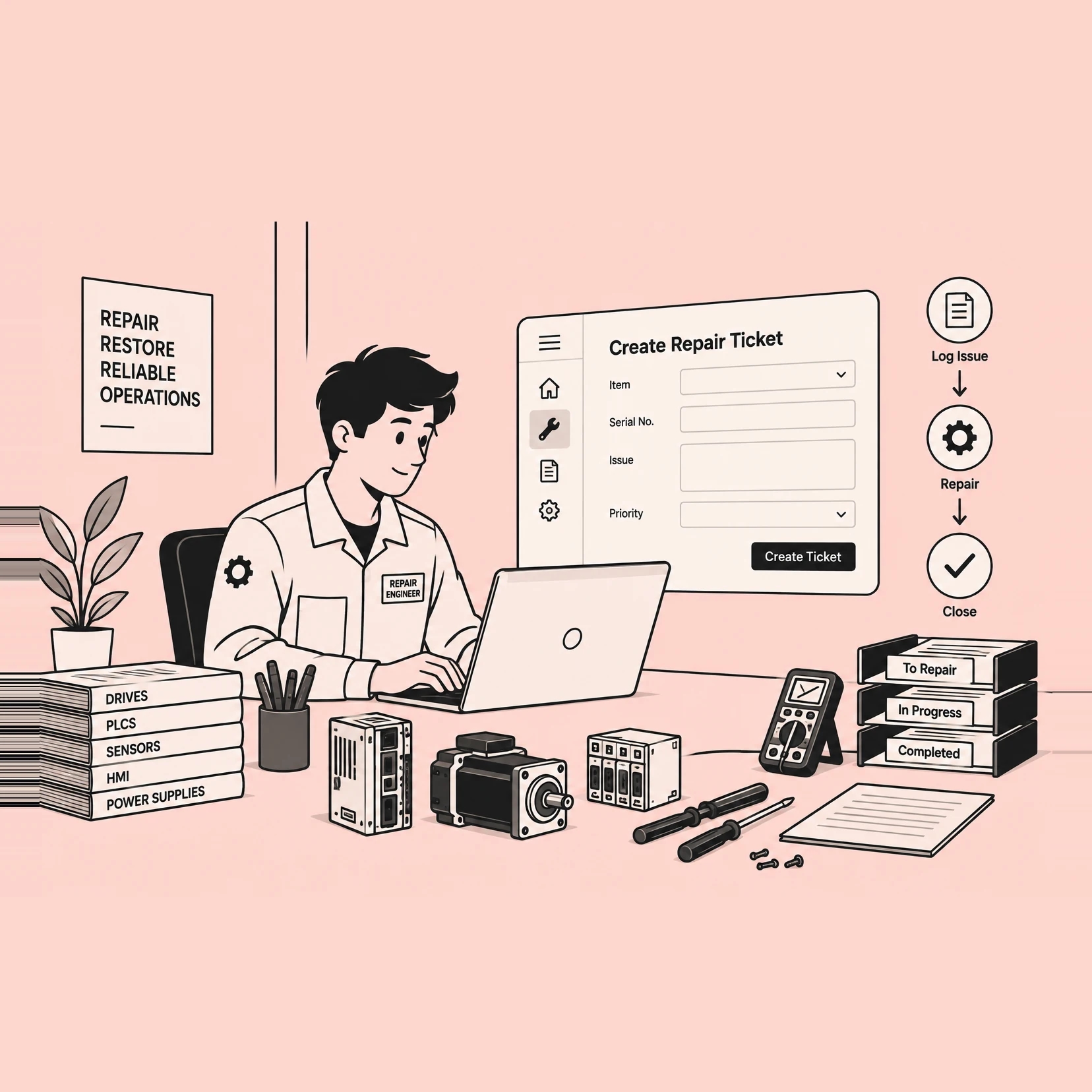
Reporting
Repair reports
A work report is drawn from the ticket rather than written up afterwards: which part was fitted, by whom, what was tested and when. The same records counted the other way give the workshop its open work by stage, by technician and by the fault being fixed.
A printable record of the job
A work report sets out what was diagnosed, replaced and tested, with technician and customer signature blocks that can be enabled per report.
Open work, counted by stage
What is open, on hold or waiting is counted off the tickets themselves, so the number on the screen is the queue rather than a tally somebody keeps.
By technician, and by fault
The same tickets group by who handled them and by the issue recorded against the device, which is what turns a month of jobs into where the time went.

Technicians
Assignment
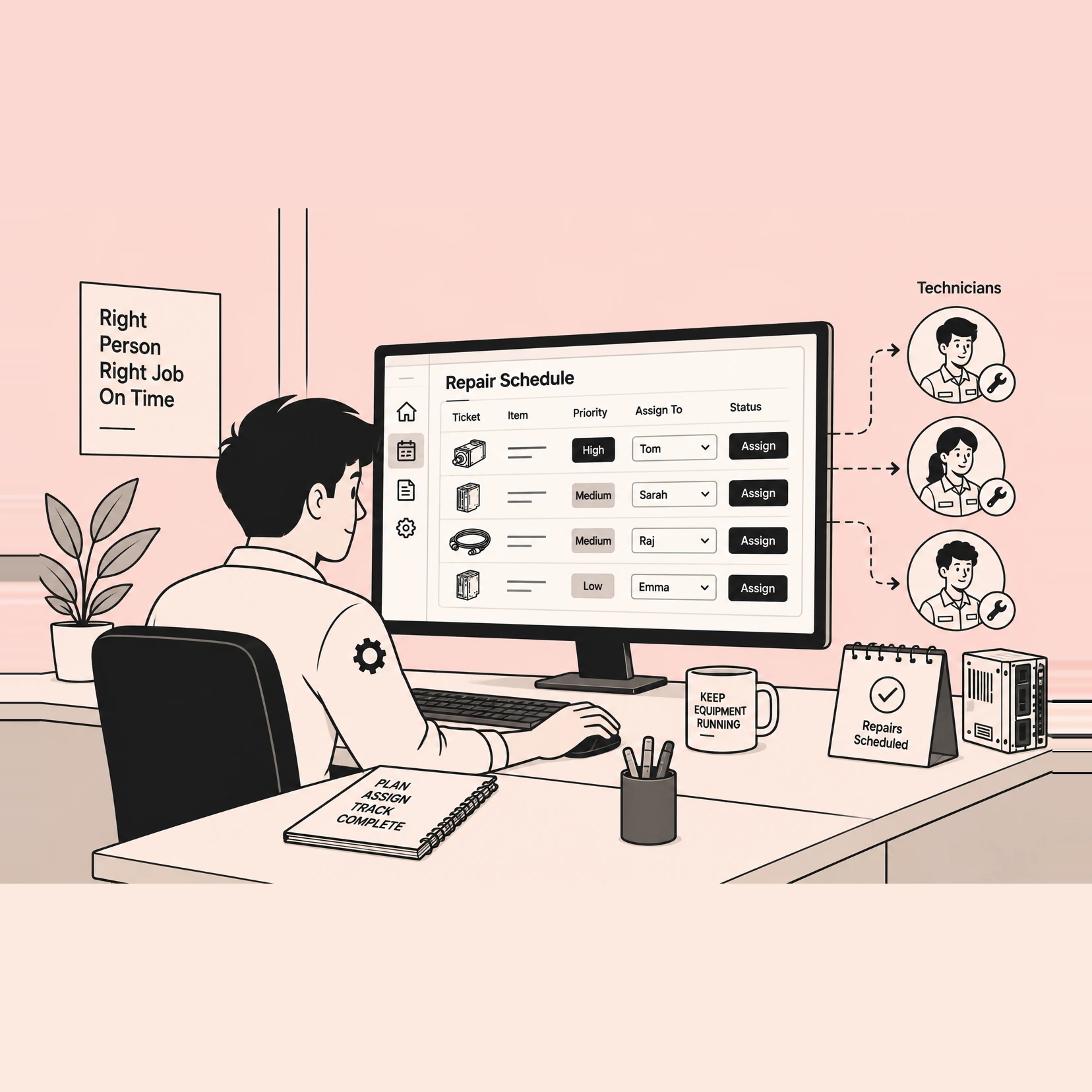
Each service line on a ticket carries its own assignee, so a device whose diagnosis and rework belong to different people is still one job. Priority is set once on the ticket, and the open list shows both.
The assignee sits on the line
Assignment is recorded against the individual piece of work rather than the whole ticket, which is what lets two technicians share a device without splitting it into two jobs.
Priority belongs to the job
A ticket carries one priority for the device in hand, so the order work is taken in is a property of the job while the hands on it can differ line by line.
One list, counter and bench
What is in for repair, what is awaiting a part and what is ready for collection is a single list both the front desk and the workshop read.
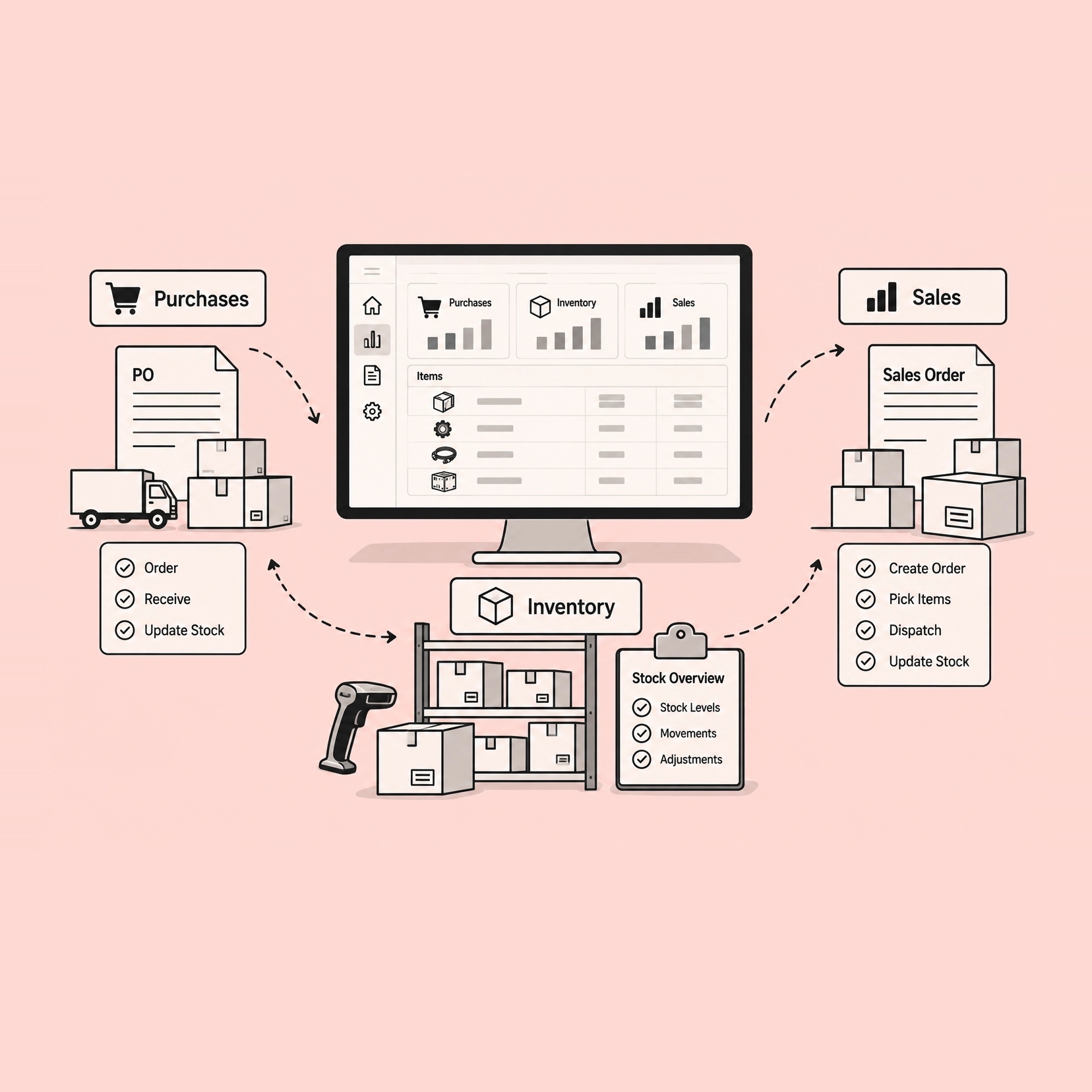
Parts
Purchases and sales
A part added to a ticket is committed against a warehouse at that point, and consumed when the job is completed or invoiced. What it cost comes from the stock it came out of; what it is charged at goes to the customer the ticket was opened for.
The part is stock, not an entered line
Adding it commits units in a nominated warehouse. Completing or invoicing the job consumes them at the costing method set on the item, and cancelling releases them.
It is consumed at what it actually cost
The cost taken is the item's own FIFO layer or weighted average, so the margin on a repair is the real one rather than a price list applied twice.
Every line carries its own invoiced state
Service lines and parts each record whether they have been invoiced and on which invoice, so a partly invoiced job is a fact held on the ticket rather than a suspicion.
FAQ
Questions about Repairs
Turn every repair into a job that gets paid
Start a 30-day trial and log your first job this morning. When it ends, your workspace goes read-only and your export stays available. We never lock you out of your own books.
30-day trial. No card needed. Export your data at any time.