
Sales and purchases under the same ledger.
The accounts update as you issue invoices, approve bills and record payments. You can open the profit and loss, the customer balances or the Tax summary on any day of the quarter.
What Finance covers
Credit notes, sales returns, advance invoices, vendor credits and purchase receives all have a place here. Finance also raises recurring invoices, bills and expenses on the schedule you set.
 Financeby SorviAI
$29Save 17%/ month, billed annually
All seven applications come to $79 a month on SorviAI Orbit.
30-day trial. No card needed. Export your data at any time.
- Any single SorviAI app, named at checkout
- Your own workspace on its own subdomain
- Included seats, flat per organisation
- Roles and permissions for every seat
- Two-factor authentication and an audit trail
Sales
Quotes, orders, invoices and credit notes
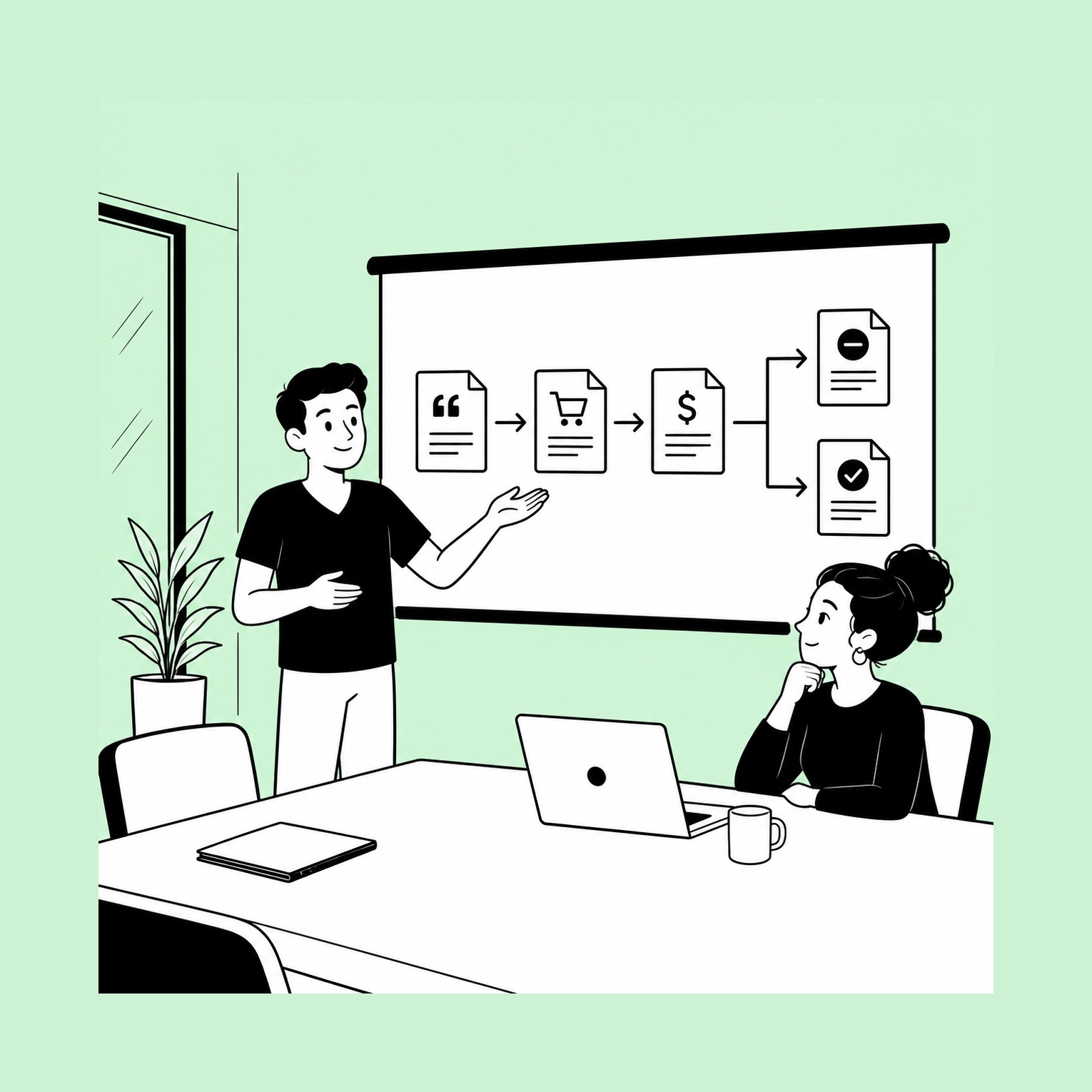
A quotation carries its lines into a sales order, and the order into the invoice raised against it. Credit notes and customer payments settle against those same documents rather than beside them.
Lines carry forward
Parts, quantities and agreed prices move with the record rather than being read off one screen and entered into another.
Every document references its source
An invoice holds the order it was raised from, and the order holds the quotation. No document in the chain stands alone.
Payments settle the document
A receipt is recorded against the invoice it clears, in full or in part, and the balance follows from it.
Purchases
Purchase orders, receives, bills and payments
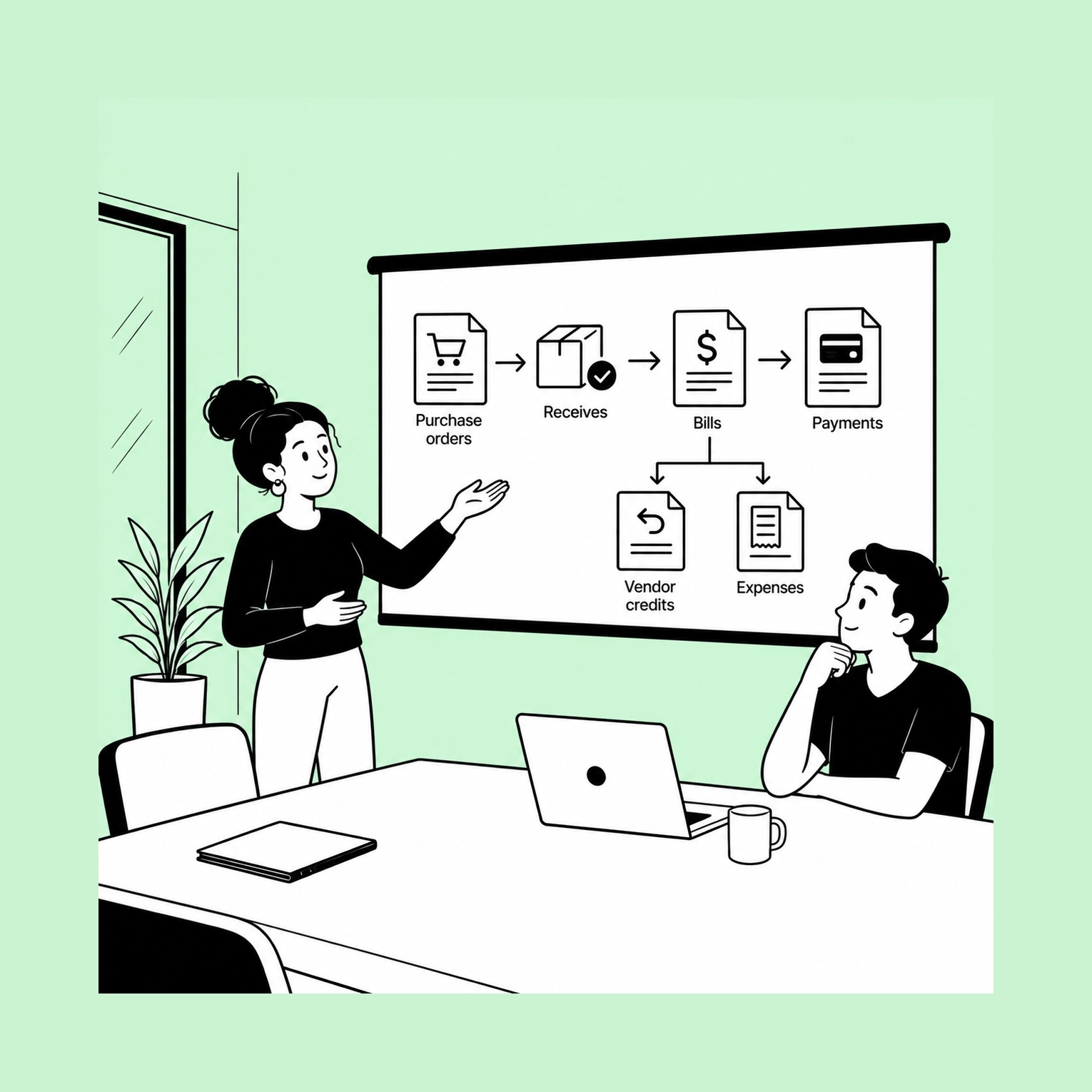
The buying side runs the same way round. An order is placed, what arrives is received against it, the bill is entered from that receipt, and the payment allocates against the bill it clears.
Received against the order
A receive references its purchase order, so what was ordered and what arrived are held on one chain.
The bill reads the receipt
It is entered from what actually came in rather than keyed a second time off the paperwork beside it.
Vendor credits and expenses post beside them
A return to a supplier and a paid expense are documents in the same ledger, not adjustments made to it afterwards.
Ledger
Taxes, chart of accounts and journals
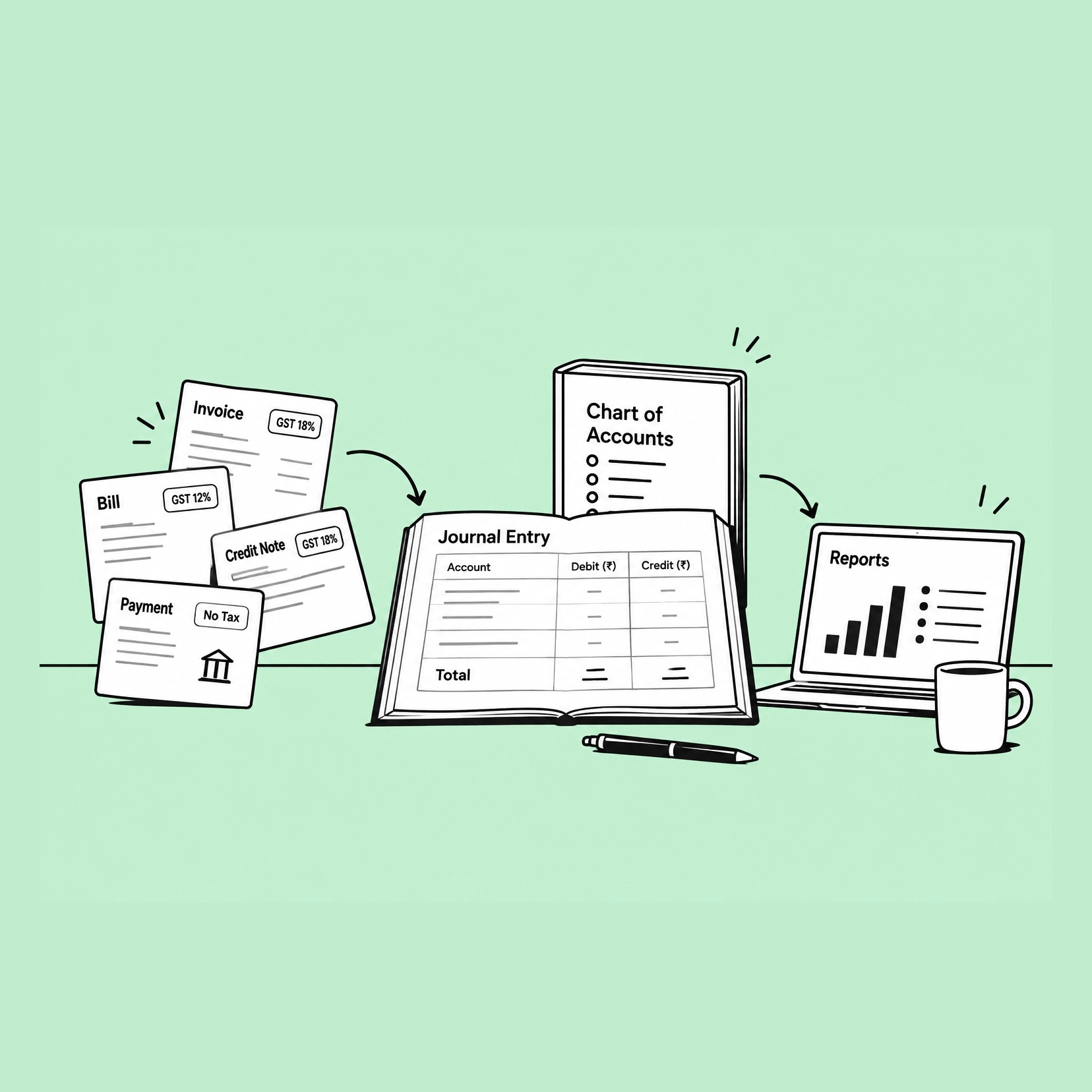
Each document carries its own tax treatment at the point it is raised, and every document that posts writes balanced debit and credit lines against the chart of accounts. Reports and period summaries are a reading of those records rather than a second set of figures kept beside them.
The treatment is held on the document
Set per item, customer or line, and recorded on the document itself rather than applied in a later pass.
Double entry underneath every posting
Each invoice, bill, payment and credit note carries its own journal entry, with the two sides equal by construction.
A summary is a reading, not a rebuild
Period end reports what the ledger already holds, so every figure has a document behind it that can be opened.
Items
Items, rate lists and stock adjustments
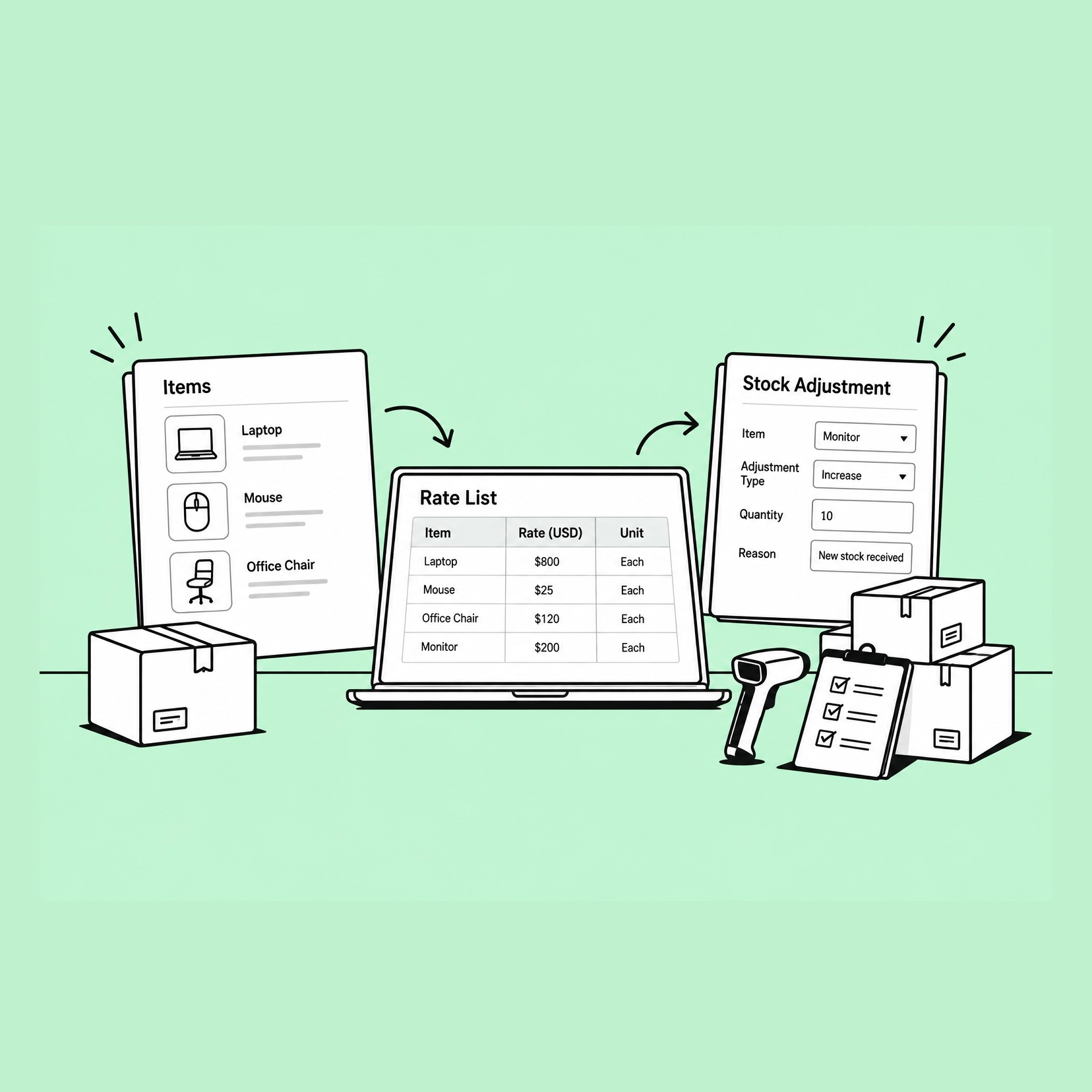
One item record is what both cycles put on their lines, priced and taxed once. A rate list sets what a given customer or vendor pays for it, and a stock adjustment corrects the quantity or the value on hand and posts as it does.
One item, both cycles
The record a quote prices is the record a purchase order buys, so a description or a tax treatment is corrected in one place rather than in each app that sells it.
A rate list is named, not typed in
A list carries its own currency and either moves the item rate by a set percentage or names a rate per item, and the document picks it up rather than somebody remembering the agreed price.
An adjustment is a document too
A correction to quantity or value cites a reason and a warehouse, and writes its journal entry like any other posting, so the count and the books move together.
FAQ
Questions about Finance
See your whole business add up, day by day
Start a 30-day trial and send your first invoice today. When it ends, your workspace goes read-only and your export stays available. We never lock you out of your own books.
30-day trial. No card needed. Export your data at any time.