
Authority and visibility, set separately.
Most systems conflate what a person may do with whose records they may see. Worklink holds the two apart: a permission grants the action, and the organisation chart determines whose record it lands on. Neither one moves the other.
What Worklink covers
Attendance, leave and the employee records underneath both, in one application rather than three that disagree. Shifts, training, departments and designations sit alongside.
 Worklinkby SorviAI
$29Save 17%/ month, billed annually
All seven applications come to $79 a month on SorviAI Orbit.
30-day trial. No card needed. Export your data at any time.
- Any single SorviAI app, named at checkout
- Your own workspace on its own subdomain
- Included seats, flat per organisation
- Roles and permissions for every seat
- Two-factor authentication and an audit trail
Employees
Employees, departments and designations
The employee record is what attendance and leave both hang from. Departments and designations describe where somebody sits and what they are called, and the organisation chart above them decides whose records a lead can reach.
- One record per person
- Shifts, locations, leave balances and attendance all point at it, so a joiner is set up once and a leaver is closed once.
- Departments and designations are records too
- Both are maintained in the app rather than typed as free text on each person, so a rename lands everywhere at once.
- The chart decides who sees whom
- A lead reaches the records of the people under them on the chart, which is a different question from what their permissions let them do.

Attendance
Attendance, records and training
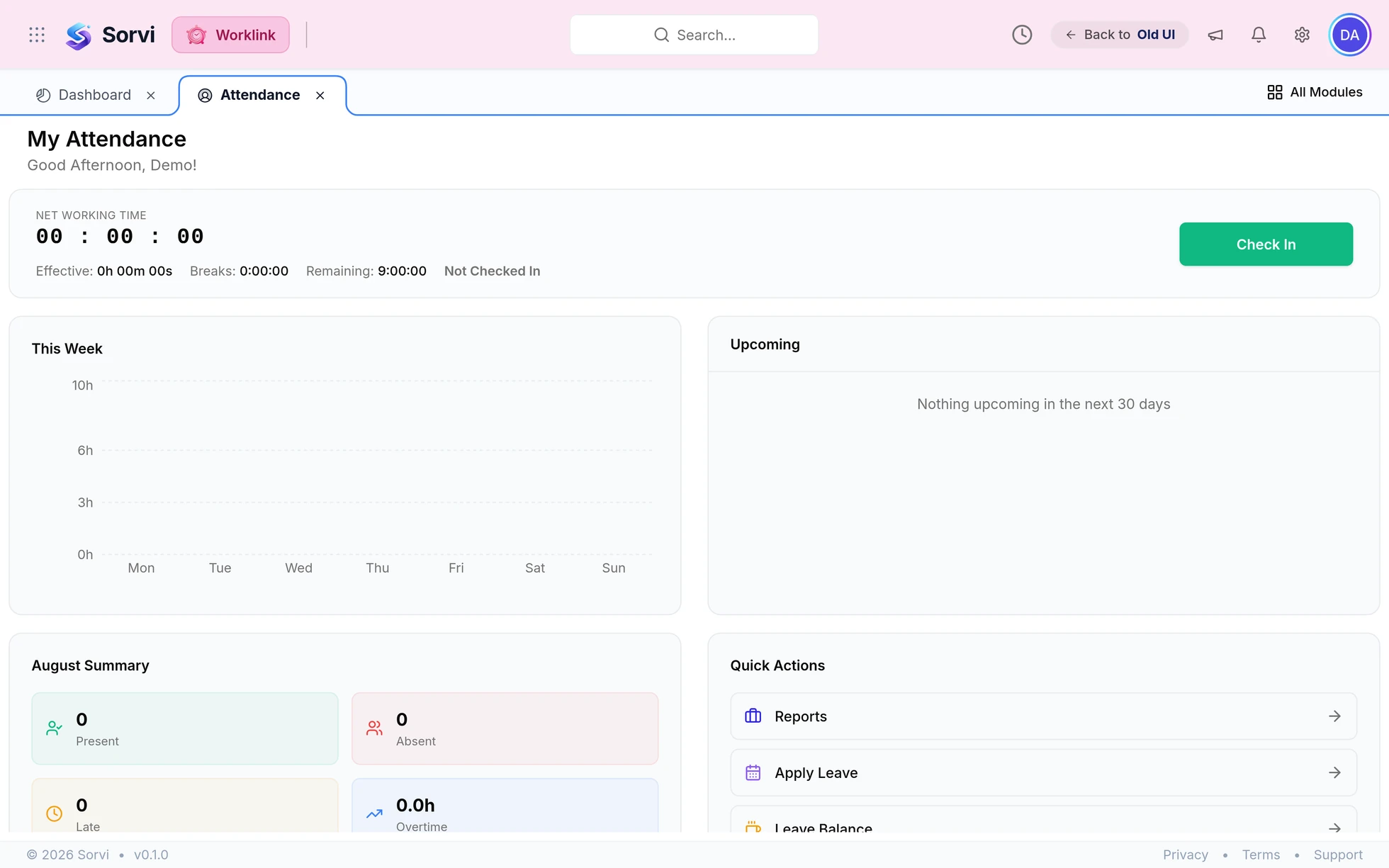
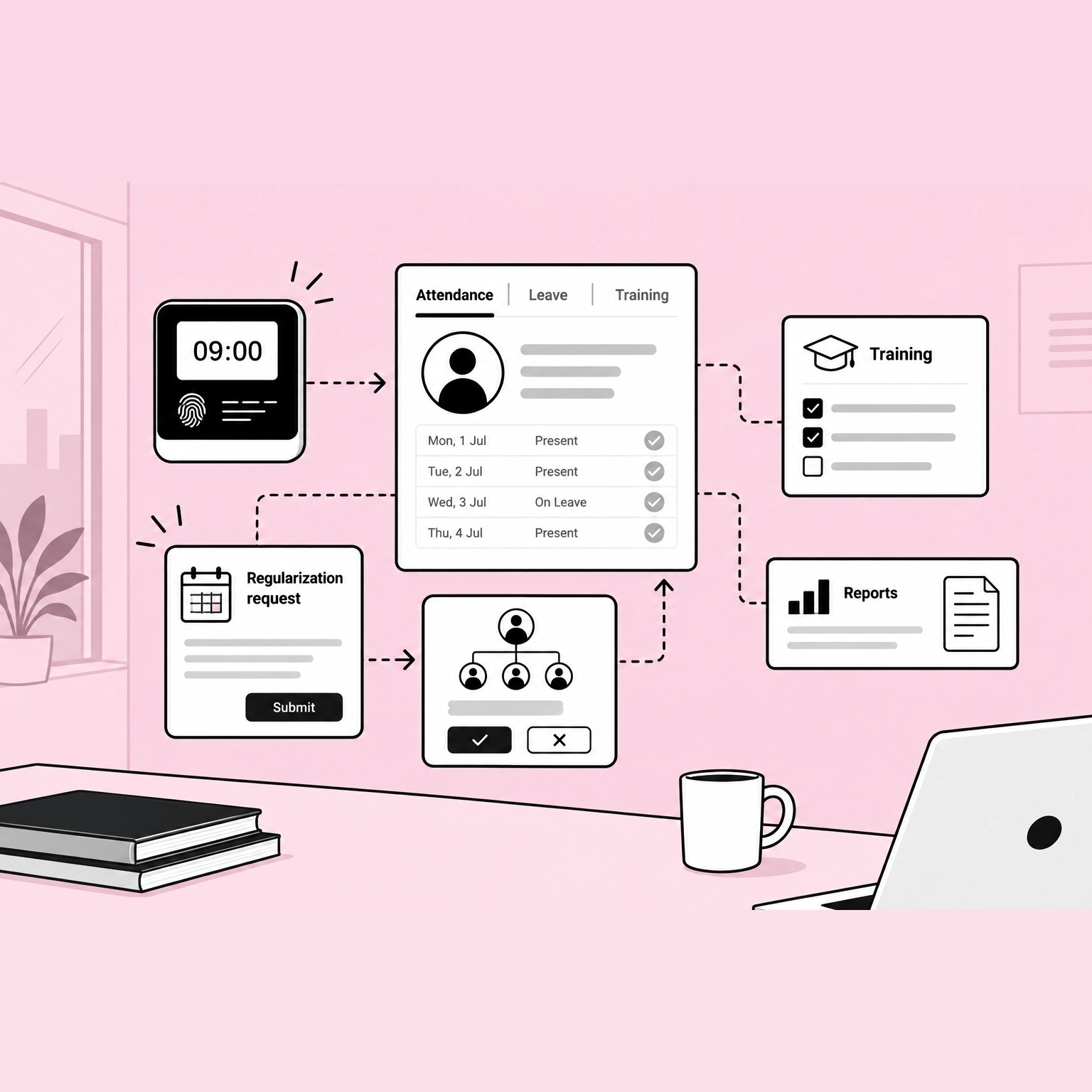
A day is clocked, recorded and left where it can be read back. The record is the same one a lead corrects and a report reads, so a question about last Tuesday has one answer rather than three.
- The record is written once
- Clock in, the day lands on the person’s own record, and a correction to it is a change to that record rather than a note kept beside it.
- A correction is asked for, not made quietly
- A regularization is raised against the day it concerns and goes to whoever the chart says approves it.
- Training sits on the same record
- What somebody has been trained on is held against them rather than in a spreadsheet somebody owns.
Kiosk
Kiosk and visitor management
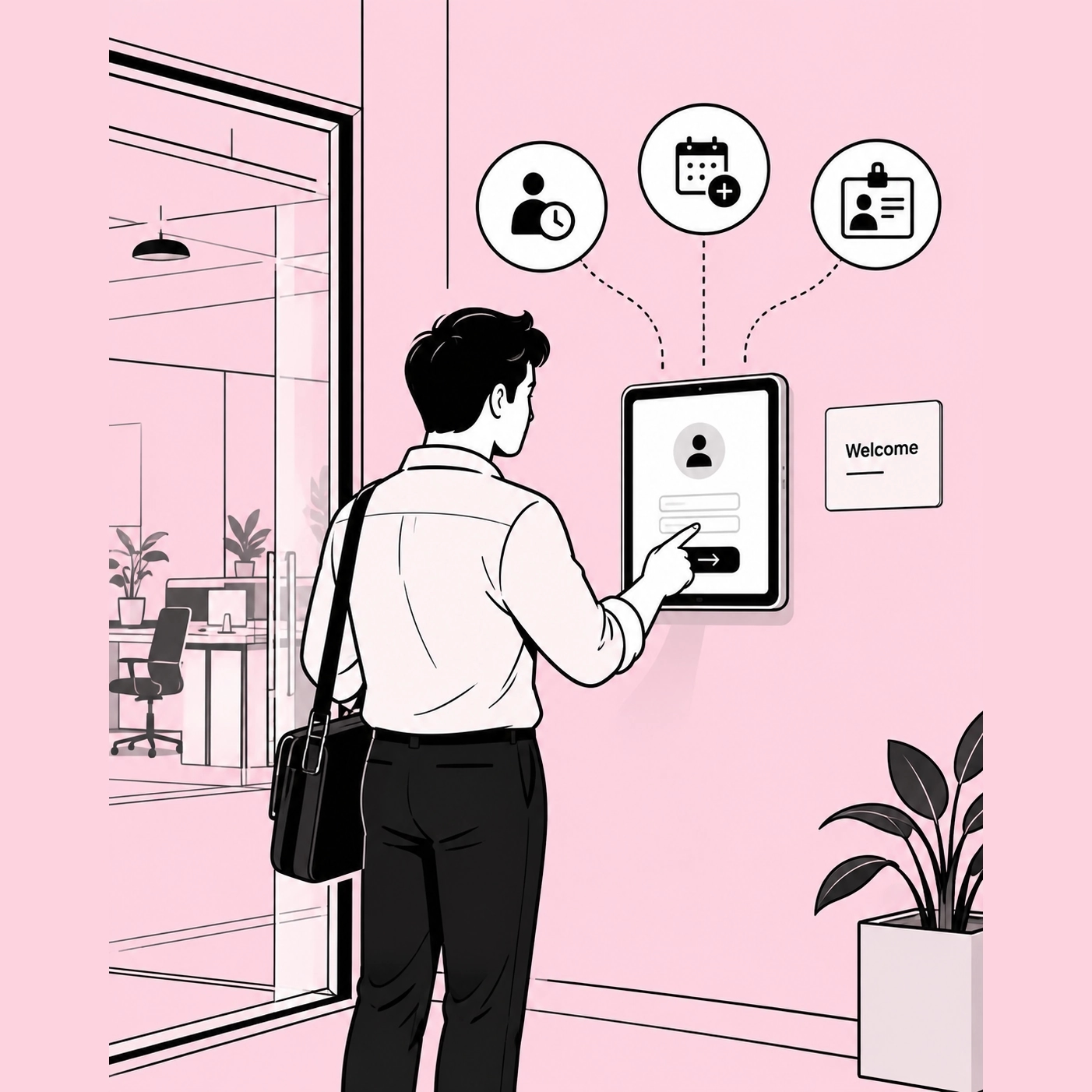
A tablet on the wall, paired once, standing open all day. Three things happen at it: somebody starts their day, somebody asks for a day off, and somebody who does not work here signs in. All three land in the same app the office already reads.
- Touch to check in
- A person punches with their own code, and the day lands on their record rather than in the tablet, so it reads back the same as a check-in made on a phone.
- Apply for leave without a desk
- The same screen takes a leave request against the balance, so somebody who never sits at a computer files their own rather than asking whoever does.
- A visitor signs themselves in
- They give their reason and the person they are here to see, and the arrival is a record with a host against it instead of a line in a book on the desk.
Roles and scope
Each role sees the record its scope allows
- Employees
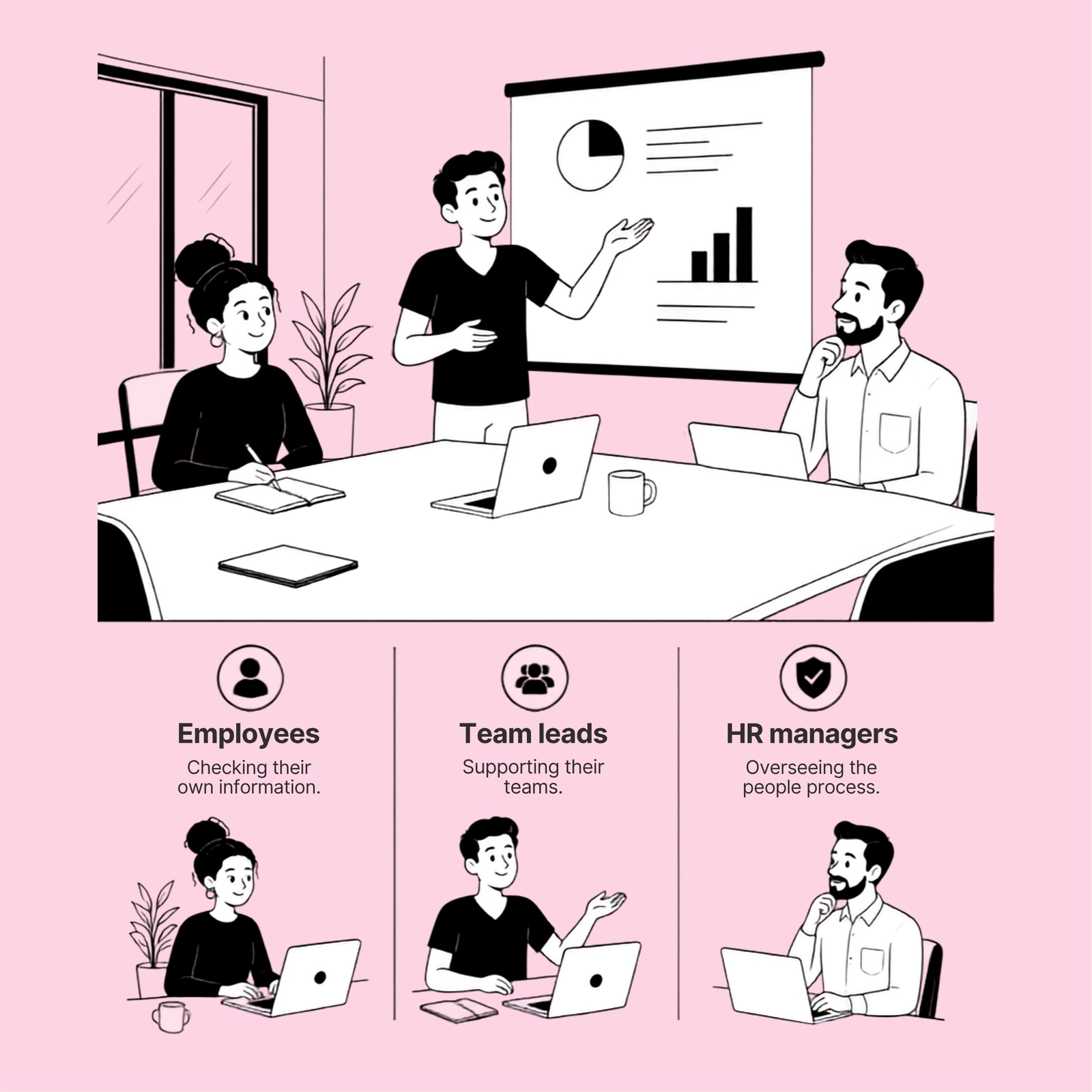
- Clock in, apply for leave and read your own record. The balance is yours to check, and nothing you can see depends on somebody remembering to send it to you.
- Team leads
- Approve leave and correct records within scope only. The list is read from the organisation chart, so it is correct on the day somebody joins the team and there is no setting to remember.
- HR managers
- Create employee records, edit shifts and locations, and read the organisation-wide roll-up because it was granted rather than because of a position on the chart. Five reports over the same period, and no report builder to learn.
FAQ
Questions about Worklink
See who is working before you have to ask
Connect a team, run it for a month, and extend the roll-up from there.
30-day trial. No card needed. Export your data at any time.